
The introduction of a bacterial pathogen into a recirculating aquaculture system (RAS) presents a challenge that goes beyond simply reducing its presence in the water. A disinfection strategy must control health risks without compromising fish health or the biological nitrification processes responsible for maintaining optimal water quality.
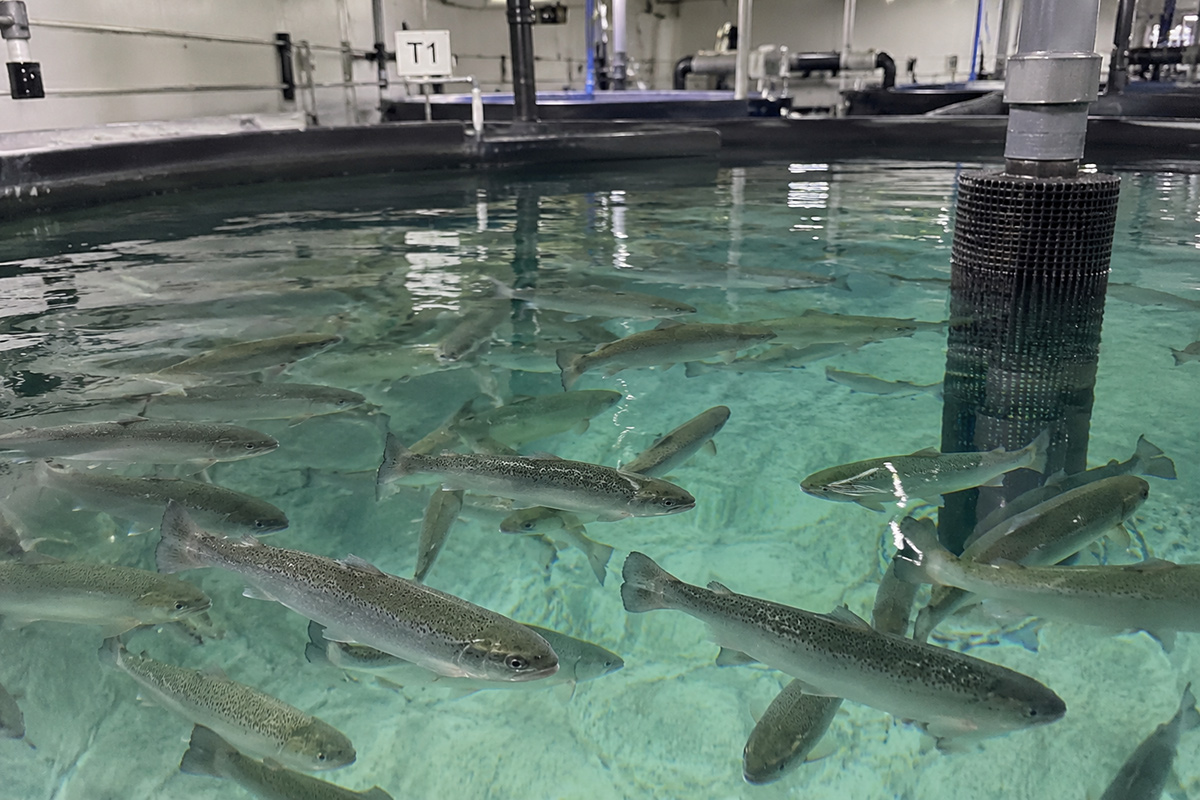
A comparative study by researchers from Norwegian and Danish institutions addresses this issue by evaluating ozone and peracetic (PPA) in pilot-scale Atlantic salmon (Salmo salar) RAS during an experimental challenge with Yersinia ruckeri, the bacterium responsible for enteric redmouth disease.
On the one hand, ozone treats water through an oxidation process that, in addition to reducing microorganisms, can improve water clarity and oxidise some dissolved organic compounds. Its application requires ozone generation and contact equipment, as well as careful control to ensure that residual oxidants do not reach concentrations harmful to fish.
On the other hand paracetic acid can be dosed as a liquid disinfectant without the need for ozone generation, although its effectiveness depends on concentration, contact time and water characteristics.
In both cases, the point of application and the exposure of the biological components of the RAS are critical.
This distinction becomes particularly important when considering biofilter performance. In an earlier study involving Atlantic salmon, continuous PAA application at 1mg/L for four weeks reduced nitrite oxidation activity by 36% and increased nitrite accumulation in the water by 95%, whereas ozone treatment improved water clarity without comparably compromising biofilter metabolic activity.
These findings do not establish ozone as universally superior, but demonstrate that disinfection performance must be assessed alongside its effects on nitrification and overall system stability.
Fish health presents and additional challenge: reducing the bacterial load in the water odes not necessarily prevent infection in fish.
In an earlier experimental assessment involving Yersinia ruckeri, the observed infection prevalence was 33.3% in the control group, compared with 13.3% under PAA treatment and 6.7% under ozone treatment.
However, these differences were not statistically significant, and the challenge did not reproduce an acute outbreak with substantial mortality. These findings, reported in an earlier doctoral study, should be distinguished from the conclusion of the new research paper, whose final comparative results still require verification.
From a production perspective, the choice between ozone and peracetic acid should not be based solely on their ability to eliminate microorganisms, but also on the effective dose, exposure time, water quality, fish response and preservation of nitrification activity.
The challenge for RAS operators is to integrate disinfection into a biosecurity strategy that reduces health risks without destabilising the biological processes on which production depends.
Comparative research can help inform this decision, although further evidence is needed to establish the conditions under which each treatment provides the best balance between effectiveness, safety and system performance.
Scientific reference:
Mota, V. C. et al. (2026). Comparison of ozone and peracetic acid during a simulated Yersinia ruckeri outbreak in pilot-scale Atlantic salmon recirculating aquaculture systems. Aquaculture.
Qi, W. et al. (2025). Estimating biofilm activity on biofilter elements in recirculating aquaculture systems (RAS) for rearing Atlantic salmon parr (Salmo salar) during operation with ozone and peracetic acid. Aquaculture, 594, 741381.
Mousavi, S. (2023). Evaluation of ozone and peracetic acid use during a Yersinia ruckeri challenge in Atlantic salmon freshwater recirculating aquaculture systems. Doctoral thesis.

Related

Latest In-depth
-
Clams more resistant to heat and Perkinsus: research paves the way for selective breeding
Padua, Italy, 16/10/2026 | University of Padua researchers explain to misPeces the findings presented at Aquaculture Europe 2026 and the steps needed to transfer them to hatcheries. Initial applications could emerge within the next two or three years, although the relationship between resistance, growth and other production traits still need to be assessed