Administrative barriers facing European aquaculture farms also affect access to disinfectants and antifouling products, even when solutions are available elsewhere in the European Union. The issue links biosecurity and facility maintenance to authorisation procedures that can reduce suppliers’ interest in marketing their products in particular countries.
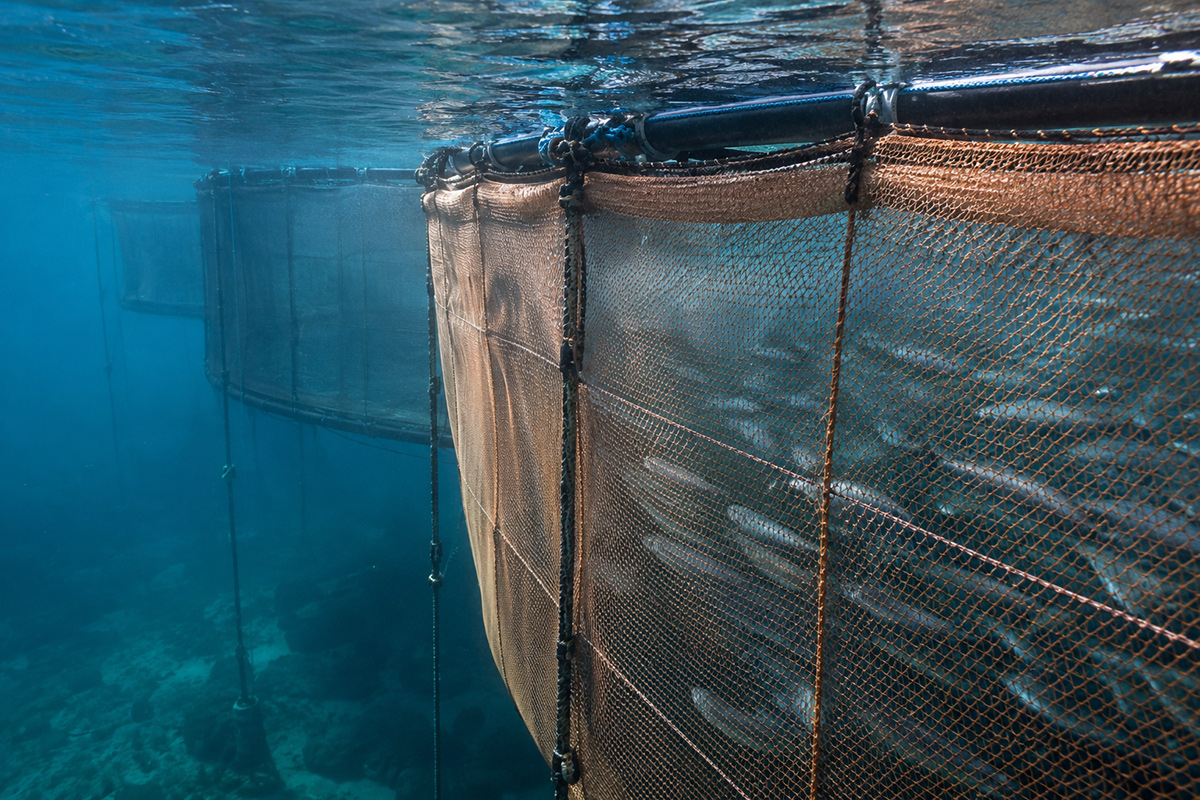
Denmark provides a concrete example. According to a recommendation from the Aquaculture Advisory Council (AAC), farmers can use copper-coated nets to prevent biofouling, but must send them abroad for coating because the necessary products lack national authorisation.
The supplier had sought mutual recognition of an existing authorisation, but withdrew its application because of the procedure’s complexity and costs. The document identifies additional costs for the sector, although it does not quantify them.
The system involves two separate steps: approval of the active substance at EU level, followed by authorisation of the product for specific uses. The European Commission acknowledges substantial delays in both processes, alongside limited innovation.
Aquaculture’s small and fragmented market adds to the challenge: according to the AAC, the investment required to obtain or extend authorisations can be commercially unattractive. The Commission is evaluating the Biocidal Products Regulation and expects to complete that work by the end of 2027.
A further difficulty arises at the boundary between disinfection and disease treatment, where a product’s classification determines which legislation applies.
In Spain, Aquacen Formaldehído is authorised as a veterinary medicinal product for specific indications in gilthead sea bream and turbot. Its product information includes the treatment and control of external parasitic infection caused by Sparicotyle chrysophrii in sea bream, under veterinary prescription and supervision. This authorisation covers a particular product and defined conditions; it does not extend to every formulation or use of formaldehyde.
To address these obstacles, the AAC has submitted recommendations to the European Commission calling for clearer product classification and regulatory status, simpler authorisation and mutual recognition procedures, and easier access to supervised trials of alternatives under commercial conditions.
The regulation already provides for research and development trials subject to certain conditions. How to make those provisions more accessible for aquaculture remains to be clarified.
The recommendations do not yet change existing authorisations or permitted uses. For farms, the practical outcome will be whether they can access authorised products suited to their needs and plan supply and application with greater certainty.
The EU evaluation will assess what adjustments the system needs, while the financial impact of these access difficulties on farms remains to be quantified.

Related
Latest In-depth
-
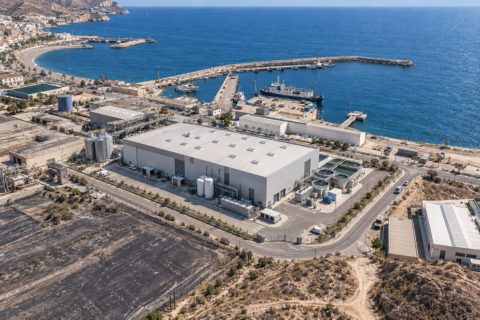
Ocean Aquaculture begins work on Spain hatchery designed to produce eight million greater amberjack juveniles a year
Almería, Spain, 9 September 2026 | The first phase will involve an investment of around €15 million and is expected to begin production in January 2028, supplying both the group’s future offshore farms and other Mediterranean producers