
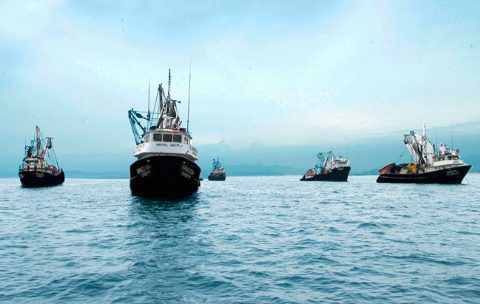
China’s aquafeed production reached 11.1 million tonnes in the first half of 2026, up 17.4% year on year. This growth coincides with reduced global availability of fishmeal and fish oil following catches in Peru, Chile and Northern Europe, according to IFFO’s latest analysis.
The extension in feed production accompanies growth in Chinese aquaculture output, which increased from approximately 29.9 million tonnes in the first half of 2025 to nearly 31.1 million tonnes in the same period of 2026, a rise of around 4%. However, China’s fishmeal imports and stocks have declined as international supplies have contracted.
Peru remains the main source of uncertainty. The quota for the first 2026 anchovy fishing season in the north-central region was set at 1,914,049 tonnes, equivalent to approximately 27% of the estimated biomass. Successive closures and the suspension of fishing on 10 June limited catches to around 25% of the quota, or approximately 479,000 tonnes.
The disruption is particularly significant because Peru normally accounts for around 20% of global fishmeal production. Conditions associated with El Niño continue to intensify and could persist until early 2027.
A news scientific monitoring operation will assess the distribution and biological condition of the anchovy stock before determining whether there is scope to resume fishing.
Chile also recorded catches well below 2025 levels, while the high incidence of juveniles further restricted fishing activity. This has been compounded by reduced raw material availability in Northern Europe and several Asian countries.
The global outcome for 2026 will increasingly depend on second-half production in countries such as Morocco, China, India and Oman.
Despite the strong growth in feed production, IFFO estimates that fishmeal consumption by China’s aquaculture sector was slightly lower than a year earlier.
This contrast could reflect lower inclusion rates, feed reformulation, substitution with other raw materials or stock management, although the available data do not identify which factor has been the main driver.
The data are also insufficient to anticipate the effect that tighter supply may have on prices and feed formulation costs during the second half of the year.

Related

Latest In-depth
-
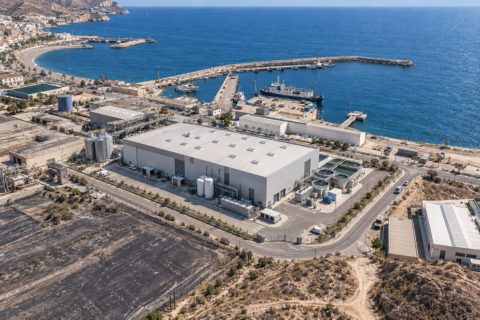
Ocean Aquaculture begins work on Spain hatchery designed to produce eight million greater amberjack juveniles a year
Almería, Spain, 9 September 2026 | The first phase will involve an investment of around €15 million and is expected to begin production in January 2028, supplying both the group’s future offshore farms and other Mediterranean producers