

For more than two decades, indicators such as Fish In: Fish Out (FiFo) and the Forage Fish Dependency Ratio (FFDR) have been used to assess aquaculture’s dependence of fishmeal and fish oil. These metrics compare the quantity of wild fish used to produce marine ingredients with the amount farmed fish ultimately produced.
However, researchers from the University of Stirling, the Stockholm Resilience Centre and Blue Food Performance argue that these indicators have important limitations.
According to the authors, traditional approaches fail to adequately account for factors such as the growing use of fisheries by-products, the retention of key nutrients such as the omega-3 fatty acids EPA and DHA, and the complex dynamics of global food systems.
The key question, therefore, is no longer simply how many kilograms of fish enter the system, but how many essential nutrients aquaculture ultimately makes available to consumers.
In other words, some of the most widely used metrics for assessing aquaculture feed sustainability may be providing only a partial picture.
The real issue is not only how much wild fish aquaculture consumes, but also how effectively it converts marine resources into nutrients for human consumption.
From fish to nutrients
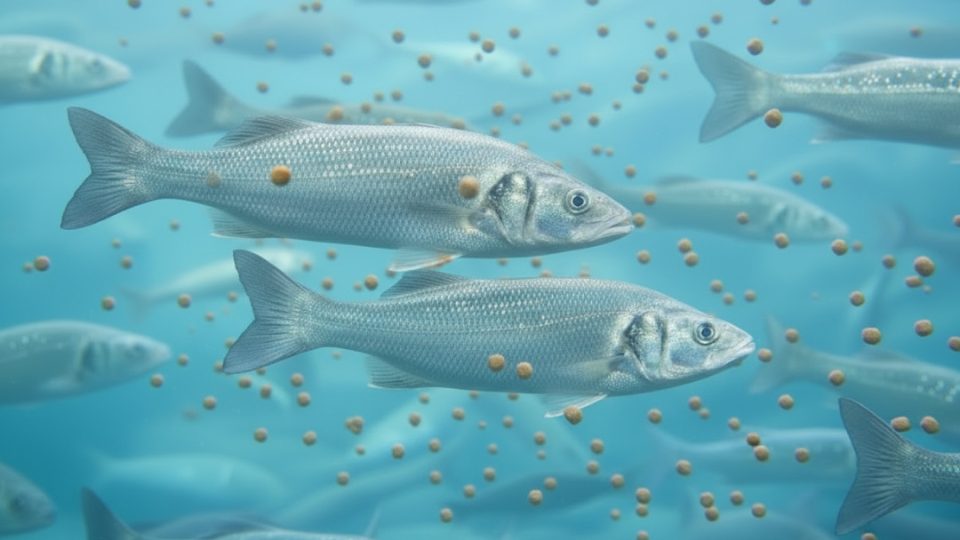
The same quantity of fish used to produce fishmeal and fish oil can result in very different nutritional outcomes. For this reason, the study proposes moving beyond biomass-based indicators towards metrics that measure how efficiently aquaculture converts marine resources into nutrients available to people.
Within this framework, the authors highlight the concept of nFIFO, or nutrient Fish in: Fish out, a metric designed to evaluate the retention of specific nutrients, particularly EPA and DHA, throughout the production chain.
Marine ingredients continue to play an important role in many aquaculture species because of their digestibility, nutritional profile and ability to provide long-chain omega-3 fatty acids. These nutrients remain one of the key nutritional advantages of farmed seafood compared with other animal protein sources.
The growing role of by-products
One of the most significant aspects of the study is its recognition of the increasing contribution of fisheries by-products to global fishmeal and fish oil production.
Today, a growing proportion of marine ingredients no longer originates form fisheries targeting reduction species exclusively, but from heads, frames, viscera and other processing leftovers generated by seafood production for human consumption.
According to the authors, fisheries by-products accounted for approximately 34% of global fishmeal and 54% of global fish oil production in 2024. From this perspective, using these resources in aquafeeds can be viewed as a way of recovering nutrients that might otherwise be underutilised.
Does reducing fishmeal and fish oil always improve sustainability?

The study also challenges a widely accepted assumption in sustainability discussions: that minimising marine ingredients automatically improves the environmental performance of aquaculture feeds.
The researchers note that replacing fishmeal and fish oil with plant-based ingredients has enabled the expansion of global aquaculture production. However, it has also shifted part of the environmental burden from marine ecosystems to terrestrial agriculture systems.
These impacts include land use, water consumption and emissions associated with crop production. As a result, the authors argue that sustainability assessments should simultaneously consider environmental, nutritional and economic indicators rather than relying on a single simplified metric.
A debate that goes beyond feed
The study does not conclude that fishmeal and fish oil should necessarily increase their share in aquaculture diets, nor does it dismiss the role of alternative ingredients. Instead, its central message is that food system sustainability must be evaluated through a broader lens.
Improving nutrient retention within aquaculture does not automatically translate into better global nutrition outcomes. Factors such as affordability, resource distribution and sustainable fisheries management remain essential components of the discussion.
Ultimately, the sustainability of aquaculture feeds cannot be assessed solely by measuring reductions in marine ingredients use. It must also consider where those ingredients come from, whether they originate from whole fish or by products, what nutrients they provide, how efficiently those nutrients are retained in the final product, and what environmental trade-offs result from replacing them with alternative raw materials.
Reference
Malcorps, W., Newton, R., Horn, S., Kok, B., Troell, M. and Little, D.C. (2026). Fish as Food or Feed? Aligning FIFO with LCA and Food System Objectives. Reviews in Fisheries Science & Aquaculture. DOI: 10.1080/23308249.2026.2679959

Related

Latest In-depth
-
Clams more resistant to heat and Perkinsus: research paves the way for selective breeding
Padua, Italy, 16/10/2026 | University of Padua researchers explain to misPeces the findings presented at Aquaculture Europe 2026 and the steps needed to transfer them to hatcheries. Initial applications could emerge within the next two or three years, although the relationship between resistance, growth and other production traits still need to be assessed