Aquafeed sustainability is entering a phase much more closely linked to execution. It is no longer enough to talk about circularity, alternative ingredients or emissions reduction if those strategies do not translate into efficiency, biological resilience, traceability and measurable outcomes for producers.
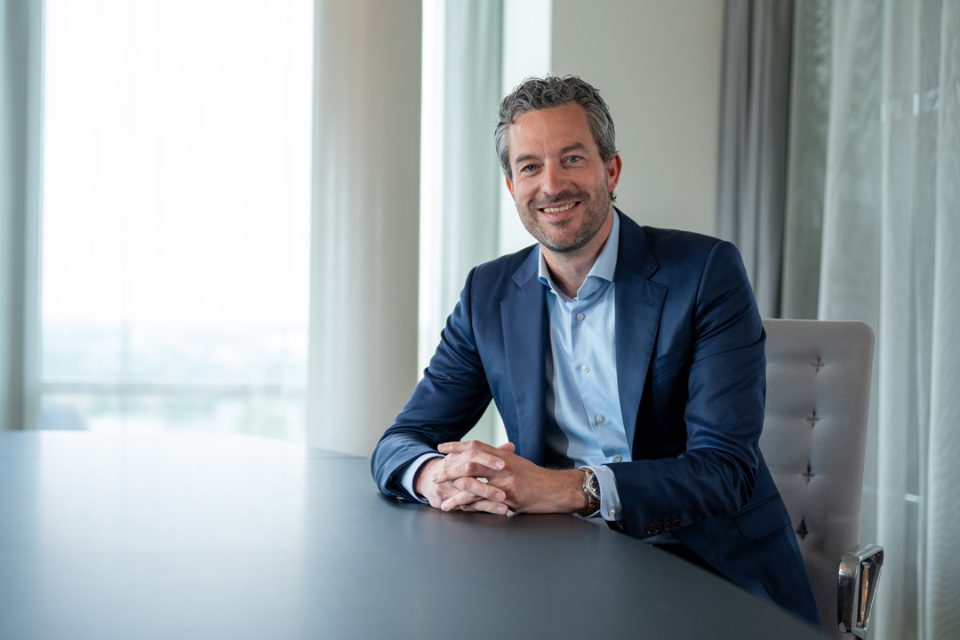
That is one of the key messages from Maarten Bijl, CEO of Skretting, in an interview with misPeces following the publication of the company’s Impact Report 2025. For Bijl, the challenge is not only to advance environmental indicators, but to make sustainability work under real farming conditions.
According to Bijl, farmers today must balance costs, biology and market expectations at the same time. Any sustainable progress, he argues, must therefore deliver better farm outcomes in a cost-efficient way. At Skretting, this approach is framed under the concept of “innovation with impact”, where solutions such as precision feeding, digitalisation and EDGEOS PhytoComplexes must always be assessed by their performance under real farming conditions.
In practice, this means measuring outcomes such as feed conversion ratio, survival, resilience and production stability. It also means integrating sustainability into daily decisions on feed formulation, supplier selection and technical support for producers.
A more mature and outcome-driven sustainability
Bijl believes aquafeed sustainability is clearly moving into a more mature and execution-driven phase. Commitments around circularity, responsible sourcing and alternative ingredients increasingly need to be supported by technical evidence, traceability and measurable farm-level outcomes.
In this context, Skretting’s CEO stresses that the company cannot afford to launch or scale innovations that do not improve farmer performance. As an example, he points to EDGEOS PhytoComplexes, plant-based compounds developed to help improve growth, survival and resilience across different species and regions.
Another relevant shift is the move from general averages to specific environmental impact data. Tools such as SKAILA make it possible to link sustainability information to product-level feed footprints, giving producers more useful decision-ready data rather than only aggregated reporting information.
“We're moving beyond averages to calculate the specific environmental impact of our ingredients and feed.”
Traceability: still an open challenge
 EDGEOS PhytoComplexes
Bijl acknowledges, however, that the industry still needs to make much more progress on transparency and traceability, particularly in marine ingredients. In this regard, he refers to challenges seen in markets such as Chile with the inclusion of blended oils that do not report their marine components properly, creating a risk of exceeding the allowed levels of uncertified ingredients under standards such as BAP.
Skretting’s CEO welcomes the action taken by the Global Seafood Alliance, which investigated the issue and introduced changes to its standard, but he believes this is not enough. In his view, other actors need to move in the same direction, which is why Skretting is strengthening collaboration with organisations such as ASC, MarinTrust and the Global Salmon Initiative to address the issue as an industry.
From product footprint to changing how business is done
For Bijl, product-level footprint data will become increasingly important in the relationship between feed companies and producers, especially as reporting becomes more integrated and automated. He also notes that the final customer of farmers, the consumer, increasingly demands this transparency, requiring producers to have credible, accurate and complete data for their own decisions, strategies and communication obligations.
But the role of these data goes beyond reporting. According to Bijl, good footprint information can help reduce impacts, identify supply risks, detect data gaps, unlock new business models or markets, and strengthen collaboration across the value chain.
“We even see it as one of the levers for changing how business is done, not just how it is reported.”
Performance, cost and impact
According to Bijl, the greatest practical value is created when performance, cost and impact come together. In this area, Skretting is accelerating its efforts in digitalisation, precision nutrition and precision feeding to improve FCR, growth and predictability. Better feed efficiency reduces feed use per kilo produced, lowers emissions and directly improves farmer margins.
The CEO also highlights the role of functional and health feeds in increasing the resilience of fish and shrimp, reducing biological risks and stabilising production without increasing resource use. In parallel, tools such as Skretting 360+ and SKAILA aim to connect feed performance, farm data and environmental footprint so that producers can move from simply reporting on sustainability to actively managing it.
The broader reading is that aquafeed sustainability is no longer a separate exercise from farm operations and is beginning to be integrated into producer decision-making. In this new phase, its value will not depend only on environmental commitments, but on its ability to improve efficiency, reduce risks, facilitate market access and strengthen the competitiveness of aquaculture companies.
Related

Latest news
-
EU ministers to discuss conditions for aquaculture support in 2028-2034
Brussels, 28 September 2026 | EU fisheries ministers will discuss on 29 September the future framework for Union support to fisheries, aquaculture and maritime policy for 2028-2034
-
FAO updates global fisheries and aquaculture employment database through 2024
Roma, Italy, 25 September 2026 | Global aquaculture adds around 900,000 jobs since 2022, reaching 23.1 million workers
-
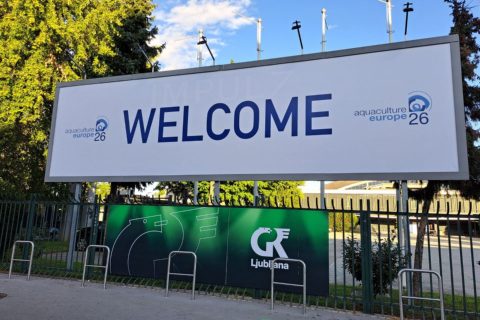
Aquaculture Europe 2026 opens in Ljubljana with climate adaptation at the centre of the aquaculture debate
Ljubljana, Slovenia, 28/09/2026 | Europe's aquaculture meeting begins with a dedicated workshop aimed at identifying adaptation needs and translating them into a joint call for climate action