
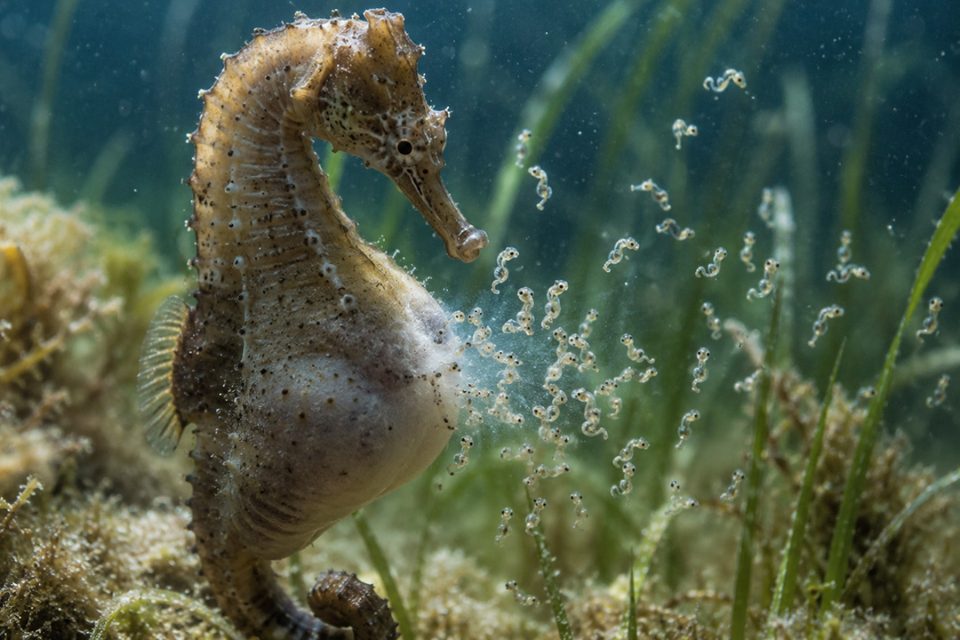
In seahorses, the male does not much more than simply carry the eggs. Its brood pouch changes during pregnancy to protect the embryos, supply oxygen and nutrients, and maintain suitable conditions for their development.
A study conducted mainly on seahorse species Hippocampus rectus followed these changes cell by cell. The researchers analysed more than 79,000 cells and identified the tissues that form the pouch, develop its blood supply and create a specialised inner layer around the embryos.
The formation of this organ depends on androgens, the male sex hormones. In one experiment, exposure to an androgenic compound caused females to develop a structure resembling the male brood pouch. This suggests that both sexes retain part of the cellular machinery required, although under natural conditions it is activated in males.
During pregnancy, the inner wall of the pouch thickness and becomes increasingly vascularised, forming a type of pseudoplacenta. It is not a placenta like that of mammals, but it solves similar problems: gas exchange, nutrient transport, regulation of water and salts, and tissue remodelling.
The male must also prevent its immune system from attacking the embryos, which contain genetic material from the female. The study found reduced inflammatory signalling and several immune cell populations that may help maintain this tolerance during pregnancy.
Comparisons with pipefishes and other sygnathids suggest that this system evolved gradually: first through eggs attaching to the male’s skin, and later through increasingly enclosed and complex brood pouches. The result is one of the clearest examples of evolution arriving at similar functions through entirely different organs and biological pathways.

Related

Latest In-depth
-
Clams more resistant to heat and Perkinsus: research paves the way for selective breeding
Padua, Italy, 16/10/2026 | University of Padua researchers explain to misPeces the findings presented at Aquaculture Europe 2026 and the steps needed to transfer them to hatcheries. Initial applications could emerge within the next two or three years, although the relationship between resistance, growth and other production traits still need to be assessed