
For years, Europe has explained the slow growth of aquaculture with a convenient argument: bureaucracy. Lengthy permitting processes, fragmented regulatory framework and high legal uncertainty. All of this is true. Yet it is becoming increasingly clear that this explanation is incomplete.
The uncomfortable question is this: what if bureaucracy is not the cause, but the consequence?
The underlying issue is not administrative complexity, but a lack of social legitimacy. When an activity does not enjoy clear public support, any political decision to promote it carries a cost. And when that cost is high, inaction becomes the safest option.
In this context, bureaucracy acts as a containment mechanism. It does not merely slow down projects; it shields decision-makers from having to take a position in a space where social consensus is uncertain. Streamlining procedures is technically feasible. What is often missing is the political incentive to do so.
At the heart of the issue lies a revealing paradox: there is no rejection of the product, but of the activity. European consumers, particularly in countries like Spain, show no hesitation in buying and consuming farmed fish. They value if for its quality, affordability and availability.
However, perceptions shift when aquaculture becomes visible in the territory. The installation of marine farms or coastal infrastructure often tiggers resistance driven not by the product itself, but by uncertainty, lack of information and distrust.
For years, the sector has been framed primarily through a macro lens – production, competitiveness, blue economy – without sufficiently integrating the local dimension. For many coastal communities, aquaculture has not been perceived as a shared opportunity, but as an imposed activity. This disconnect helps explain much of the social opposition that continues to shape its development.
Without social support, there is no political urgency. And without political urgency, bureaucracy remain untouched.
There are, however, early sings of progress. Public awareness of aquaculture is increasing, and perceptions are improving in key areas such as access to seafood and the sustainability of natural resources. The sector is beginning to recognise that the so-called “social licence to operate” is not a theoretical concept, but a fundamental requirement for long-term growth.
The challenge now is not only to reduce administrative burdens, but to built trust. This means engaging with local communities, opening genuine dialogue and clearly communicating what aquaculture is, what it delivers and how it operates. Without this foundation, regulatory reforms alone will continue to fall short.
Europe does not have a bureaucracy problem. It has a legitimacy problem.
And until that change, aquaculture will remain a strategic sector… only on paper.

Related


Latest In-depth
-
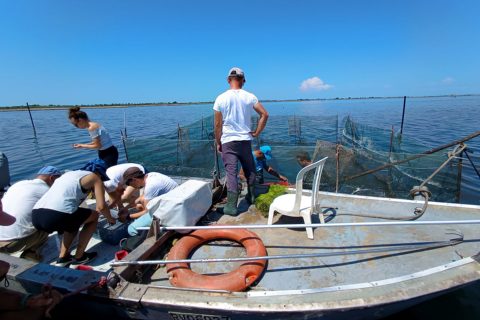
Clams more resistant to heat and Perkinsus: research paves the way for selective breeding
Padua, Italy, 16/10/2026 | University of Padua researchers explain to misPeces the findings presented at Aquaculture Europe 2026 and the steps needed to transfer them to hatcheries. Initial applications could emerge within the next two or three years, although the relationship between resistance, growth and other production traits still need to be assessed