
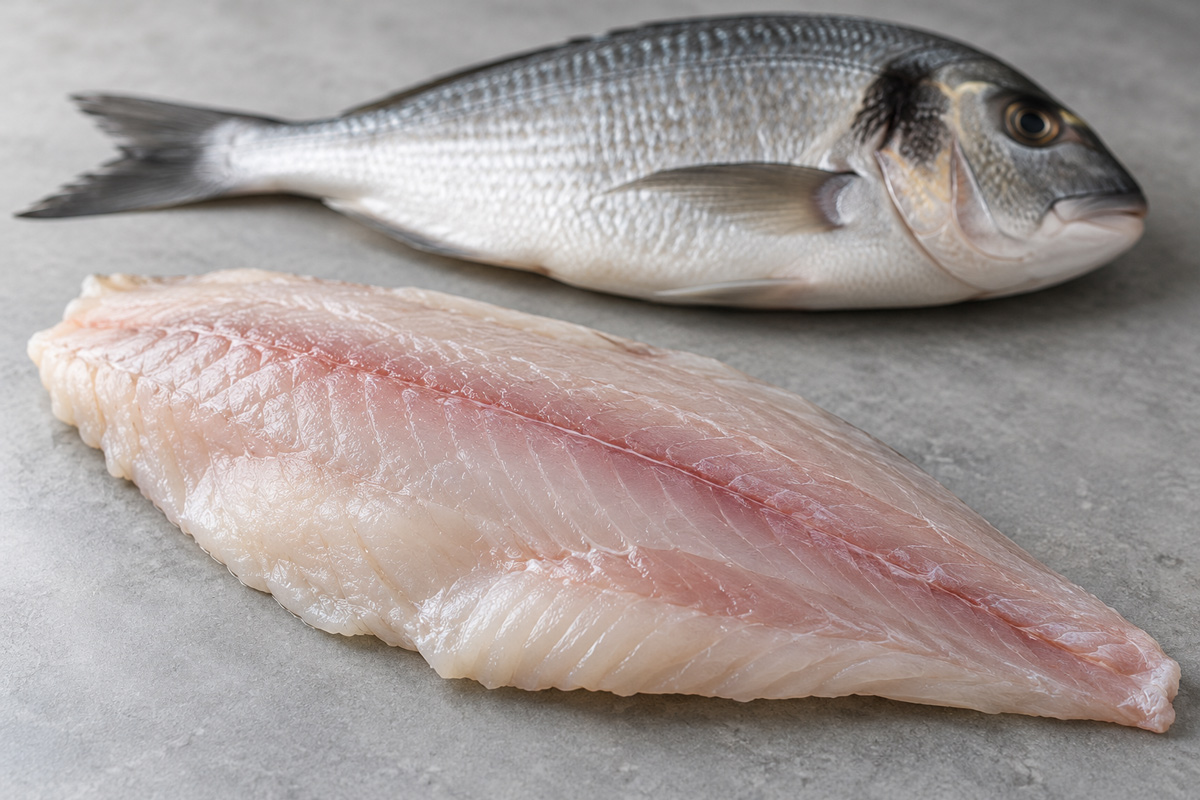
A higher proportion of EPA and DHA in fish’s fatty acid profile does not necessarily mean a greater amount per serving. A study published in Food Control found that cage-farmed gilthead seabream contained more of these omega-3 fatty acids per 100 grams of fresh muscle than the wild fish analysed, despite wild specimens having a higher proportion with their fatty acid profiles.
The team, comprising researchers from Portuguese institutions, compared 120 seabream divided into four groups of 30 fish, sampled during the same season and within a comparable commercial size range. Cage-farmed fish from Madeira contained an average of 280 mg of EPA+DHA per 100 grams of muscle, compared with 260 mg in cage-farmed fish from Olhão, 180 mg in wild fish form Olhão and 160 mg in pond-farmed specimens from the same location.
The higher total fatty acid content of cage-farmed specimens compensated for their lower proportion of EPA and DHA. The findings do not establish a general nutritional advantage for farmed seabream, as the pond-farmed group contained less EPA+DHA than the wild group. For producers and seafood suppliers, the results highlight the value of communicating nutritional content as quantities per serving alongside percentages.
The researchers also used fatty acid profiles to distinguish the four groups through a machine-learning model. It achieved 99.1% accuracy in internal cross-validation, a promising reslt for authentication that still requires testing with independent samples from additional farms, seasons and batches.
The findings describe the fish examined and cannot be taken as representative of Mediterranean production as a whole. The researchers did not have information on feed formulations, preventing them from attributing the differences to particular ingredients or farming practices. The calculated lipid quality indices characterise product composition but do not demonstrate clinical health effects in consumers.
The practical contribution it twofold: measuring product EPA and DHA content can support clearer communication of nutritional value, while fatty acid profiles may help verify declared production attributes. Further development as traceability tool will require testing whether the identified signatures remain reliable as diets, farming conditions and sampling seasonal change.
Source: Feijão et al. Published online on 1 October 2026 in Food Control. DOI: 10.1016/j.foodcont.2026.112672

Related

Latest In-depth
-

Ocean Aquaculture begins work on Spain hatchery designed to produce eight million greater amberjack juveniles a year
Almería, Spain, 9 September 2026 | The first phase will involve an investment of around €15 million and is expected to begin production in January 2028, supplying both the group’s future offshore farms and other Mediterranean producers