
A recent study published in Aquaculture Reports has found that salmon futures prices offer a reliable tool for forecasting spot market prices up to 12 weeks in advance. Based on an extensive analysis of data from the Nasdaq Salmon Index spanning 2005 to 2022, the findings pave the way for new risk management strategies in aquaculture markets — including those for high-value Mediterranean species such as gilthead seabream (Sparus aurata) and European seabass (Dicentrarchus labrax).
According to the authors, salmon futures contracts not only provide financial hedging against price volatility but also “contained significant predictive information about future spot market prices.” Their forecasting accuracy was particularly strong within a 1- to 12-week horizon, highlighting the potential of these instruments for harvest planning and market timing strategies.
Although the study focuses on salmon, its implications for other species are clear. Gilthead seabream and European seabass — cornerstone species of Mediterranean aquaculture — could benefit significantly from similar financial instruments. As it stands, these sectors lack standardised tools for managing price risk, a gap that could be narrowed by developing benchmark indices and futures contracts akin to those already in place for Norwegian salmon.
Why This Matters for Mediterranean Aquaculture

In recent years, producers of seabream and seabass have faced significant price swings driven by shifting consumer demand, feed costs and climate-related factors. Against this backdrop, having access to tools that can anticipate market trends — such as salmon futures — could offer a clear competitive edge.
A transparent and liquid market for these species would allow producers to time their harvests more effectively, negotiate forward contracts with greater confidence, and optimise their investment decisions in grow-out phases. Moreover, these tools could enhance mid-term strategic planning — a critical advantage for species with longer production cycles.
As the study notes, “Salmon futures contracts can contribute to a more efficient allocation of resources in the aquaculture industry by improving visibility into future price developments.” For species such as seabass and seabream — also subject to seasonal fluctuations and macroeconomic sensitivity — adopting price-based forecasting models could significantly improve decision-making across production and commercial operations.
One of the study’s most valuable insights is its emphasis on the use of futures prices as an early warning system. In today’s increasingly volatile markets, having models that flag upcoming price rises or drops weeks in advance could be the difference between a profitable cycle and a financial setback.
The key, as the authors point out, lies in establishing “market transparency, liquidity, and standardisation” — conditions that have helped the Nasdaq Salmon Index emerge as a leading benchmark. Replicating such conditions for the Mediterranean would require institutional commitment, collaboration between producers and buyers, and the development of appropriate financial infrastructure.
Ultimately, this study not only reaffirms the economic utility of salmon futures but also issues a challenge to the seabream and seabass markets: Are we ready to embrace advanced financial tools for a more resilient Mediterranean aquaculture sector?

Related

Latest In-depth
-
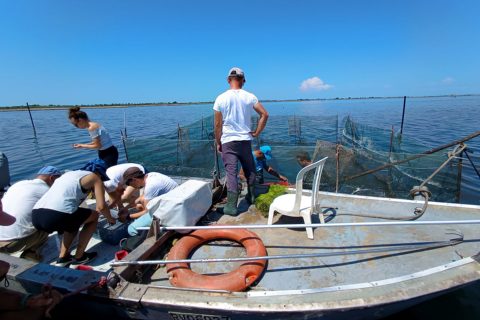
Clams more resistant to heat and Perkinsus: research paves the way for selective breeding
Padua, Italy, 16/10/2026 | University of Padua researchers explain to misPeces the findings presented at Aquaculture Europe 2026 and the steps needed to transfer them to hatcheries. Initial applications could emerge within the next two or three years, although the relationship between resistance, growth and other production traits still need to be assessed