
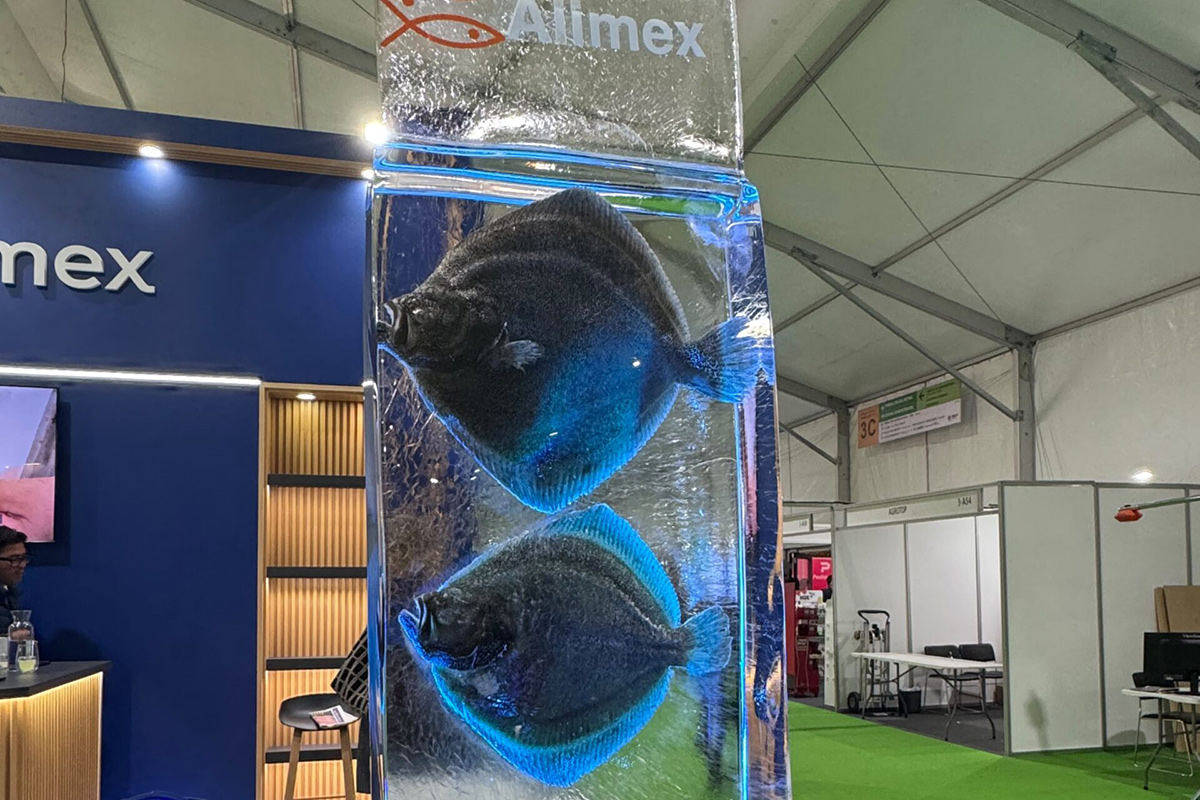
Chile is revisiting the commercial potential of turbot (Scophthalmus maximus) farming, more than two decades after an earlier attempt failed to establish a viable industry due to high production costs. Universidad de Los Lagos (ULagos) is now seeking to move its long-running experimental programme towards commercial production, combining recirculating aquaculture systems (RAS) with partnerships aimed at developing a domestic market.
The university currently produces approximately 500 kg of turbot per month at its Metri Aquaculture Centre in Puerto Montt, where it has maintained the species for more than 20 years. According to the project team, production could potentially be increased to 10 tonnes per month, although the investment required, operational costs and timetable for reaching that scale have not been disclosed.
Researcher Óscar Mora Garay, from ULagos' Aquaculture Production Unit, notes that Fundación Chile attempted to establish commercial turbot farming around 2000, but production costs prevented the initiative from progressing. The university believes current market conditions may offer a more favourable opportunity, citing prices of approximately US$14–15/kg.
However, these price indications do not establish whether land-based production would be profitable in Chile, particularly given the absence of an established domestic market for farmed turbot and the importance of feed, energy and operating costs.
The initiative involves Chilean companies Alimex and Lago Sofía. Through Alimex, which supplies retail, distribution and foodservice markets, ULagos recently presented its farmed turbot at Espacio Food & Service 2026 in Santiago. The immediate objective is to assess commercial interest and develop demand before committing to larger production volumes.
Initial plans envisage supplying two to three tonnes annually to Alimex, potentially increasing to around 30 tonnes per year within three to five years, subject to market demand. These commercial projections remain well below the project's stated potential production capacity of 120 tonnes annually. The strategy prioritises Chile's domestic market, with Brazil and the United States identified as possible export destinations at a later stage.
For an international aquaculture industry already familiar with commercial turbot production in Europe and China, the Chilean initiative illustrates the distinction between technical feasibility and commercial viability. ULagos has accumulated considerable experience in rearing the species, but scaling up will require competitive production costs, reliable market access and sufficient demand to support sustainable prices.
Whether these conditions can be achieved remains the central question as the project moves beyond experimental production.

Related

Latest In-depth
-

Ocean Aquaculture begins work on Spain hatchery designed to produce eight million greater amberjack juveniles a year
Almería, Spain, 9 September 2026 | The first phase will involve an investment of around €15 million and is expected to begin production in January 2028, supplying both the group’s future offshore farms and other Mediterranean producers