
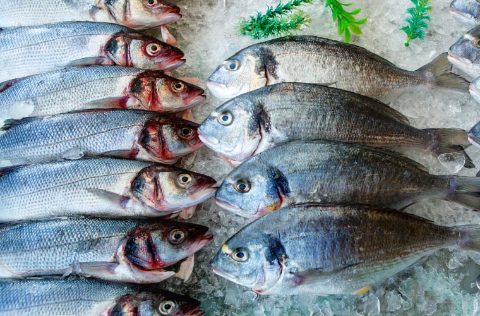
A study on consumer attitudes towards the slaughter method of farmed fish reveals that 83%, an overwhelming percentage of consumers surveyed in Greece, Italy, Spain, and France, support the use of electrical stunning prior to the slaughter of sea bream and sea bass, as they consider it a more humane method.
Additionally, 80% of consumers who purchase these species are willing to pay more, around €0.05 per 200g serving, for humanely slaughtered fish.
From this survey, conducted by Savanta for the Centre for Aquaculture Progress, it is concluded that adopting more humane slaughter practices is not only economically viable but also potentially profitable for aquaculture producers, who could align their processes with consumer expectations.
The study, although it also included surveys in Italy, Spain, and France, focused on Greece, specifically on the country's largest markets for sea bream and sea bass.
Other important aspects highlighted in the study include the growing concern among consumers for animal welfare, with consistent support for the use of more humane slaughter methods across all demographic groups—age, gender, and income. Furthermore, producers have the potential to differentiate their products in an increasingly competitive market by adopting these practices.
It was also noted that the willingness to pay more for humanely slaughtered fish is similar in Greece, Italy, and France, while in Spain, it is slightly lower due to lower price levels in that market.
Despite the clear advantages in both animal welfare and economic benefits, the study highlights that this method of slaughter is still scarcely adopted by sea bream and sea bass farms in Greece.

Related

Latest In-depth
-
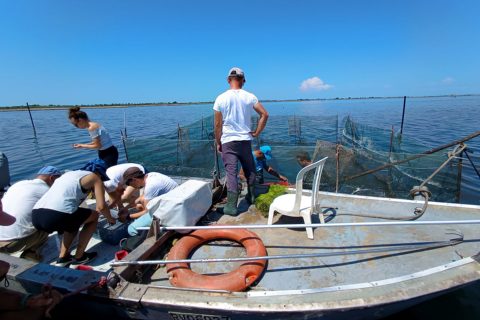
Clams more resistant to heat and Perkinsus: research paves the way for selective breeding
Padua, Italy, 16/10/2026 | University of Padua researchers explain to misPeces the findings presented at Aquaculture Europe 2026 and the steps needed to transfer them to hatcheries. Initial applications could emerge within the next two or three years, although the relationship between resistance, growth and other production traits still need to be assessed