
In marine aquaculture, much of future profitability is decided during the larval stage, when low survival, poor feed transition or irregular development can affect the entire production cycle.
For decades, rotifers have been essential in marine hatcheries because they are easy to culture, reach high densities, allow repeatable protocols and can be enriched before being offered to larvae. That predictability has made stable production possible for for many marine species.
However, their natural nutritional value does not always match larval requirements, especially in demanding species or critical developmental stages. Enrichment improves their profile, but it does not turn them into a prey equivalent to what larvae would find in the natural environment.
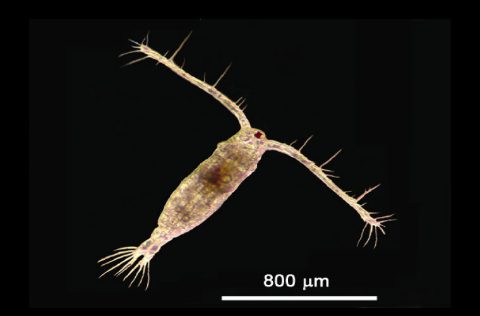
This is where copepods come in. In the wild, many fish larvae feed on copepods at different stages of development. Their size, movement and nutritional composition make them a prey that is closer to the natural diet of mane species than an enriched rotifer.
Their main advantage lies in the combination of lipid profile, especially DHA and EPA, amino acids, enzymes and feeding stimulus. For many larvae, a copepod can be a more complete and biologically “recognisable” prey.
The challenge, however, lies in industrial scale-up. Copepods are more complex to culture, more sensitive to environmental conditions and do not always reach the densities required by a commercial hatchery. In the laboratory, they may show clear advantages; in the hatchery, the issue is turning that advantage into a stable biosecure and profitable protocol.
The key will be to determine which copepod species can be mass-produced and in which cases their use pays off: whether to improve larval survival and hatchery performance in established species such as gilthead seabream and European seabass, or whether their greatest value lies in emerging species such as Senegalese sole, meagre or greater amberjack, where first feeding remains a critical bottleneck.
Copepods still need industrial development
For copepods to become a commercial tool, industrial data are still needed: production cost, achievable density, stability, biosecurity, automation, microalgae requirements, labour and integration into existing hatchery systems.
A hatchery does not buy nutritional value in the abstract; it buys survival, consistency and protocols that work every day. For this reason, the future is unlikely to be “copepods versus rotifers”, but rather a combination of both: rotifers proving industrial stability, and copepods improving biological quality during critical phases.
The key will be to know when the extra cost is offset by higher survival, better growth, fewer deformities, more homogeneous batches or a faster transition to microdiets. Their development does not signal the end of rotifers, but rather a more precise and mature approach to larval rearing.

Related

Latest In-depth
-
Clams more resistant to heat and Perkinsus: research paves the way for selective breeding
Padua, Italy, 16/10/2026 | University of Padua researchers explain to misPeces the findings presented at Aquaculture Europe 2026 and the steps needed to transfer them to hatcheries. Initial applications could emerge within the next two or three years, although the relationship between resistance, growth and other production traits still need to be assessed