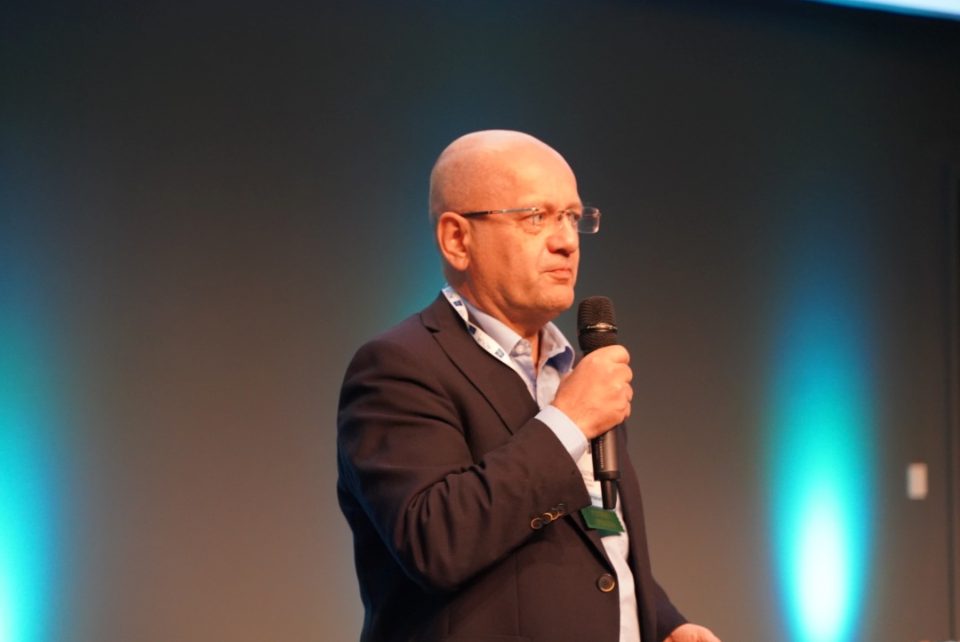
 Dag Sletmo durante su ponencia en AQUA 20 24 | @misPeces
Aquaculture expert Dag Sletmo, from the seafood division at DNB, one of the most important financial institutions in the Nordic regions, was clear during the opening speech of Aqua 2024 in highlighting that, while the drivers of demand are in place, the real challenge lies in increasing supply without increasing the environmental footprint. To achieve this, as the expert pointed out, it will be necessary to implement new technologies, improve farming practices, and establish better regulations.
Sletmo emphasized that, while the drivers of demand are in place, the real challenge lies in increasing supply without increasing the environmental footprint. Factors that benefit the demand for aquaculture include better food supply chains in emerging markets, a better-educated population that opts for healthier diets, and an aging population that consumes more fish. Additionally, there is limited potential in traditional fishing, meaning that growth must primarily come from aquaculture.
All this takes place in a global context where sustainable aquaculture production must increase by at least 75% by 2040 if global warming is to be limited to 1.5°C. And, as the expert highlighted, aquaculture has significant sustainability advantages compared to other forms of animal production.
Fish farming has lower water consumption and generates less CO2 emissions compared to land-based livestock. Additionally, it requires less land area and has a lower feed conversion rate, making it a more efficient and sustainable option to meet global protein demand.
For Sletmo, solving the supply problem involves "pushing the boundaries." "Biological capacity is not an absolute; it is a function of regulation and technology," he stated. However, he acknowledged several issues the industry faces: spatial conflicts, the tragedy of the commons, a lack of sufficient knowledge, and increasing societal expectations.
In the face of these challenges, Sletmo stressed that we should not "build the house on sand." The key, according to him, is to establish a solid regulatory framework based on science with strict enforcement, along with robust and applied research closely linked to the industry. He also highlighted the importance of strong cooperation between regulators, researchers, and the industry to drive innovation and improve farming practices.
As an executive at DNB, the leading bank in Norway and the largest global financial institution in the salmon farming sector, Sletmo brings a unique financial perspective on what is needed to drive this expansion sustainably. While DNB has focused much of its aquaculture activities on salmon, Sletmo also addressed topics related to aquaculture in general.
Before joining DNB, Sletmo worked at Cermaq, a global salmon producer, and at ABG Sundal Collier, a Nordic investment bank. His education includes an MBA from Columbia Business School in New York and studies in economics and philosophy at NHH and UiB in Bergen.
With extensive experience in the industry and finance, Sletmo argues that the key to the future of aquaculture lies not only in innovation and regulation but also in ensuring adequate and sustainable financing that allows the industry to grow without compromising the environment.

Related
Latest In-depth
-
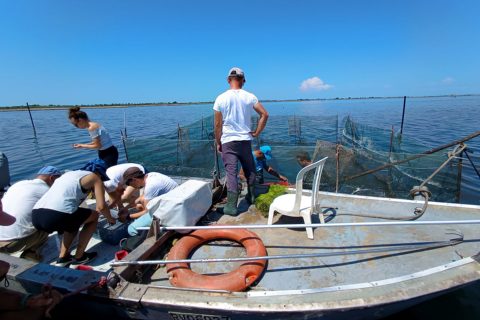
Clams more resistant to heat and Perkinsus: research paves the way for selective breeding
Padua, Italy, 16/10/2026 | University of Padua researchers explain to misPeces the findings presented at Aquaculture Europe 2026 and the steps needed to transfer them to hatcheries. Initial applications could emerge within the next two or three years, although the relationship between resistance, growth and other production traits still need to be assessed