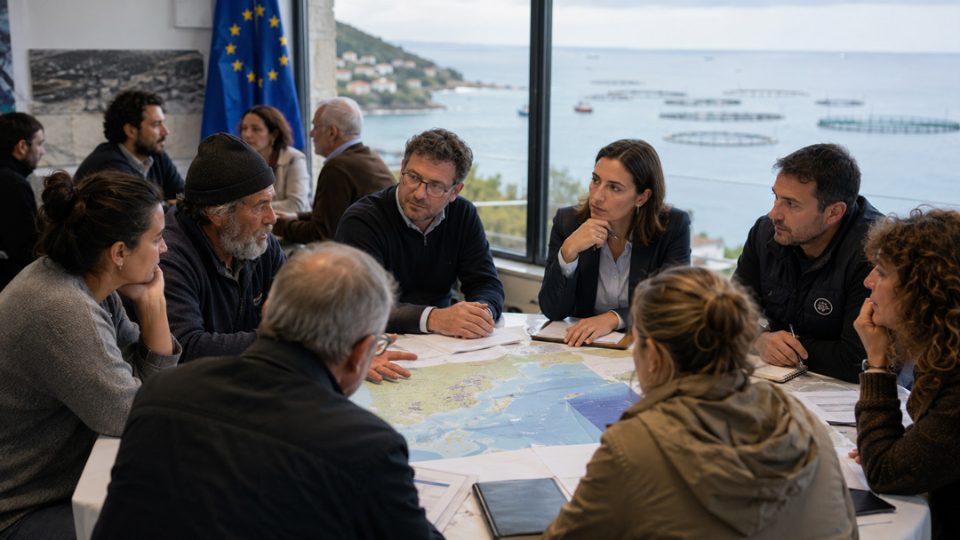
The European Union wants to increase its aquaculture production, but its policies still do not define clearly enough who should participate in planning the sector or how the views of citizens and local communities should be incorporated.
This is the main conclusion of a study published in Marine Policy, which identifies a gap between the participatory ambitions of the European blue economy strategy and their implementation in policies specifically addressing aquaculture.
While broader EU documents recognise public participation as a condition for progressing towards a sustainable blue economy, aquaculture guidelines focus primarily on consulting so-called stakeholders, without defining precisely who belongs to this group.
The research, conducted by Elli Arvola of the University of Eastern Finland, examines seven European Commission documents published since 2021. The document analysis was supplemented by nine interviews with EU officials, non-governmental organisations and one representative of the European aquaculture industry.
The analysis shows that concepts such as citizenship, inclusion and public participation appear much less frequently than the term stakeholders, particularly in document dealing with regulatory and administrative frameworks.
The lack of clarity could have practical consequences. When participation is limited to informing the public or seeking acceptance after a project has already been defined, rather than involving affected communities from the earliest stages, the risk of local opposition increases. This can complicate spatial planning, delay authorisations and weaken the social licence of marine, freshwater and land-based aquaculture facilities.
The study also notes that European policies tend to portray citizens as consumers or recipients of information, rather than as active participant capable of contributing local knowledge.
According to the authors, improving the social acceptance of aquaculture depends not only on communicating its benefits more effectively, but also on clarifying who can participate, at what stage and with what real capacity to influence decisions.
In response, the study proposes developing a specific European guide or toolkit for public participation in aquaculture planning.
Such an instrument could help public authorities and project developers identify affected groups, organise consultations at an early stage and reduce conflicts before project reach the final authorisation phase.
The findings should be interpreted with caution. The research examines the vision of participation contained in European policies, but does not assess how these policies are applied in individual Member States or regions.
In addition, the interviews included only one direct representative of the aquaculture industry and no citizens.
The next stage of research should examine how these policy orientations are translated into specific cases, particularly in Mediterranean regions where aquaculture competes with tourism, fisheries, environmental conservation and other uses of coastal space.
Scientific reference
Arvola, E. (2026). Visions of public participation in EU aquaculture policy. Marine Policy, 193, 107226. DOI: 10.1016/j.marpol.2026.107226.

Related
Latest In-depth
-
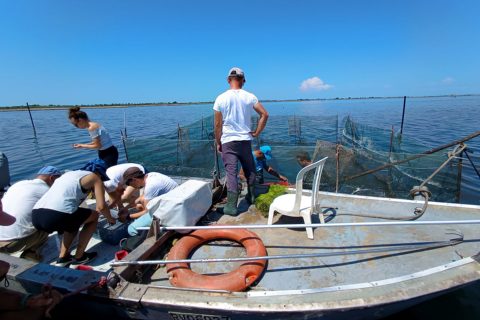
Clams more resistant to heat and Perkinsus: research paves the way for selective breeding
Padua, Italy, 16/10/2026 | University of Padua researchers explain to misPeces the findings presented at Aquaculture Europe 2026 and the steps needed to transfer them to hatcheries. Initial applications could emerge within the next two or three years, although the relationship between resistance, growth and other production traits still need to be assessed