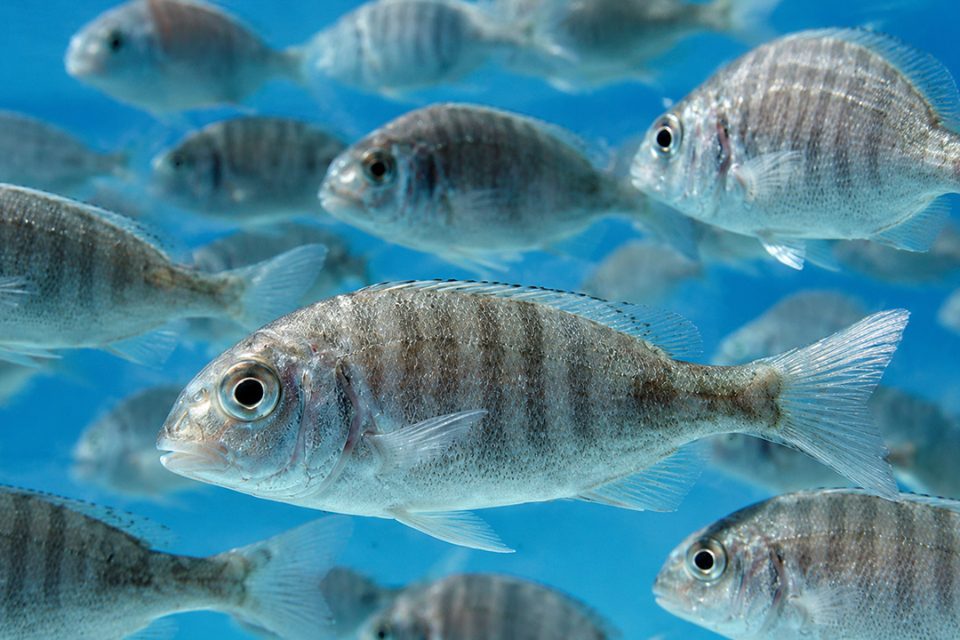
Organic aquaculture may use non-organic juveniles when available data show that the supply of organic juveniles does not meet operators’ needs in terms of either quantity or quality. The provisional agreement reached by the Council and the European Parliament retains the requirement for fish to be managed organically for at least the final two-thirds of the production cycle.
The derogation already exists under current rules, but with limits: it allows the use of up to 50% non-organic juveniles for certain species, and authorisations may not exceed two years or be renewed. The agreed text removes these explicit limits and sets 31 December 2036 as the derogation’s end date.
| Aspect | Current rule | Provisional agreement |
|---|---|---|
| Use of non-organic juveniles | Up to 50% for certain species; authorisation limited to two years and not renewable | Authorisation possible if data show that organic supply does not meet needs in quantity or quality |
| Organic management | At least the final two-thirds of the production cycle | Requirement remains unchanged |
| End of derogation | At the end of the authorised period | 31 December 2036, subject to possible review by the Commission |
The Commission must report on the availability of organic juveniles by 31 December 2031. From then on, it may bring forward or extend the end date through delegated acts, based on the information available.
The agreement also changes the withdrawal period following the use of allopathic veterinary medicines. The new rule sets it at twice the period specified in the medicine’s product information or, where the medicine is used outside the terms of its authorisation, twice the applicable period under Article 115 of the EU Veterinary Medicinal Products Regulation.
This removes the aquaculture-specific reference to a minimum of 48 hours where no other period was specified. The agreement does not introduce an exception for fish feed.
The agreed flexibility on the use of non-organic protein feed applies to poultry and pigs; for aquaculture, the change concerns juveniles only. The agreement, reached on 20 October, is provisional.
It must still be endorsed by the Council and the Parliament and formally adopted before it can enter into force.
Organic production remains marginal
The scope of the derogation is best understood in the context of a small sector with marginal production volumes. Greece is the largest producer of organic sea bass and sea bream. In 2025, it produced 270 tonnes — just 0.2% of the total output of the two species — with only one company still producing organically.
Other producing countries include Italy, Croatia and France.
Limited availability of organic juveniles, the cost of certified feed and higher overall production costs all contribute to the low output.
A study by OrganicTargets4EU also identifies administrative complexity and the difficulty of passing the cost premium on to buyers as barriers.
Allowing greater access to juveniles may ease a supply constraint, but it will not, on its own, resolve the sector’s market challenges.

Related
Latest In-depth
-
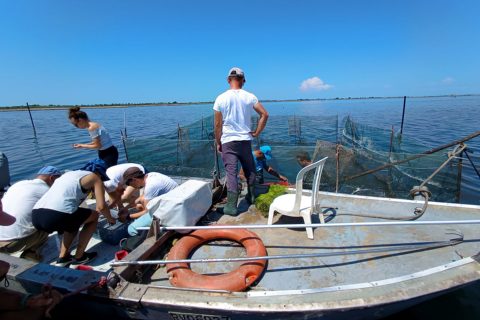
Clams more resistant to heat and Perkinsus: research paves the way for selective breeding
Padua, Italy, 16/10/2026 | University of Padua researchers explain to misPeces the findings presented at Aquaculture Europe 2026 and the steps needed to transfer them to hatcheries. Initial applications could emerge within the next two or three years, although the relationship between resistance, growth and other production traits still need to be assessed