
The bioactive compounds in algae are showing great potential as fortifiers in fish feed, in anticipation of a future where heatwaves will become increasingly frequent and intense.
A study led by Isa Marmelo from CIIMAR, alongside researchers from NOVA University of Lisbon and the Portuguese Institute of the Sea and Atmosphere (IPMA), focused on the white seabream (Diplodus sargus), a commercially significant species typical of the Mediterranean Sea.
The study aimed to evaluate the impact of marine heatwaves on the physiology and well-being of juvenile white seabream and to analyze the immune and antioxidant responses of fish fed with feeds fortified with the macroalga Asparagopsis taxiforms under these stressful conditions.
The innovative concept on the use of natural ingredients with immunostimulant properties to enhance the resilience of farmed fish.
For the experimental design, several fortified feeds were created for 28-gram juvenile white seabream. The feeds were fortified with three doses – 1.5%, 3%, and 6% - to determine the most effective dose. The study also analyzed the underlying mechanisms involved in enhancing resilience by examining changes in various immune and antioxidant biomarkers at the individual, cellular, biochemical, and molecular levels.
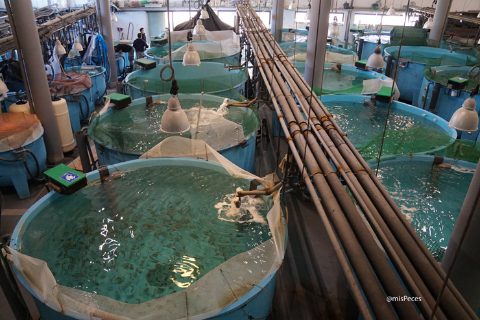
The trials were conducted at the Aquaculture Research Station of the Portuguese Institute of the Sea and Atmosphere (EPPO-IPMA) in Olhão, Portugal. The heatwave simulation was done by gradually raising the water temperature by 4 degrees over 8 days. The evaluated temperature was the maintained for 15 days before gradually decreasing it again over 8 days.
The impact of the simulated heatwaves was evident in the fish’s physiological state, decreasing specific growth rate and hematocrit, and increasing nuclear abnormalities in erythrocytes and lipid peroxidation.
However, these adverse effects were mitigated by biofortifying the feeds with Asparagopsis taxiformis.
The researchers found that a dose of 1.5% was the most effective in minimizing the effects of these heatwaves, significantly improving immune responses and modulating antioxidant responses.
As noted, the inclusion of this macroalga showed significant potential to be a valuable key ingredient in the aquaculture industry, beneficially modulating the immunity and resilience of fish under both optimal and adverse conditions.
These results could be extrapolated to other fish species, highlighting the importance of developing sustainable aquafeeds in the face of extreme climatic events such as marine heatwaves.
Given that the study focuses on a 30-day biofortification period and a 61-day recovery period, future research should explore the long-term effects of this strategy. Additionally, it would be relevant to investigate how this biofortification affects life stages of the fish, such as adults and reproductive stages.
Reference:
Isa Marmelo, Cátia Lourenço-Marques, Iris A.L. Silva, Florbela Soares, Pedro Pousão-Ferreira, Leonardo Mata, António Marques, Mário Sousa Diniz, Ana Luísa Maulvault. Eco-innovative aquafeeds biofortified with Asparagopsis taxiformis to improve the resilience of farmed white seabream (Diplodus sargus) to marine heatwave events. Heliyon, Volume 10, Issue 15, 2024, e35135, ISSN 2405-8440

Related
Latest In-depth
-
Clams more resistant to heat and Perkinsus: research paves the way for selective breeding
Padua, Italy, 16/10/2026 | University of Padua researchers explain to misPeces the findings presented at Aquaculture Europe 2026 and the steps needed to transfer them to hatcheries. Initial applications could emerge within the next two or three years, although the relationship between resistance, growth and other production traits still need to be assessed