
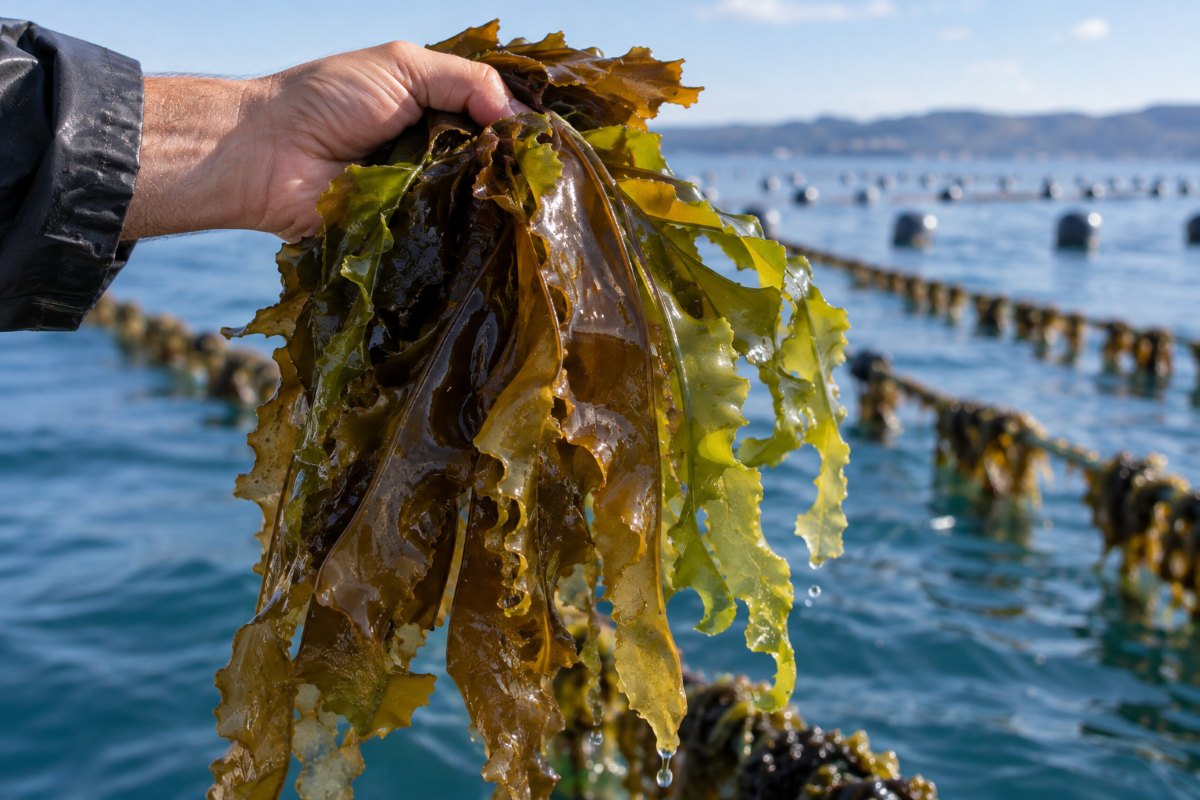
Europe has a significant biomass resource, but its supply still depends overwhelmingly on wild harvesting. More than 95% of European production currently comes from wild biomass, while farming accounts for only a small proportion, according to mapping carried out under the European MARMADE project to identify resources capable of supplying new value chains.
The analysis identifies Norway as Europe’s leading producer, accounting for more than 50% of total volumes, followed by France, Ireland and Iceland. Brown seaweeds dominate production, particularly species of the genera Laminaria and Ascophyllum, alongside Saccharina latissima. Red seaweeds include Palmaria palmata, Gelidium and Gracilaria, while green seaweed production is mainly concentrated on Codium and Ulva species.
The mapping, developed by the Andalusian Aquaculture Innovation Centre (CTAQUA) together with BIOCHICA and ALGAE SCOPE, goes beyond determining how much biomass is produced. Its availability for industrial value chains also depends on where it is located, how it is obtained and where processing takes place.
The study shows for example, that production and processing can be geographically separated, as occurs with flows of red seaweed from Morocco supplying European facilities producing agar.
MARMADE intends to use this information to select raw material sources for the next stages of the project. Its aims is to develop circular value chains capable of transforming European marine biomass into higher-value ingredients, including vitamins, peptides, oligosaccharides, prebiotics and emulsifiers for human food and animal feed.
The map also incorporates biomass outside conventional production chains. This includes the invasive species Rugulopteryx okamurae, whose rapid expansion around the Iberian Peninsula has resulted in substantial biomass accumulations.
The analysis identifies the Strait of Gibraltar as its main hotspot, opening the possibility of exploring its use as a raw material. However, the presence of large quantities of biomass does not in itself mean that it can be collected and valorised economically.
Aquaculture provides another potential source through green algae associated with aquaculture facilities. Within MARMADE, CTAQUA is working on obtaining this biomass and evaluating new functional aquafeed formulation using compounds extracted from it.
The challenge for these emerging value chains will therefore be to demonstrate not only that the biomass can be transformed, but also that a sufficiently concentrated, reliable and scalable supply exists to take these developments towards industrial application.

Related

Latest In-depth
-
Ocean Aquaculture begins work on Spain hatchery designed to produce eight million greater amberjack juveniles a year
Almería, Spain, 9 September 2026 | The first phase will involve an investment of around €15 million and is expected to begin production in January 2028, supplying both the group’s future offshore farms and other Mediterranean producers