
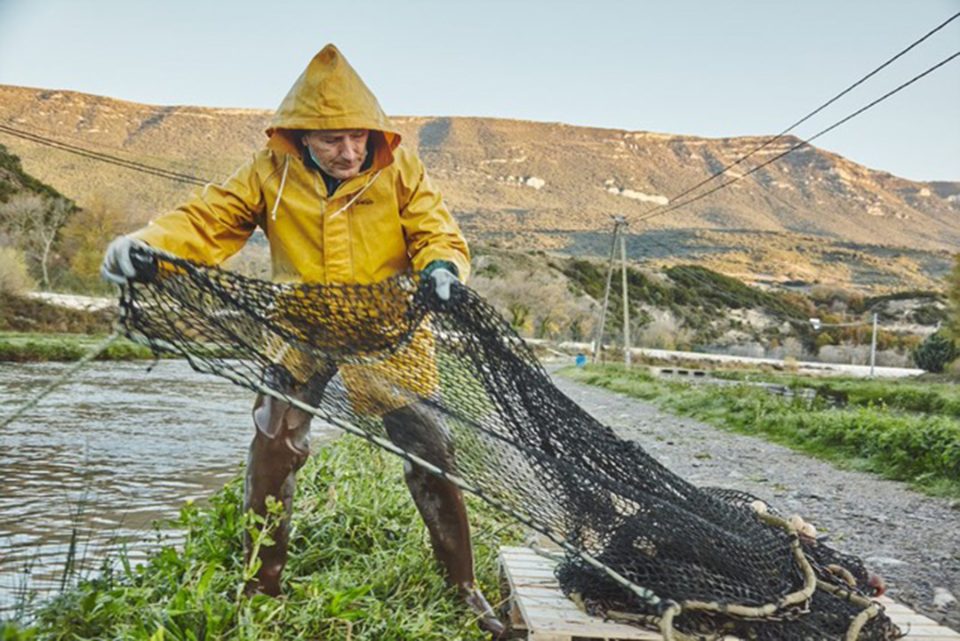
The first STECF social report raises a question that goes beyond employment statistics: can European aquaculture grow if the EU still lacks a clear picture of its labour base, skills needs and generational renewal?
For years, the European aquaculture debate has been framed mainly around production. The sector has been asked to grow, reduce dependence on imports, support food security and contribute to the blue economy, while meeting increasingly demanding environmental, licensing and welfare requirements.
What has been less visible is the labour question behind that ambition.
Who is going to work in European aquaculture? What skills will farms need? Can the sector attract younger workers? How much of its employment depends on small family-run businesses? And what role do women play in companies and ownership?
The new Annual Social Report prepared by STECF and the Joint Research Centre does not yet answer all these questions. But it makes one thing clear: if Europe wants more aquaculture, social data will have to become part of the growth strategy.
Aquaculture is already a relevant employer in the European seafood economy. Sectoral estimates used in the report place employment at around 67,962 people, representing 23% of jobs across fisheries, aquaculture and seafood processing. Yet the social data call under the Data Collection Framework reports 53,001 people employed in EU aquaculture in 2023.
That difference is not just a technical detail. It reveals a structural problem for policy making.
“Europe can describe aquaculture production, value and trade flows with reasonable precision, but still struggles to measure the people behind the sector with the same level of robustness.”
Labour is not a secondary variable
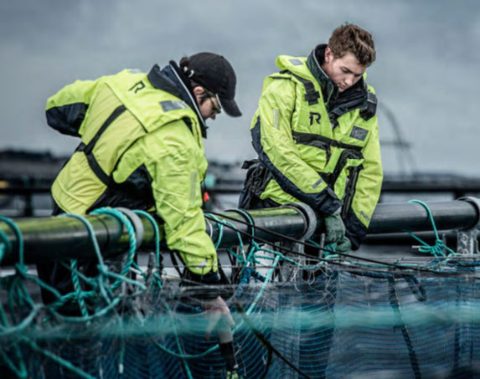
In marine finfish farming, growth requires technicians, site managers, fish health specialists, feeding and monitoring staff, maintenance teams and people able to work with increasingly automated systems. In hatcheries, the skills profile becomes even more specialised.
In shellfish farming and traditional freshwater aquaculture, the challenge is different but no less important. These activities are often more labour-intensive and closely linked to local communities, family businesses and regional identity. Their social value may be greater than what is captured by production volume alone.
This is especially relevant in the Mediterranean and Atlantic arc, where Spain, France, Greece and Italy produce 64% of EU aquaculture and will face key challenges in jobs, skills and investment.
“In Mediterranean aquaculture, labour is directly tied to competitiveness. Producers already face price pressure, imports, regulation and rising costs. Without skilled workers, they will find it harder to manage feed efficiency, health monitoring, welfare standards, digital systems and environmental compliance.”
Women represent 24% of aquaculture employment, but remain under-represented in ownership and decision-making. The same applies to younger workers: with 57% of employees aged between 40 and 64, generational replacement is becoming a strategic issue.
EU policy has focused on production and performance, but growth also depends on people.
“A sector can have sites, licences and investment plans, and still face a bottleneck if it lacks trained workers, attractive conditions, clear career paths and business succession.”
The STECF report opens this debate, but remains descriptive. Future work should better analyse employment structures, skills, age groups, ownership and differences between production systems.
The key question is no longer only how much aquaculture Europe wants, but who will build, operate and sustain it.

Related

Latest In-depth
-
Clams more resistant to heat and Perkinsus: research paves the way for selective breeding
Padua, Italy, 16/10/2026 | University of Padua researchers explain to misPeces the findings presented at Aquaculture Europe 2026 and the steps needed to transfer them to hatcheries. Initial applications could emerge within the next two or three years, although the relationship between resistance, growth and other production traits still need to be assessed