
The European Court of Auditors (ECA) has warned that the European Union lacks a common methodology for determining whether human activities are compatible with the conservation objectives of marine projected areas. The report cites aquaculture among the uses that need to be taken into account in maritime spatial planning.
The audit says that designating an area as a marine protected area does not, in itself, guarantee that conservation measures or restrictions on activities will be put in place. Nor is there an EU-wide harmonised classification of protection categories and permitted activities, meaning that levels of protection can vary between Member States and even between Natura 2000 sites.
This has implications for marine aquaculture planning. The EU’s Maritime Spatial Planning Directive requires Member States to integrate and balance activities such as fisheries, aquaculture, shipping and energy generation with conservation objectives. Without common criteria for assessing compatibility, the framework leaves national authorities room to determine which measures apply.
The audit did not examine specific aquaculture projects or assess how protected areas affect farms their permits or their location. It therefore does not conclude that aquaculture should be restricted in these areas or quantify the impact of conservation measures on the sector.
The ECA also considers it unlikely that the EU will meet its marine protection targets for 2030. Around 14% of its marine waters are designated as protected areas, compared with a target of 30%; less than 1% are designated for strict protection, well short of the 10% target.
Among its recommendations, the Court calls on the European Commission to work with Member States to ensure that protected area designations lead to enforceable protection measures and more standardised information on their objectives and management. The deadline for implementing these recommendations in the end of 2029.

Related

Latest In-depth
-
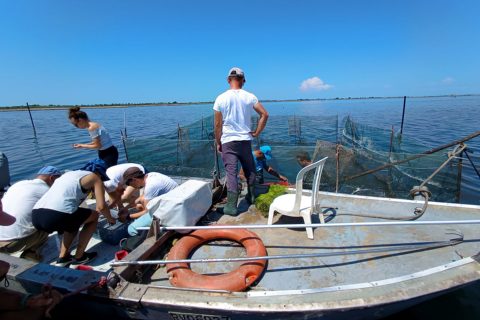
Clams more resistant to heat and Perkinsus: research paves the way for selective breeding
Padua, Italy, 16/10/2026 | University of Padua researchers explain to misPeces the findings presented at Aquaculture Europe 2026 and the steps needed to transfer them to hatcheries. Initial applications could emerge within the next two or three years, although the relationship between resistance, growth and other production traits still need to be assessed