European aquaculture does not need to wait for new technologies to emerge before it can begin substantially reducing its greenhouse gas emissions. The tools already exist and their adoption is technically feasible, but bringing them into commercial farms requires economic, regulatory and market barriers to be overcome.
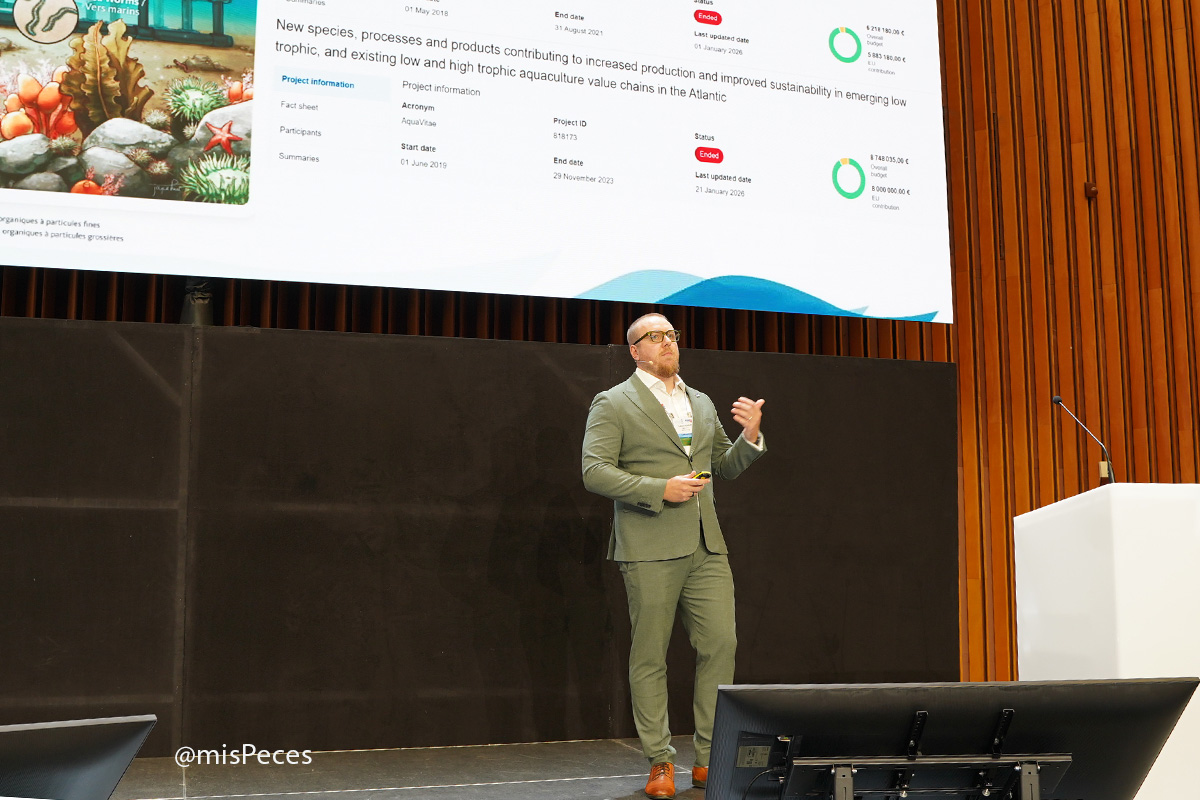
This was one of the main messages from Callum Howard, Senior Consultant at MRAG, during his presentation at Aquaculture Europe 2026 (AE2026) in Ljubljana, Slovenia, where he addressed the costs and potential pathways towards climate-neutral European aquaculture.
In his conclusions, Howard was explicit: “the tools do exist”, and there is no need to wait for an entirely new technological solution to emerge.
Howard’s analysis considers emissions associated with different production systems and across the wider value chain, from feed manufacturing and transport to energy use, logistics and farm operations.
One of the critical areas is feed, which accounts for more than half of estimated emissions, making the decarbonisation of feed ingredients and raw materials one of the main levers for action. This is accompanied by the need to improve energy efficiency and accelerate the transition towards lower-carbon energy sources.
The proposed solutions range from renewable energy, digitalisation and improved energy efficiency to lower-carbon feed ingredients, selective breeding for efficiency and resilience, and integrated multi-trophic aquaculture (IMTA).
Howard also highlighted two conditions extending beyond technology: stimulating market development and consumer awareness of low-carbon aquaculture products, and establishing a strong regulatory framework with streamlined licensing so that solutions can move from demonstration to commercial implementation.
The difficulty is that technical feasibility does not necessarily mean economic viability. The scenarios analysed put marginal abatement costs at between €46 and €243 per tonne of CO₂ equivalent in 2026–2030, depending on the production system and measures implemented, and between €69 and €228 per tonne by 2050.
Technologies and operational improvements could deliver substantial reductions, but would not on their own eliminate all residual emissions, particularly if European aquaculture production expands.
The analysis therefore shifts part of the climate debate from which technologies are still missing to how existing solutions can actually be deployed on farms. For Howard, the transition requires simultaneous action on energy, feed, efficiency, genetics, digitalisation, markets and regulation.
Producers will also be on the front line of climate change impacts, while the rest of the value chain will need to provide the tools and knowledge required to support that transformation.
The question for European aquaculture is therefore no longer simply how far it can technically reduce its emissions, but how these solutions can be financed, regulated and translated into commercially viable production.
The pathway towards Net Zero will depend both on decisions taken at farm level and on the decarbonisation of upstream sectors — particularly energy and feed — as well as an economic and regulatory environment capable of turning available technologies into solutions deployed at commercial scale.

Related

Latest In-depth
-
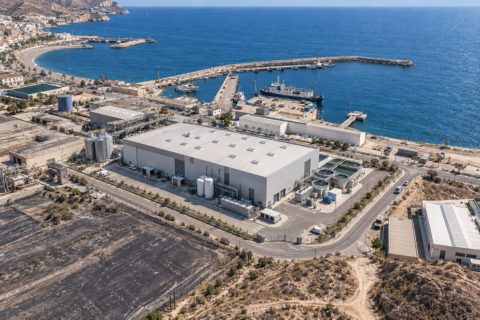
Ocean Aquaculture begins work on Spain hatchery designed to produce eight million greater amberjack juveniles a year
Almería, Spain, 9 September 2026 | The first phase will involve an investment of around €15 million and is expected to begin production in January 2028, supplying both the group’s future offshore farms and other Mediterranean producers