
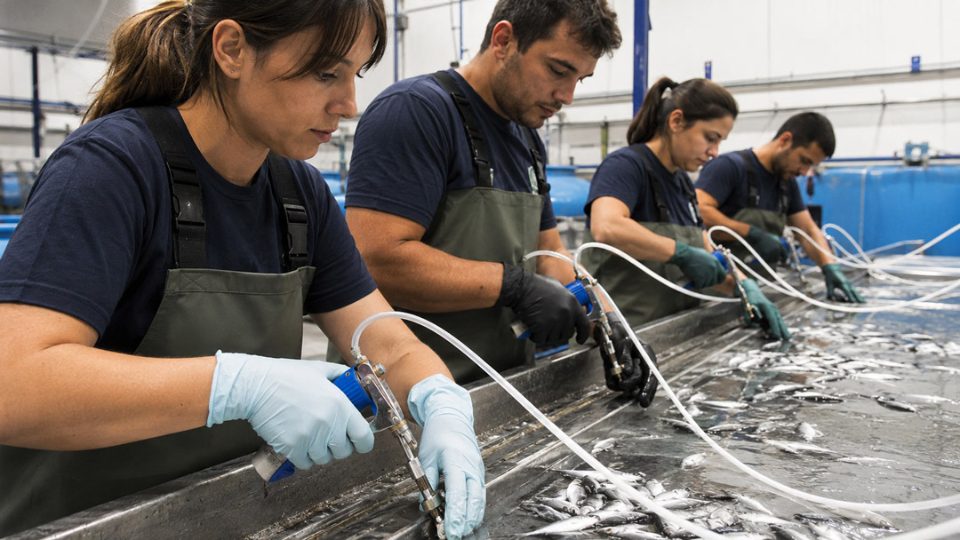
The limited availability of commercial vaccines leaves significant gaps in disease prevention in European aquaculture. This problem is particularly relevant for species produced in small volumes, new pathogen variants and outbreaks concentrated in specific areas, as developing a commercial vaccine may be economically unviable or take too long.
In these situations, autogenous vaccines, produced from organisms isolated form a particular farm or epidemiological setting, can adapt prevention to the existing risk.
However, their manufacture and use are subject to national rules and interpretations that do not always reflect how aquaculture farms operate or how diseases spread through water, fish movements and links between production sites.
For this reason, the EU Aquaculture Advisory Council (AAC) is calling on the European Commission to establish a specific framework for autogenous vaccines.
Its recommendations seek to enable faster and more flexible responses by adapting manufacturing times, production volumes and methods to the health and operational needs of aquaculture.
One of the main proposals is to allow these vaccines to be prescribed and used across regions or epidemiological areas rather than restricting them to an individual farm.
This possibility could also extend across Member States where a clear epidemiological risk can be demonstrated. In aquaculture, such a connection may result from a shared river basin, marine currents, water circulation or animal movements, rather than merely the distance between production sites.
The AAC also identifies a contradiction in disease prevention: when an autogenous vaccine successfully controls a disease for several years, the absence of recent outbreaks may lead authorities to consider the isolate used in its manufacture too old.
A farm may then encounter difficulties in continuing its vaccination programme aid, in practice, be forced to wait for another outbreak. Obstacles can also arise when an authorised commercial vaccine exists but has not been updated to protect against the variants circulating in a particular area.
These limitations are especially relevant for localised diseases or species with small markets, for which developing a commercial vaccine may be economically unviable or too slow.
Alongside preventing mortalities and reducing health-related costs, combining autogenous vaccines with biosecurity measures can reduce the need for antibiotics and help tackle antimicrobial resistance.
Among its recommendations, the AAC calls for the authorisation of multivalent autogenous vaccines or formulations containing adjuvants when justified by diagnosis, the adaptation of manufacturing processes to the particular production requirements of aquaculture, and improved coordination between national authorities.
This is not yet a legislative reform initiated by the European Commission, but an AAC recommendation to move from a system centred on individuals farms towards one based on risk and actual epidemiological connections.

Related

Latest In-depth
-
Clams more resistant to heat and Perkinsus: research paves the way for selective breeding
Padua, Italy, 16/10/2026 | University of Padua researchers explain to misPeces the findings presented at Aquaculture Europe 2026 and the steps needed to transfer them to hatcheries. Initial applications could emerge within the next two or three years, although the relationship between resistance, growth and other production traits still need to be assessed