
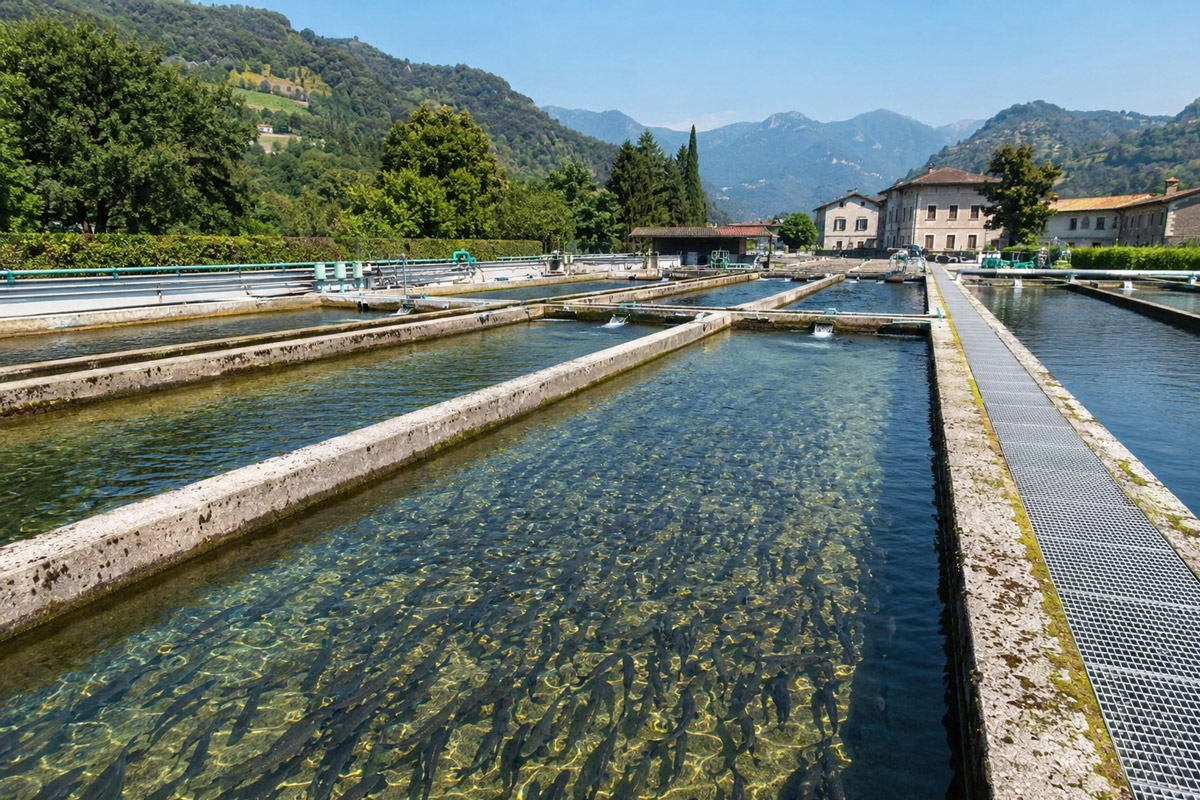
The summer of 2026 is subjecting Italian aquaculture to a test that goes beyond isolated episodes of high temperatures. Two very different production systems – river trout farming and marine bivalve mollusc farming – are simultaneously recording production losses, stunted growth, and mortalities associated with warming waters and a reduction in available oxygen.
In trout, the rise in temperature reduces available oxygen and has forced a decrease in feeding to preserve the welfare and health of the fish, slowing down growth. The impact estimated by the Italian Fish Farmers Association (API) is a 15% reduction in production, based on the evolution of sales and feed consumption.
The problem does not end when temperatures drop. For trout, weeks of reduced feeding mean less growth and delays in reaching commercial size, whilst the reduction in biomass affects subsequent planning, with effects that could last until Christmas.
In bivalve farming, the impact has been much more immediate. Campania reported mussel mortalities coinciding with sea temperatures that sector organisations estimated to be around 3.5ºC above seasonal values.
However, the largest-scale episode is occurring between Goro and Porto Garibaldi, in Emilia-Romagna, where Confcooperative estimates that over 90% of mussels have been lost-between 20,000 and 25,000 tonnes – with direct damages exceeding €50 million. High temperatures and episodes of anoxia appear to be the main associated factors.
For mussels, part of the losses in Emilia-Romagna corresponds to seed intended for the next cycle, which could reduce production capacity in 2027. The extreme summer is thus carrying its effects from current production to subsequent seasons.
An impact affecting already weakened sectors
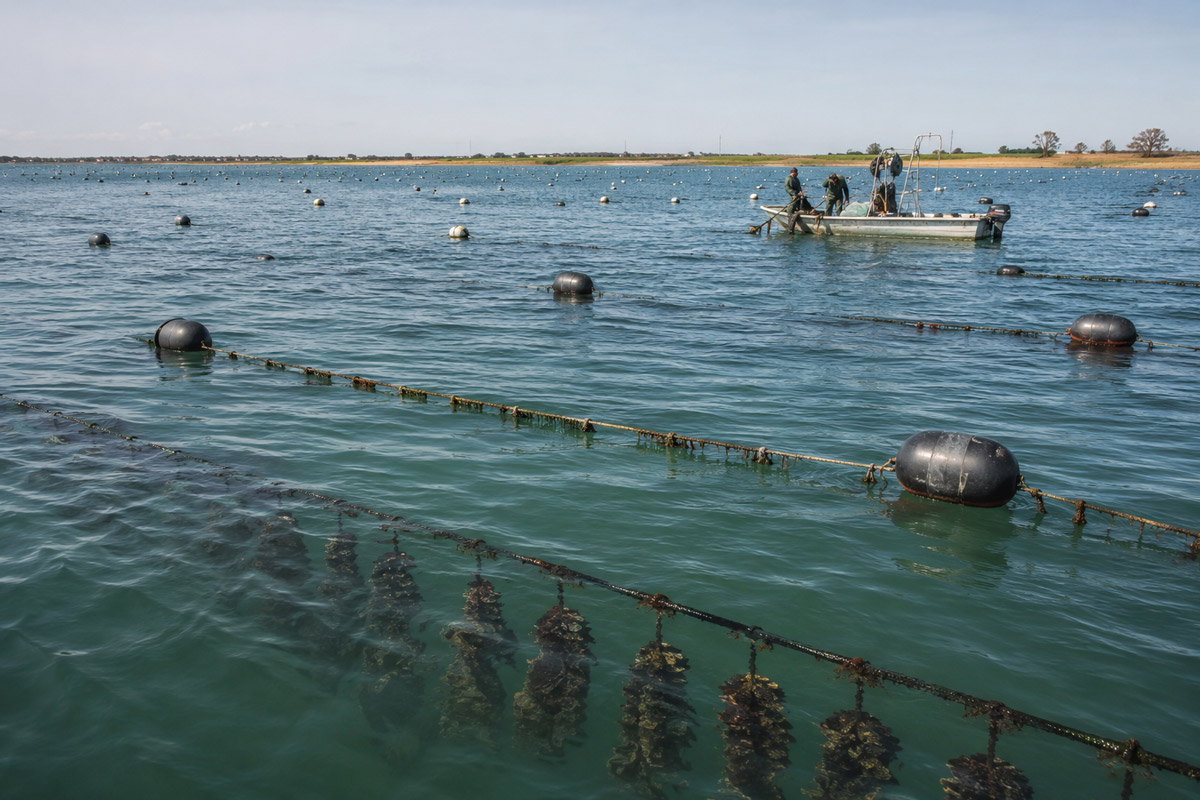
The latest available data indicates that Italian rainbow trout production had fallen by around 11% in 2024, from approximately 34,000 to 30,000 tonnes. In mussels, the drop was even steeper: -23%, from roughly 57,000 to 44,000 tonnes. The 2026 climate shock therefore affects production chains that had already lost volume prior to this summer.
The question raised by 2026 for Italian aquaculture should also serve as a learning experience for other Mediterranean countries regarding the extent to which farming systems can sustain biomass, growth, and production cycles when environmental conditions remain outside their usual ranges for weeks on end.

Related

Latest In-depth
-
Clams more resistant to heat and Perkinsus: research paves the way for selective breeding
Padua, Italy, 16/10/2026 | University of Padua researchers explain to misPeces the findings presented at Aquaculture Europe 2026 and the steps needed to transfer them to hatcheries. Initial applications could emerge within the next two or three years, although the relationship between resistance, growth and other production traits still need to be assessed