
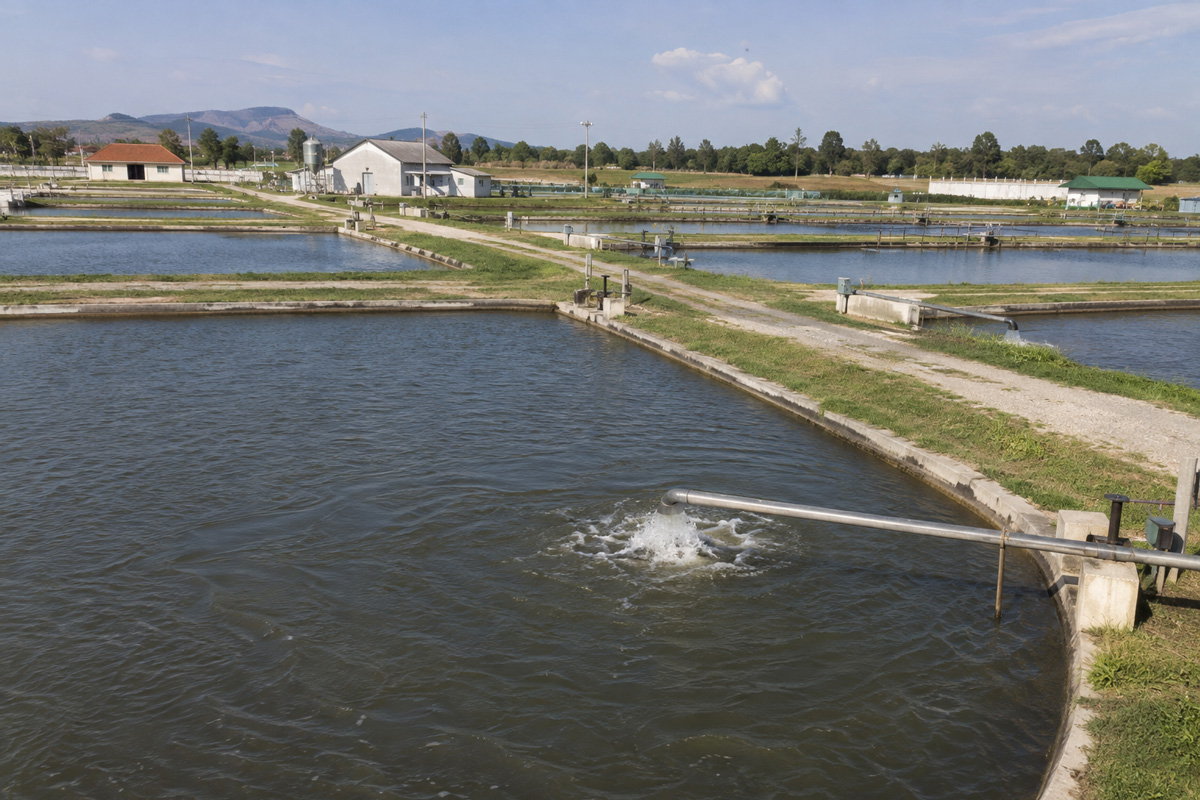
The Federation of European Aquaculture Producers (FEAP) has called for traditional pond farms to be recognised and compensated for the ecosystem services they provide. The organisation argues that their contribution extends beyond fish production, as they store and regulate water conserve biodiversity, retain nutrients and mitigate effects of droughts and floods.
According to FEAP, these extensive and semi-intensive systems, mainly devoted to carp polyculture, maintain around 250,000 hectares of semi-natural wetlands across the European Union. They are particularly concentrated in Central and Eastern Europe, where for centuries they have shaped landscapes comprising open water, reed beds and wet meadows.
The organisation is calling for these farms to be integrated into European and national policies covering drought resilience, wetland restoration, river basin management and climate change adaptation.
It also proposes recognising them as traditional farming areas of high ecological value and as nature-based solutions for water and nutrient retention.
As a direct economic consequence of this approach, FEAP is calling for financial support and compensation mechanisms to maintain ecosystem services whose costs are currently borne, at least in part, by producers.
The measures that should receive support include pond maintenance and the removal of accumulated sediment for subsequent agricultural use.
FEAP warns that abandoning production does not guarantee the recovery of more natural or biodiverse ecosystems, as the conservation of these areas depends on active management and the economic viability of the farms.
These landscapes can support more than 400 bird species, as well as amphibians, reptiles and invertebrates.
At the same time, FEAP member associations produced a total of 54,793 tonnes of carp species in 2023, including 51,784 tonnes of common carp.
If the proposal moves forward, it could set a precedent for other forms of extensive European aquaculture, including traditional coastal ponds, productive salt pans and Mediterranean coastal wetlands.
However, common methodologies are still needed to determine which services each farm provides, calculate their economic value and establish the level of public compensation that would be appropriate in each case.

Related

Latest In-depth
-
Ocean Aquaculture begins work on Spain hatchery designed to produce eight million greater amberjack juveniles a year
Almería, Spain, 9 September 2026 | The first phase will involve an investment of around €15 million and is expected to begin production in January 2028, supplying both the group’s future offshore farms and other Mediterranean producers