
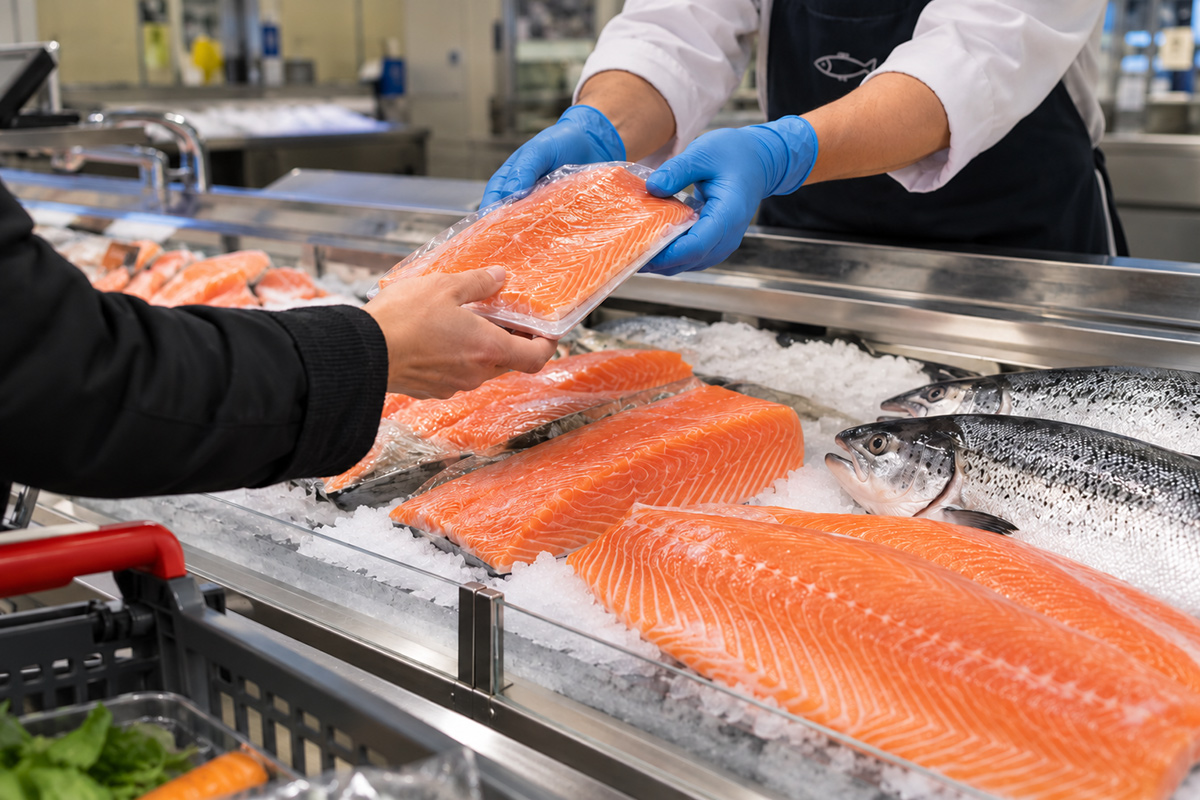
Norwegian producers of Atlantic salmon and rainbow trout recorded a pre-tax profit of NOK 7.7 billion (around €658 million) in 2025, down 46.1% from NOK 14.3 billion (around €1.221 billion) the previous year, according to the Norwegian Directorate of Fisheries’ profitability survey.
The decline was concentrated among grow-out companies, whose pre-tax profit fell from NOK 11.5 billion (around €981 million) to NOK 5.2 billion (around €444 million). Their average operating margin dropped from 10.9% to 5.3%. Juvenile fish producers also recorded a decline, although their average margin remained at 20.4%.
The Directorate of Fisheries links the fall in profitability, among other factors, to lower selling prices. The average price per kilo sold of salmon and rainbow trout combined fell 9.8% to NOK 61.49. The decline was steeper for salmon, at 10.2%, compared with 3.2% for rainbow trout.
More salmon on the market
Higher supply helps explain the downward pressure on prices. In 2025, Norway exported 1.41 million tonnes of salmon, 13% more than the previous year. The Norwegian Seafood Council attributed the increase to favourable production conditions, which boosted growth and raised the average size of the fish.
The higher volume coincided with a significant fall in the average salmon price, although the total value of salmon exports rose by 2% to NOK 124.7 billion. The Directorate of Fisheries also recorded an increase in the quantities sold of salmon and rainbow trout, alongside lower prices between 2024 and 2025.
Lower prices did not translate into an equivalent fall in the result per kilo because costs also declined: average production costs per kilo fell 4.4% to NOK 61.79. However, the survey calculated an average result of –NOK 0.30 per kilo in 2025, compared with a positive NOK 3.50 the previous year. Feed remained the largest cost item, accounting for 40.8% of the total.
The survey covers companies producing salmon and rainbow trout and represents 87.6% of active grow-out licences and 87% of juvenile production licences. Its figures are averages and do not mean that every company recorded losses. In addition, where some companies separated production from operations into different businesses, the operating companies were excluded from the analysis.

Related

Latest In-depth
-
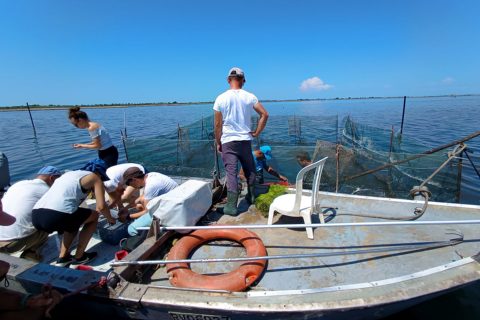
Clams more resistant to heat and Perkinsus: research paves the way for selective breeding
Padua, Italy, 16/10/2026 | University of Padua researchers explain to misPeces the findings presented at Aquaculture Europe 2026 and the steps needed to transfer them to hatcheries. Initial applications could emerge within the next two or three years, although the relationship between resistance, growth and other production traits still need to be assessed