
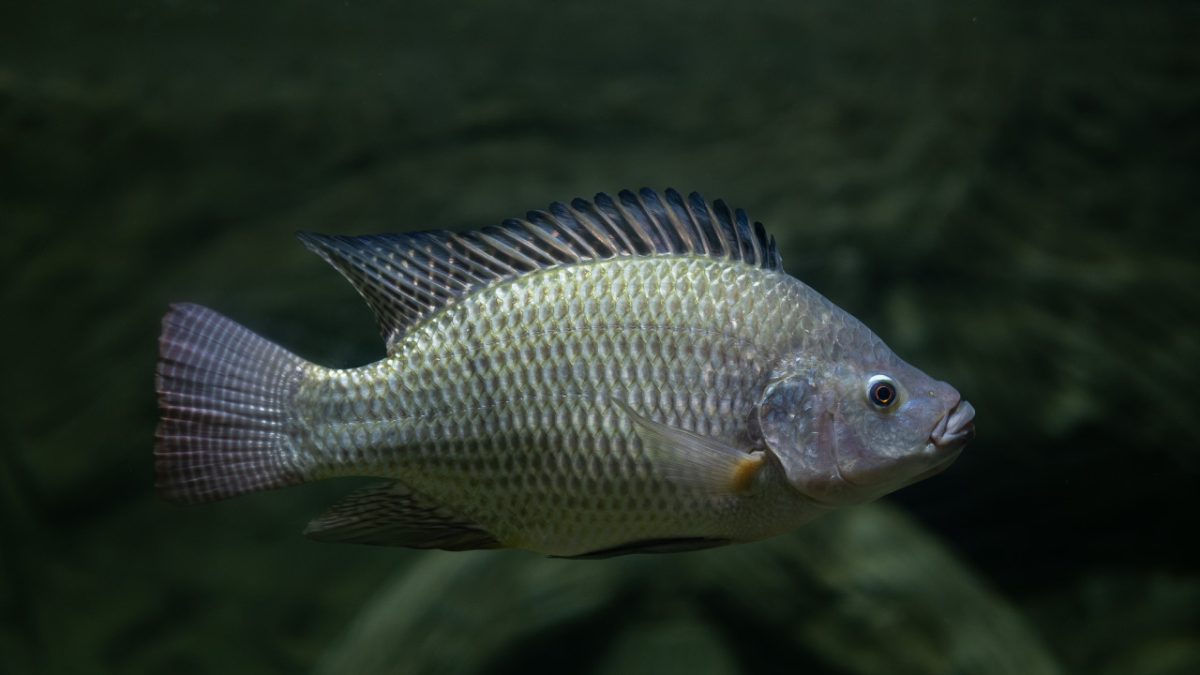
Probiotics can improve growth and feed efficiency in Nile tilapia, but their effects do not depend solely on the microorganism incorporated into the feed. A systematic review and meta-analysis published in Reviews in Aquaculture concludes that the farming system itself is an important source of variability and that more controlled environments tend to produce more consistent production responses. The study analysed 141 studies on probiotics, prebiotics and synbiotics, 96 of which could be included in the quantitative analysis.
Among the three strategies evaluated, probiotics have the broadest and most reproducible evidence base. They accounted for around 75% of the studies reviewed and showed favourable effects on both weight gain and feed conversion ratio. Of the 104 comparisons available for growth, 89 showed a favourable response, while 78 of 104 comparisons were favourable for feed conversion. Bacillus was by far the most extensively studied probiotic genus, followed by Lactobacillus, Pediococcus, Saccharomyces and Enterococcus.
The finding of greatest production relevance emerges when farming systems are compared. The authors observed that closed systems with greater environmental control, particularly RAS and biofloc, tended to show more consistent growth responses than systems exposed to greater environmental variability. In RAS, for example, probiotics were among the most stable combinations for improving feed efficiency. Flow-through systems, by contrast, showed considerable variation between studies, while ponds and cages produced intermediate or context-dependent responses.
One possible explanation is that probiotic efficacy depends on how long microorganisms remain active and are able to interact with the fish, its microbiota and the rearing water. High water-exchange rates and variations in oxygen, ammonia, nitrite or organic load can alter that exposure. As a result, the same nominal dose does not necessarily produce the same biological response. The authors suggest that efficacy should be understood more in terms of effective microbial exposure than simply the quantity of microorganisms incorporated into the feed.
Synbiotics — combinations of probiotics and prebiotics — produced the largest average effects on weight gain, but also showed the greatest variability between studies. Their performance appears to depend particularly on compatibility between the probiotic strain, the prebiotic substrate, the resident microbiota and farming-system conditions. Prebiotics produced more moderate average effects, although the available evidence is much more limited and heterogeneous, making it premature to interpret this as evidence of intrinsically lower efficacy.
The main implication for farms is that functional additives should not be selected as universal solutions. Formulation, strain viability, dose, treatment duration and production system need to be assessed together. Moreover, although probiotics were associated with improvements in markers such as lysozyme, superoxide dismutase and catalase, the meta-analysis did not identify a system-related pattern in immune responses as clear as that observed for growth. The authors therefore call for trials under commercial production conditions that integrate performance, microbiota, immunity and costs to determine when the use of these additives actually translates into a production advantage.
Reference: Cardenas Laverde, D., Ruiz Pardo, R.Y. & Villamil Diaz, L.M. (2026). “Aquaculture Systems Affect the Impact of Probiotics, Prebiotics, and Synbiotics on Growth and Immunity of Oreochromis niloticus: A Systematic Review and Meta-Analysis”. Reviews in Aquaculture, 18, e70199. DOI: 10.1111/raq.70199.

Related

Latest In-depth
-
Clams more resistant to heat and Perkinsus: research paves the way for selective breeding
Padua, Italy, 16/10/2026 | University of Padua researchers explain to misPeces the findings presented at Aquaculture Europe 2026 and the steps needed to transfer them to hatcheries. Initial applications could emerge within the next two or three years, although the relationship between resistance, growth and other production traits still need to be assessed