

It is widely known and accepted that feed composition is the main factor determining the concentration of long-chain omega-3 fatty acids, particularly EPA and DHA, in farmed fish fillets. However, their final concentrations also depend on other nutritional, environmental and management factors that can influence the retention of these nutrients.
A systematic review of 1,685 scientific papers and 3,780 experimental records, published in Reviews in Aquaculture and conducted by researchers from Australia's University of Melbourne and Deakin University, brings together the available evidence on the factors influencing fatty acid composition in fish.
The most represented species include rainbow trout, Atlantic salmon, Nile tilapia, gilthead sea bream and European sea bass.
The review confirms that dietary EPA and DHA supply is the main factor determining their concentrations in fish muscle, although other nutritional and farming conditions, including salinity, temperature and husbandry practices, also play a role.
Replacing fish oil changes the nutritional profile
One of the most consistent findings is that replacing fish oil with vegetable oils tends to reduce muscle EPA and DHA concentrations, particularly when the dietary supply of these fatty acids decreases.
The situation differs when algae-derived ingredients are used. Many algal products contain high concentrations of DHA but relatively low levels of EPA.
Consequently, using them as fish oil replacements may increase muscle DHA without necessarily maintaining EPA levels.
By contrast, when these ingredients are used as supplements without displacing other sources of marine fatty acids, the results show a more favourable trend for DHA and less downward pressure on EPA.
This distinction is relevant to feed formulation, as alternative ingredients cannot be considered equivalent solely on the basis of their origin or total omega-3 content. Their specific composition must be understood, along with how it is reflected in the fish produced.
The review also identifies positive associations between muscle EPA and DHA concentrations and certain functional feed additives, including antioxidants, prebiotics, amino acids and vitamins.
The researchers suggest that these compounds may improve digestibility, limit lipid oxidation or modify lipid metabolism, although responses are not consistent across species.
Salinity shows a more consistent relationship than temperature

Among the environmental factors examined, salinity shows a more consistent positive association with muscle EPA and DHA concentrations than temperature.
In several studies, increased salinity was associated with higher concentrations of these fatty acids, possibly due to metabolic changes linked to osmoregulation. However, the results depend on the species and the salinity range investigated.
Temperature produced more variable responses. Under certain conditions, lower temperatures favoured higher EPA and DHA concentrations, while in other studies the effects were limited or influenced by feeding and growth.
The authors caution that the available evidence on environmental factors is considerably more limited than that relating to nutrition.
These findings therefore do not support general recommendations on temperature or salinity to improve omega-3 content.
More omega-3 in muscle does not always mean better production performance
One of the most relevant findings from a production perspective concerns feed restriction and stocking density.
Both conditions were generally associated with higher muscle EPA and DHA concentrations, but also with reduced growth. Feed restriction was additionally associated with lower lipid deposition.
The researchers explain that, under conditions of limited energy availability or stress, fish may preferentially use other fatty acids as an energy source while proportionally conserving more EPA and DHA for structural functions.
Consequently, a higher omega-3 concentration in muscle does not necessarily mean that the fish has accumulated a greater absolute amount of these nutrients.
This distinction is important when interpreting nutrition and husbandry trials.
A strategy that increases relative EPA and DHA concentrations but reduces growth or lipid content does not necessarily represent an overall improvement in production performance or nutritional value per unit of output.
Gilthead sea bream and European sea bass do not always respond like salmon
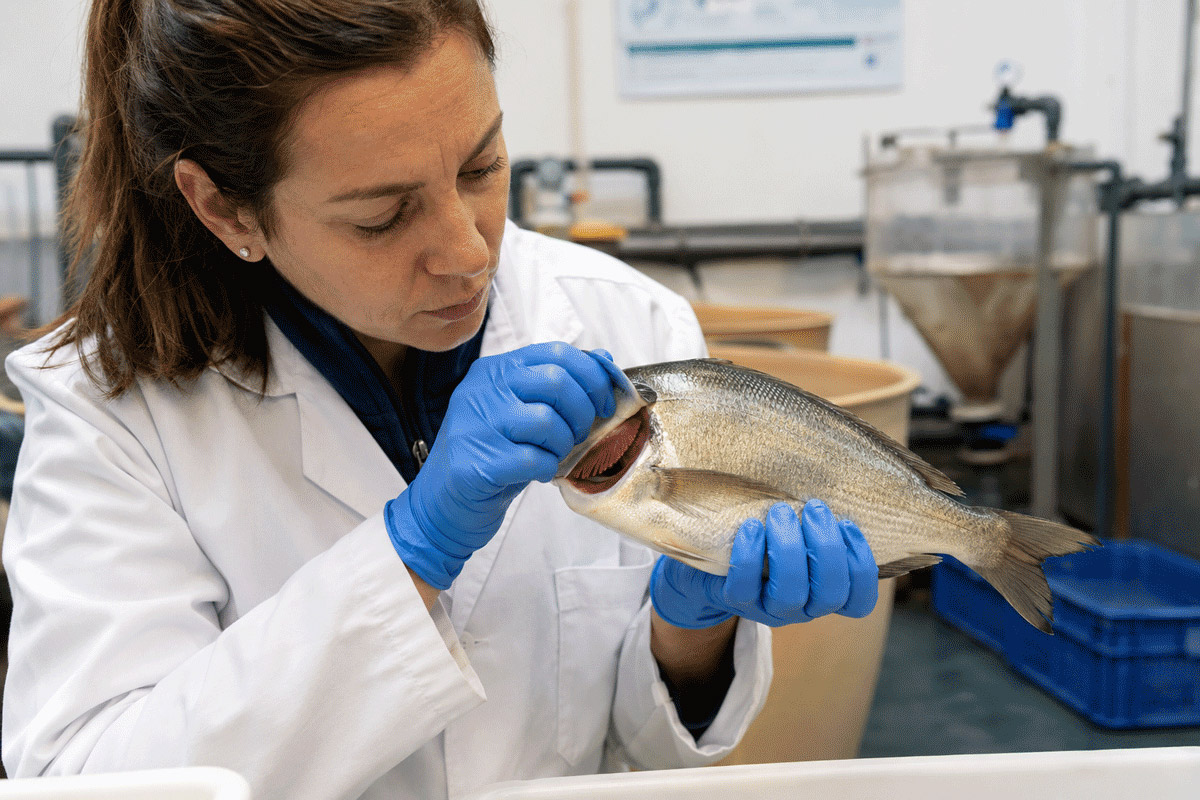
The review also highlights differences between species that may have implications for feed formulation in Mediterranean aquaculture.
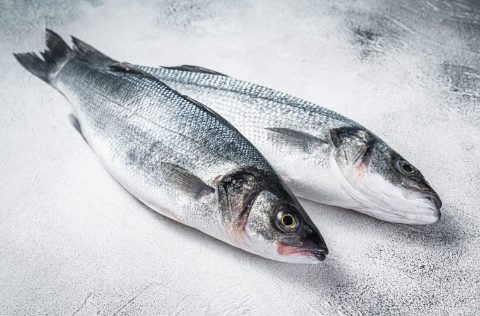
For example, replacing fishmeal with plant proteins showed a generally positive association with muscle EPA and DHA concentrations in Atlantic salmon, whereas the associations were negative in gilthead sea bream (Sparus aurata) and European sea bass (Dicentrarchus labrax).
The findings also indicate that replacing fish oil with algal ingredients can produce different responses depending on the species and the fatty acid considered.
These differences reinforce the need to validate feed formulations in the species for which they are intended, rather than automatically transferring findings from salmonids to Mediterranean marine fish.
A review linking nutrition, environment and production performance
Unlike studies focusing exclusively on ingredient replacement or individual species, this review integrates nutritional, environmental, biological and management factors.
In addition to examining EPA and DHA concentrations, the authors investigated their relationship with growth, lipid content and selected indicators of fatty acid metabolism, including desaturation, elongation and beta-oxidation.
The findings suggest that when the dietary supply of long-chain omega-3 fatty acids decreases, fish may activate compensatory mechanisms associated with their biosynthesis. Conversely, a higher dietary supply is associated with reduced activity in these pathways.
However, this metabolic compensation does not guarantee that fish can maintain the same muscle EPA and DHA concentrations when their dietary supply is reduced.
The researchers also highlight a methodological limitation: the review primarily identifies the direction of observed effects but does not quantify the magnitude of the changes attributable to each factor. Its findings therefore cannot establish how much EPA or DHA may be gained or lost through a particular formulation, or which intervention offers the greatest economic efficiency.
Maintaining nutritional value with new feed formulations
The progressive replacement of marine ingredients with alternative sources is expanding the options available for aquafeed formulation. However, it also creates a need to assess how these changes affect the nutritional composition of fish intended for consumers.
The review shows that maintaining growth or improving feed efficiency does not, in itself, guarantee that EPA and DHA concentrations will be preserved in the final product. Equally, increasing muscle concentrations of these fatty acids does not necessarily mean greater absolute deposition or better production performance.
For feed manufacturers and aquaculture producers, the challenge is to assess fish performance, ingredient utilisation efficiency and the amount of EPA and DHA ultimately delivered by the marketed product together.
Against a backdrop of limited marine ingredient availability and increasing diversification of raw materials, this combined assessment will become increasingly important in reconciling production efficiency with the preservation of the nutritional value of farmed fish.
Scientific reference: Qian, Y., Pinho, S. M., Zhao, M., Francis, D. and Turchini, G. M. (2026). What Shapes Fish n-3 Long-Chain Polyunsaturated Fatty Acids Composition? A Systematic Review of Influencing Factors. Reviews in Aquaculture, volume 19 (2027), e70226. https://doi.org/10.1111/raq.70226

Related

Latest In-depth
-

Enrico Bachis: Fishmeal and fish oil production to recover in 2027
Sardinia, 16 November 2026 | global fishmeal production will reach 4.44 million tonnes in 2026, the lowest figure in IFFO’s historical series and fish oil production is expected to be around 1.15 million tonnes, its lowest level since 2016