
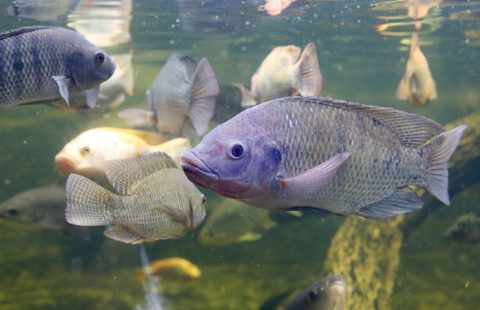
The valorisation of vegetable by-products as an aquaculture feed ingredient is once again at the centre of the debate on more circular aquafeeds. A study published in Scientific Reports has evaluated the inclusion of fermented vegetable by-products in diets for Nile tilapia (Oreochromis niloticus) and concludes that these materials can be incorporated under experimental conditions without compromising fish growth or survival.
The study, carried out by researchers from Egypt’s National Institute of Oceanography and Fisheries, points to an area of interest for feed manufacturers, nutritionists and researchers working on alternative ingredients.
The key question is not only whether vegetable by-products can be used, but how fermentation can modify its nutritional value, reduce limitations associated with antinutritional factors and support a better digestive response.
The key is not only to make use of vegetable waste, but to determine whether fermentation can turn it into digestible, stable and useful ingredients for aquafeed formulation.
The by-products used in the trial came mainly from pea peels or pods, with smaller proportions of potato, carrot, beetroot, okra and courgette. After drying and grinding, the material was subjected to solid-state fermentation with Saccharomyces cervisiae and Bacillus subtilis, two microorganisms selected for their ability to produce enzymes that degrade complex compounds and may improve their availability.
According to the study, fermentation increased the crude protein content of the vegetable by-products from around 18% to 26.21%, with a moderate reduction in lipids, ash and fibre.
This is relevant because may vegetable by-products have economic and environmental interest, but their direct incorporation into aquafeed can be limited by fibre, palatability, variability in composition and the presence of antinutritional factors.
The trial was carried out over 60 days with juvenile tilapia fed four experimental diets containing fermented vegetable material at inclusion levels of 0, 6.6, 13.3 and 20%.
From a production and growth perspective, no significant improvement was found, but performance was not penalised either. Weight gain and specific growth rate did not differ significantly between groups. Survival was 100% in all treatments, and somatic indices did not show clear signs of stress or organ alteration.
This finding is nevertheless important. In alternative ingredients, especially when they come from by-products, maintaining performance can be as relevant as achieving a statistically significant improvement. The commercial question is not only whether fish grow more, but whether a cheaper, local or circular raw material can enter the formula without impairing FCR, survival, intestinal health or final product quality.
The study did observe some relevant changes in feeding and metabolism. Feed intake was higher in the intermediate and high treatments, while feed utilisation efficiency, measured through FCR and PER, did not vary significantly.
The authors also recorded an increase in the concentration of several essential amino acids in fish fed diets containing fermented waste, particularly leucine, threonine, lysine, methionine, arginine and histidine.
The most interesting signals appear not so much in growth as in the intestine: normal architecture, improved villi and higher goblet cell density point to possible digestive functionality.
The most interesting signals appears in the intestine. Histological analysis showed normal intestinal architecture in all groups, with no apparent lesions, and improvements in parameters such as villus length and width, muscular layer thickness and goblet cell density, especially in the intermediate treatment.
According to the authors, these improvements suggest a larger absorptive surface area, better intestinal integrity and a possible reinforcement of mucosal function.
This means that fermentation does not only act as a preservation or waste valorisation process, but as a technology capable of turning a vegetable by-product into an ingredient with potential digestive capacity.
Changes were also observed in serum biomarkers and digestive enzymes, which may be interpreted as a possible immunomodulatory signal, although they should be trated with caution.
Commercial caution remains necessary: data are still lacking on digestibility, microbiome, the cost of the fermentation process and validation under real production conditions.
For future work, the researchers recommend measuring extact digestibility coefficients and analysing the intestinal microbiome. Longer trials, tests with raw materials form different sources, economic assessment of the fermentation process and validation under real production conditions would also be needed.

Related

Latest In-depth
-
Clams more resistant to heat and Perkinsus: research paves the way for selective breeding
Padua, Italy, 16/10/2026 | University of Padua researchers explain to misPeces the findings presented at Aquaculture Europe 2026 and the steps needed to transfer them to hatcheries. Initial applications could emerge within the next two or three years, although the relationship between resistance, growth and other production traits still need to be assessed