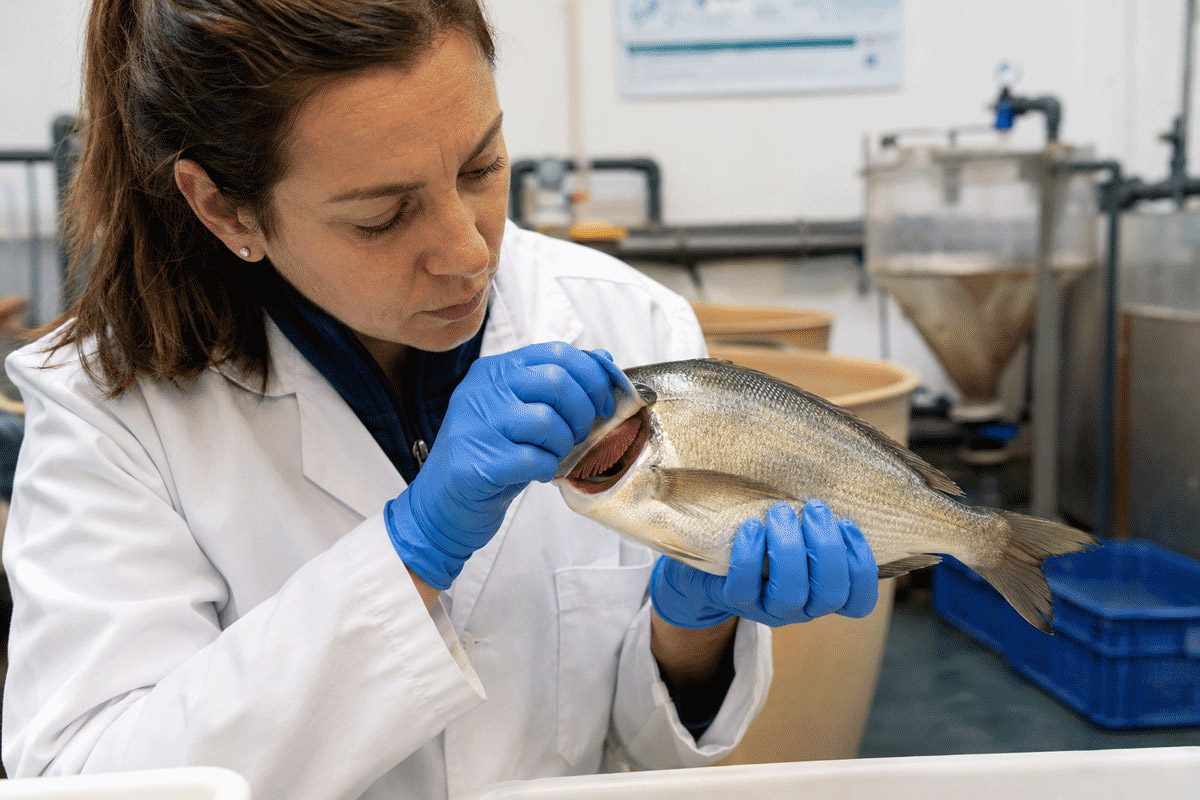
The search for new treatments against Sparicotyle chrysophrii, one of the most damaging parasites affecting Mediterranean gilthead seabream production, has identified several compounds with much greater activity than praziquantel.
The findings open up new pharmacological avenues against a disease that causes anaemia, gill damage, loss of body condition and increased susceptibility to other infections.
Researchers from the Instituto Torre de la Sal of the Spanish National Research Council (IATS-CSIC), together with scientists from the Universitat Politècnica de València, in Spain, and the University of Bologna, in Italy, evaluated 17 compounds against adult specimens of the parasite.
The screening included six known antiparasitic drugs and 11 new chemical entities selected using computational tools based on their similarity to reference molecules.
The strongest results were obtained with three salicylanilide derivates: ME1.62, niclosamine and closantel. After two hours of exposure, ME1.62 had the lowest median lethal concentration, at 0.09 micromolar, followed by niclosamine at 0.12 micromolar and closantel at 2.3 micromolar. By comparison, praziquantel recorded a median lethal concentration of 1,426 micromolar.
Niclosamide therefore showed parasiticidal activity more than 11,000 times greater than that of praziquantel during short-term exposure. The results also revealed that the potency of some compounds increased over time. However, the differences observed confirm that the efficacy recorded for a drug against other groups of parasitic flatworms cannot be directly extrapolated to Sparicotyle.
The study does not yet demonstrate that these molecules can be used as treatments on gilthead seabream farms. The tests were conducted in vitro by exposing the parasite directly to the compounds.
Trials involving infected fish will therefore be required to determine their toxicity, safety margins, bioavailability, potential residues and suitable routes of administration.
Researchers must also establish whether the compounds can be delivered through feed or applied as bath treatments at safe and operationally viable concentrations.
The advance is relevant because control of Sparicotylosis still relies heavily on formalin or hydrogen peroxide bath treatments, which requires complex logistics and only temporarily reduce parasite burdens. Although an authorised praziquantel formulation is now available for administration through medicated feed, additional candidates could broaden the available treatment options and reduce the risks associated with dependence on a single pharmacological strategy.

Related

Latest In-depth
-
Clams more resistant to heat and Perkinsus: research paves the way for selective breeding
Padua, Italy, 16/10/2026 | University of Padua researchers explain to misPeces the findings presented at Aquaculture Europe 2026 and the steps needed to transfer them to hatcheries. Initial applications could emerge within the next two or three years, although the relationship between resistance, growth and other production traits still need to be assessed