
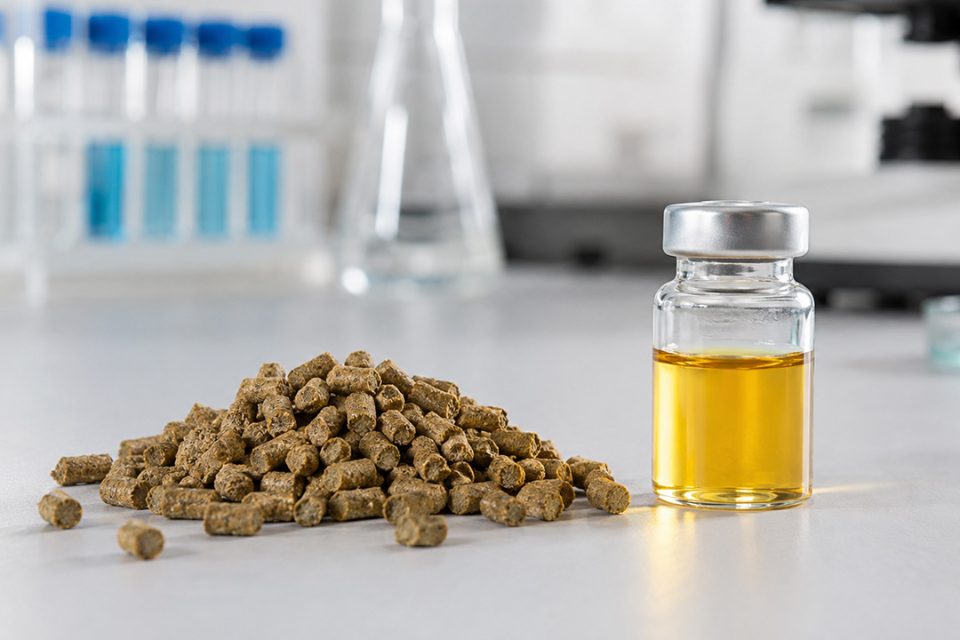
Fish oil shortages and price volatility are strengthening demand for alternative sources of EPA and DHA in aquafeeds. In Norway, microalgal oil is estimated to supply 34% of the EPA and DHA used in salmon production in 2026, up from 29% in 2025, according to a presentation by Christian Meinich of Chr. Holtermann at IFFO’s annual conference in Buenos Aires last week.
The figure refers to the share of EPA and DHA sourced from algae, not the proportion of algal oil in the aquafeed. Meinich’s also cites an industry estimate that the potential contribution of products currently available could reach 40%; it does not present this as a forecast or a ceiling set by Meinich.
Meinich’s presentation does not specify or identified which products or production methods are included in its average for algal oil.
At misPeces, we interpret his reference as most likely relating to heterotrophic microalgal oils produced in fermenters, a route we consider to have more competitive production costs for EPA- and DHA-rich oils than autotrophic cultivation in photobioreactors.
The growing use of this alternative comes amid a tight supply Outlook. Meinich estimates global fish oil production at 791,000 tonnes in 2026, compared with consumption of 930,000 tonnes – a projected shortfall of 139,000 tonnes. The figures cover pelagic and salmon oils but exclude pangasius oil.
Meinich’s scenario assumes no catches in Peru during the second half of 2026. It projects production recovering to 950,000 tonnes in 2027, against estimated consumption of 931,000 tonnes.
During his presentation, Meinich described fish oil’s unit value as highly volatile, while the value for algal oil has remained steadier. Meinich said feed demand for algae was shifting from a price-led approach towards a greater focus on supply security.
Meinich stressed that the figures and projections reflect his own análisis, base don sources active in the trade, and do not represent IFFO’s position.
Anne Hvistendahl, DNB Bank’s Global Head of Seafood, putt he fish oil price at US$ 10,500 per tonne at the time of the conference, compared with a previous peak of US$ 6,700 in 2024. She attributed the figures to Holtermann and Cargill.
Hvistendahl also warned that salmon farmers face aquafeed costs they cannot always pass on to their customers.

Related

Latest In-depth
-
Clams more resistant to heat and Perkinsus: research paves the way for selective breeding
Padua, Italy, 16/10/2026 | University of Padua researchers explain to misPeces the findings presented at Aquaculture Europe 2026 and the steps needed to transfer them to hatcheries. Initial applications could emerge within the next two or three years, although the relationship between resistance, growth and other production traits still need to be assessed