
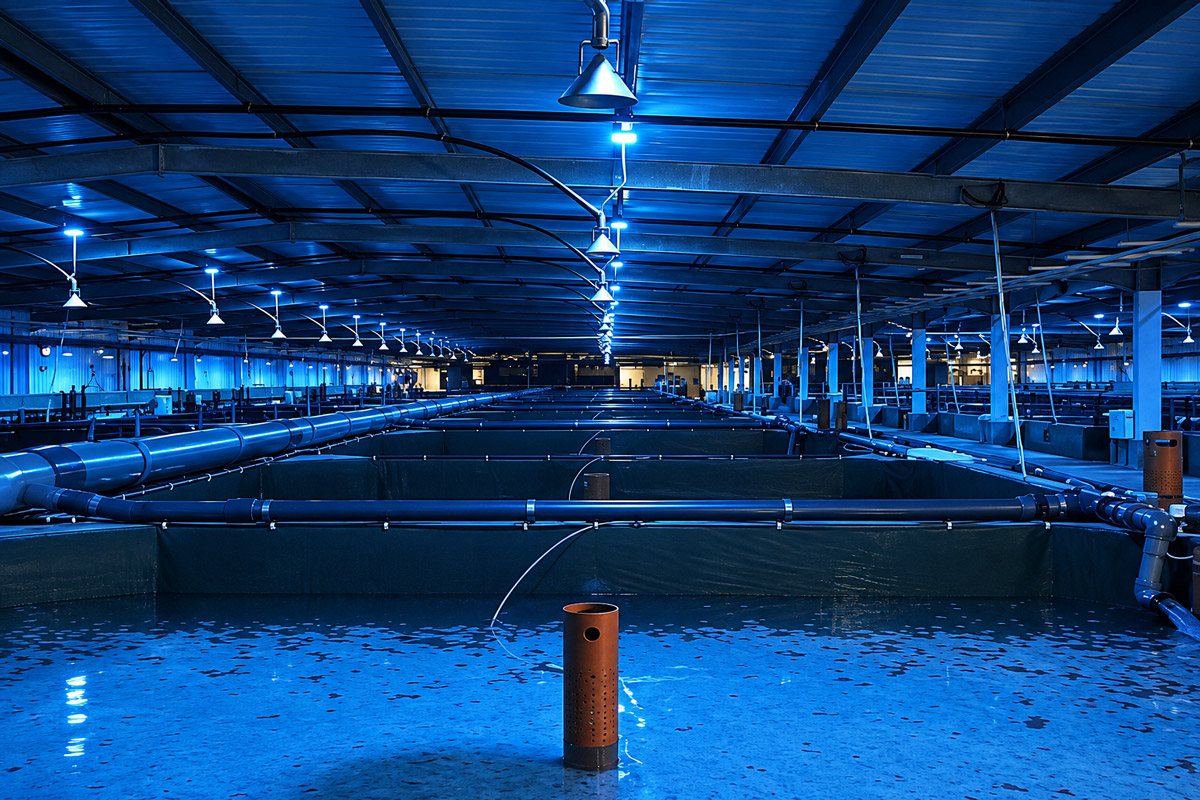
Flatlantic is nearing completion of work to reactivate the second seawater intake at its Praia de Mira facility, restoring a significant part of the production capacity lost 12 years ago. The project includes the installation of two new pipelines to ensure a continuous supply and renewal of the seawater used in the tanks.
The work will bring four grow-out units in the facility’s Phase II area back into operation, providing approximately 70,000 square metres of usable production space. According to the official project documentation, this will add around 2,764 tonnes per year to Flatlantic’s turbot production capacity.
This section of the farm has been unable to operate at full capacity since 2014, when one of the two large intake structures supplying the facility became detached. Restoring the infrastructure will enable Flatlantic to make use again of grow-out facilities that had already been built but lacked the seawater flow required for full operation.
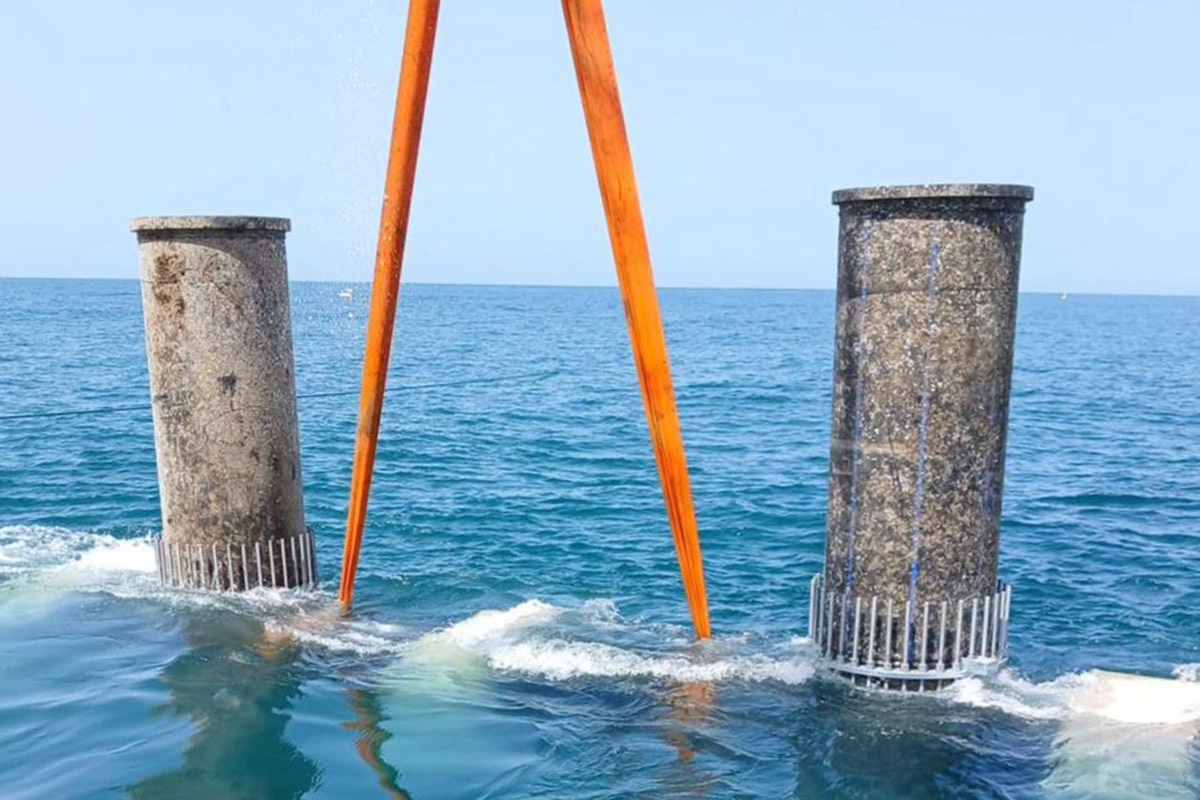
The reconstruction of the intake represents a total investment of €19.99 million and is supported by Portugal’s Mar 2030 programme. The official Mais Transparência portal records €349,880 in grant funding for this specific operation and lists 31 December 2026 as its expected completion date.
The technical scale of the project is reflected in the two installed pipelines, each approximately 1,140 metres long. The structures were transported from Norway to the Port of Aveiro, where they were prepared before being towed by sea to Praia de Mira and incorporated into the farm’s seawater intake system.
Flatlantic currently produces more than 3,500 tonnes of turbot and sole per year and describes its Mira site as Europe’s largest farm specialising in flatfish. The recovery of Phase II forms part of a wider growth programme that includes modernising the facilities, expanding the hatchery and developing new units primarily intended to increase sole production.
A brief history of the facility
The Mira farm was established in 2006 as Acuinova, the Portuguese subsidiary of the Pescanova Group, and was unveiled in 2007 as a major turbot farming complex with a projected annual capacity of 7,000 tonnes.
Technical problems affecting the seawater pipelines, the accident in 2014 and high levels of debt constrained its development and eventually led the company into insolvency proceedings.
In 2017, three creditor banks sold Acuinova to the Portuguese company Ondas e Versos, linked to investment group Oxy Capital, which took responsibility for restoring its production. Five year later, the company adopted the Flantlantic brand, marking a new phase focused on turbot and sole.

Related


Latest In-depth
-
Clams more resistant to heat and Perkinsus: research paves the way for selective breeding
Padua, Italy, 16/10/2026 | University of Padua researchers explain to misPeces the findings presented at Aquaculture Europe 2026 and the steps needed to transfer them to hatcheries. Initial applications could emerge within the next two or three years, although the relationship between resistance, growth and other production traits still need to be assessed