
The Aquaculture Advisory Council (AAC), the Market Advisory Council (MAC), the North Sea Advisory Council (NSAC), and the Outermost Regions Advisory Council (CCRUP) have issued a joint statement highlighting the importance of promoting the circularity of by-products derived from fisheries and aquaculture.
The decision of the advisory councils to work together reflects a coordinated approach that aims not only to optimise the use of available resources but also to foster innovation and technological development. It also seeks to overcome current regulatory barriers that limit the valorisation of these resources, which are mostly discarded today but have a high potential to be converted into fertilisers, biostimulants, cosmetics, and other valuable products.
"Circularity is not just an option, but a necessity to ensure the long-term sustainability of our oceans and the well-being of our coastal communities," said Clara Aguilera, Member of the European Parliament and promoter of the event "Connecting the dots for a circular blue economy," which inspired this joint initiative.
One of the main challenges identified by the councils is the lack of an integrated regulatory framework that facilitates the use of fisheries and aquaculture by-products in the EU. Currently, regulations are managed in a fragmented manner, creating uncertainty and limiting producers' ability to fully utilise the available resources.
The advisory councils have called for greater flexibility in regulations, particularly regarding the use of by-products for food and fertiliser production. They have urged the European Commission to consider revisions to current legislation, such as the 2009 Animal By-Products Regulation, to align it with circular economy principles without compromising safety standards.
In addition to proposing regulatory changes, the councils have emphasised the importance of fostering collaboration among policymakers, the research community, and industry. This cooperation is crucial to developing strategies that facilitate the adoption of circular practices and promote sustainability in the sector.
The joint statement also underscores the need for better coordination among the various directorates-general of the European Commission, particularly between DG MARE (Directorate-General for Maritime Affairs and Fisheries) and DG SANTE (Directorate-General for Health and Food Safety), to ensure that policies are consistent and reflect the realities of the sector.
As the EU positions itself to lead the blue economy globally, the coordinated work of these advisory councils will be essential to ensure that European policies are at the forefront of sustainability and innovation in fisheries and aquaculture.
Go to the recommendations document:
Joint-AC Advice on valorisation of fisheries and aquaculture by-products

Related
Latest In-depth
-
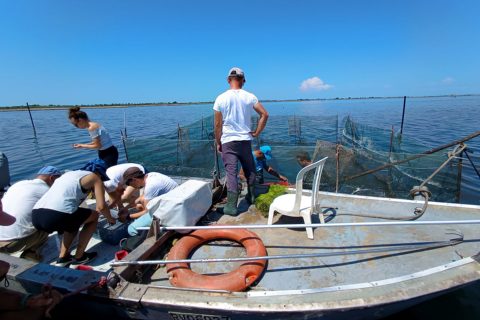
Clams more resistant to heat and Perkinsus: research paves the way for selective breeding
Padua, Italy, 16/10/2026 | University of Padua researchers explain to misPeces the findings presented at Aquaculture Europe 2026 and the steps needed to transfer them to hatcheries. Initial applications could emerge within the next two or three years, although the relationship between resistance, growth and other production traits still need to be assessed