
Aquaculture Europe 2026 opens this week in Ljubljana with one question running through much of its scientific and industry programme: how can European aquaculture maintain its production capacity and competitiveness amid increasing climatic, economic and regulatory pressures?
Under the theme Aquaculture -from Sustainability to Resilience, the event shifts part of the debate from how to produce more sustainably towards how aquaculture systems can also become better able to adapt to increasingly challenging and changing conditions.
For misPeces, five questions stand out among the numerous sessions scheduled throughout the event.
The first puts feeds back at the centre of the debate: how far can raw materials be diversified without compromising performance, quality, availability and cost? The programme includes several sessions on alternative ingredients and a dedicated session on insects on Thursday, reflecting scientific interest in expanding the range of options available to feed formulators.
The second question arises at the other end of the value chain: are consumers really holding back the adoption of new ingredients? A dedicated session on consumer studies will examine, among other issues, perceptions of alternative ingredients used in aquaculture feeds.
The third question directly affects the sector’s capacity to grow: where can new aquaculture development take place? Space allocation and maritime spatial planning will have a dedicated presence at AE2026, with particular attention ot the Mediterranean.
The availability of suitable sites, administrative procedures and coexistence with other uses of marine space continue to determine whether policy ambitions for growth can be translated into new production capacity.
The fourth question relates directly to the conference theme: how can production adapt to climate that is already changing? Temperature, welfare, disease, oxygen availability and extreme events feature across the programme. Resilience is therefore moving beyond being solely an environmental concept to become a variable directly linked to survival, growth, costs and production predictability.
Finally, Aquaculture Europe 2026 will once again put expectations surrounding digitalization, sensors, predictive modelling and artificial intelligence to the test.
For producers, the question will be less whether these technologies work and more whether they can become practical tools capable of improving decision-making, welfare and efficiency at a cost compatible with their adoption on farms.
Throughout Aquaculture Europe 2026, misPeces will follow these five questions from Ljubljana through scientific presentations, industry sessions and conversations with their protagonists, seeking to distinguish between technologies and findings that remain experimental and advanced with genuine potential to reach European farms, feeds and markets.

Related

Latest In-depth
-
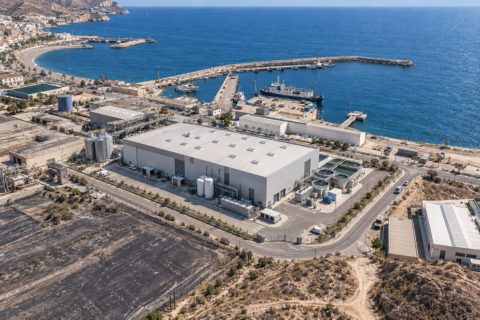
Ocean Aquaculture begins work on Spain hatchery designed to produce eight million greater amberjack juveniles a year
Almería, Spain, 9 September 2026 | The first phase will involve an investment of around €15 million and is expected to begin production in January 2028, supplying both the group’s future offshore farms and other Mediterranean producers