
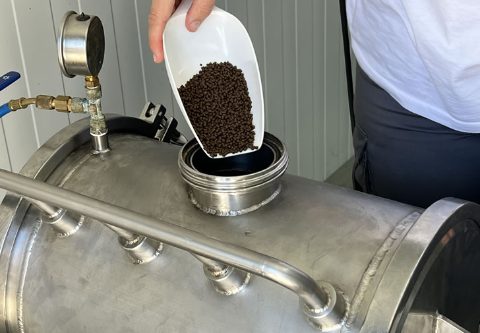
The fry stage represents one of the most sensitive phases in the production cycle of gilthead seabream (Sparus aurata). During this period, small variations in growth, feed efficiency or physiological stability can generate cumulative effects throughout the entire production cycle. A recent trial confirms that functional feed supplementation can play a significant role in optimising performance precisely at this strategic stage.
The 75-day study, conducted with juveniles of 2.3 grams initial body weight, evaluated the impact of several commercial feed additives – probiotics, prebiotics, symbiotics and organic acids – included in diets formulated with 45% protein. The results showed that supplemented groups achieved significantly improved growth and feed utilisation compared to the non-supplemented control, highlighting how early nutritional intervention can translate into measurable production advantages.
The treatment incorporating organic acids stood out in terms of final body weight and feed conversion ratio, reinforcing the idea that modulation of the intestinal and microbial environment can enhance nutrient utilisation efficiency. In production systems where feed accounts for the largest operational cost, sustained improvements in feed conversion during the fry phase can have a direct impact on overall cycle profitability.
Beyond zootechnical performance, the trial also reported positive effects on physiological indicators and water quality. Lower ammonia (NH3) concentrations were recorded in the supplemented systems, suggesting greater environmental stability, while histological analysis revealed improved intestinal morphology, with longer and more regular villi compared to the control group. At a stage when the digestive system is still developing, these factors are particularly relevant for ensuring robust growth and immune competence.
Rather than focusing solely on differences between additive types, the study reinforces the message that functional nutrition should not be viewed merely as a complementary strategy, but as a management tool for optimising performance during critical production phases. Enhancing efficiency at the fry stage does not only improve short-term metrics; it influences batch uniformity, robustness and overall production efficiency in larger grow-out stages.
In a context of increasing production intensification and cost control, the evidence suggests that well-designed functional supplementation can act as a strategic lever to strengthen performance from the very beginning of the production cycle.

Related

Latest In-depth
-
Clams more resistant to heat and Perkinsus: research paves the way for selective breeding
Padua, Italy, 16/10/2026 | University of Padua researchers explain to misPeces the findings presented at Aquaculture Europe 2026 and the steps needed to transfer them to hatcheries. Initial applications could emerge within the next two or three years, although the relationship between resistance, growth and other production traits still need to be assessed