
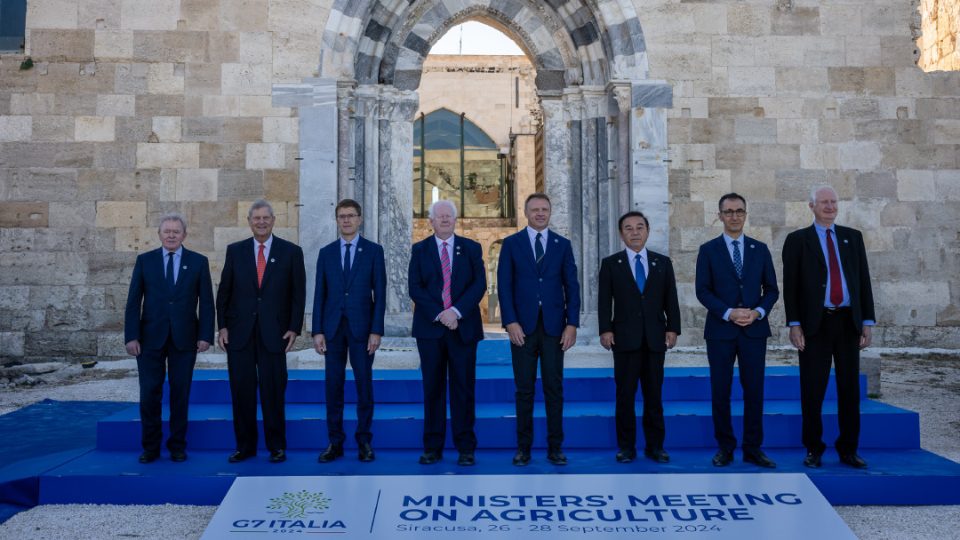
Agriculture ministers from the world's seven most advanced economies met in Syracuse, Italy, on 26-28 September for a high-level meeting that focused on the critical importance of sustainable fisheries and aquaculture in ensuring global food security.
During the meeting, G7 ministers, including representatives from Canada, France, Germany, Japan, Italy, the United Kingdom and the United States, underlined the vital role these sectors play in providing food and livelihoods for nearly 40% of the world's population.
The G7 also emphasised the need to promote aquaculture that complies with social, economic and environmental standards that contribute not only to its sustainability but also to transparency and the protection of human rights. In this context, it was discussed how these practices should promote fair competition and maintain ecological balance.
For the first time, the G7 intergovernmental forum explicitly addressed the important issue of food sovereignty, highlighting the crucial contribution of aquaculture to global food security and nutrition. It was also reaffirmed that sustainable fisheries and aquaculture are not only essential from an economic point of view, but also form an integral part of the cultural identity of rural, coastal and local communities.
The Summit underlined the importance of sustainable management of fisheries resources, in line with the FAO Code of Conduct for Responsible Fisheries and the new Guidelines for Sustainable Aquaculture. Ministers reaffirmed their collective commitment to achieving Sustainable Development Goal 14 (SDG 14), which aims to eradicate illegal and unregulated fishing and conserve marine biodiversity.
It is significant that the term "aquaculture" was mentioned up to ten times in the final communiqué, demonstrating the strategic importance of this sector for the future of global food security and the protection of natural resources.
Finally, international cooperation was recognised as an essential element in promoting responsible practices worldwide.

Related

Latest In-depth
-
Clams more resistant to heat and Perkinsus: research paves the way for selective breeding
Padua, Italy, 16/10/2026 | University of Padua researchers explain to misPeces the findings presented at Aquaculture Europe 2026 and the steps needed to transfer them to hatcheries. Initial applications could emerge within the next two or three years, although the relationship between resistance, growth and other production traits still need to be assessed