 Gammarus locusta | @misPeces
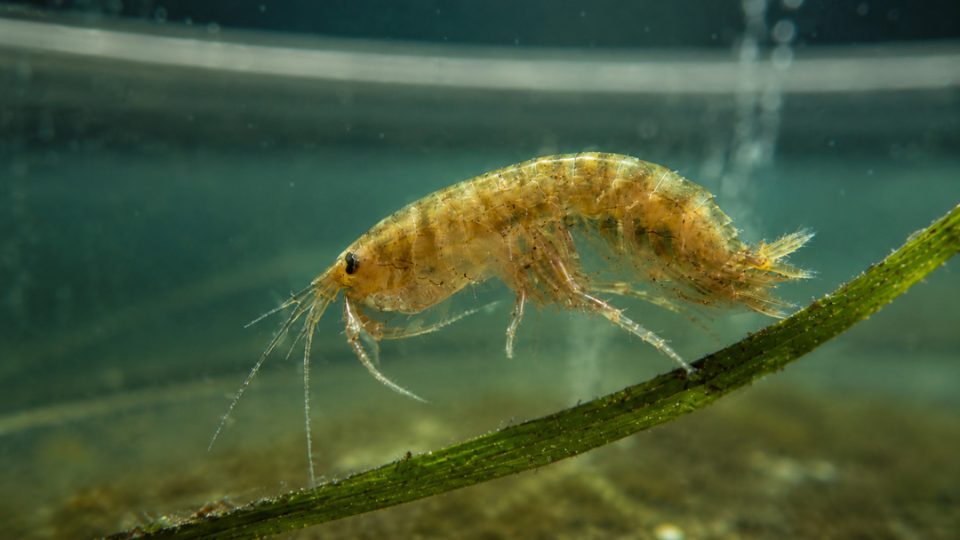
The Portuguese PUFApods project, led by researchers at the University of Aveiro, has taken an initial step towards validating biomass from the gammarid amphipod Gammarus locusta as a potentially valuable aquafeed ingredient due to its content of the omega-3 fatty acids EPA and DHA.
The small gammarid crustaceans were fed terrestrial plant-derived co-products, including potato and carrot peels, tomato leaves, and different by-products from green beans, peas, peppers and beetroot. These feed materials contained no long-chain omega-3 fatty acids such as EPA and DHA.
The inclusion of biomass from this tiny crustacean was evaluated under laboratory conditions in gilthead seabream (Sparus aurata) diets using different replacement levels.
The researchers observed that the gammarids retained omega-3 fatty acids of interest for aquaculture nutrition over several generations. This opens a potential route for connecting the valorisation of food-industry residues with the production of higher-value ingredients for aquaculture diets.
Detailed data on growth, survival and fatty acid composition, although considered promising, are included in scientific manuscripts that are currently under review.
The technology remains at the proof-of-concept stage
The trials were conducted in replicated experimental units of approximately two litres. Biomass productivity per unit of water volume, the conversion efficiency of the co-products and the potential cost of the system have not yet been determined.
Productive performance depended on the type of co-product used. Some diets supported population growth, survival and reproduction over successive generations, while others produced less favourable results.
This variability indicates that any future application will require the plant-derived material streams to be selected, combined and potentially conditioned before they can be used as feed.
Although PUFApods does not yet provide an industrial alternative to fish oil or other omega-3 sources, its main contribution is to demonstrate that small, cultivable marine organisms can act as a bridge between plant-based co-products and nutrients of interest to aquaculture.
The next challenge will be to transfer the process from laboratory containers to systems offering the productivity, stability and costs required for aquafeed manufacturing.
Find here more information about the PUFAPODS project:
https://doi.org/10.54499/2022.01620.PTDC

Related

Latest In-depth
-
Clams more resistant to heat and Perkinsus: research paves the way for selective breeding
Padua, Italy, 16/10/2026 | University of Padua researchers explain to misPeces the findings presented at Aquaculture Europe 2026 and the steps needed to transfer them to hatcheries. Initial applications could emerge within the next two or three years, although the relationship between resistance, growth and other production traits still need to be assessed