
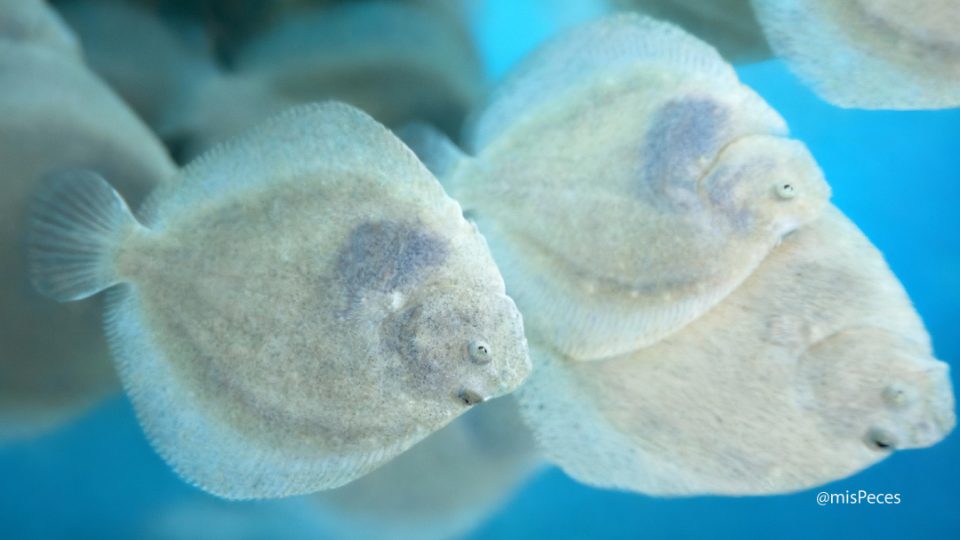
Researchers at the Institute of Marine Research (IIM-CSIC), working with the University of Vigo and Pescanova Biomarine Center, in Spain, have provided evidence that a substantial part of turbot's predisposition to develop pigmentation abnormalities is heritable, opening the possibility of tackling the problem through genetic selection.
The research therefore provides a new route for addressing a defect that, until now, has primarily been managed through rearing conditions during the early stages of development.
The study, published in Aquaculture, does not rule out the influence of factors such as nutrition during larval development, endocrine disruption, light intensity, background colour or substrate.
What it adds is evidence of a significant additive genetic component, which has until now been much less well characterised in turbot, together with the identification of genomic regions that could allow pigmentation to be incorporated as an additional trait in future selective breeding programmes.
The genetic signals are distributed across several chromosomes, although the largest and most consistent regions are located on chromosomes 5 and 15.
Functional analysis identified candidate genes associated with pigmentation, melanocyte differentiation, neural crest development and several signalling pathways.
These include slc24a5, bloc1s6 and tjp1a on chromosome 5, while chromosome 15 contains a concentration of candidates mainly associated with development, vision and cytoskeletal organisation.
From an application perspective, the findings strengthen the case for using these regions in marker-assisted or genomic selection strategies.
This could add a genetic tool to the management measures currently used during sensitive developmental stages, allowing broodstock with a lower predisposition to transmit the trait to their offspring to be selected. The study therefore does not propose replacing the management of environmental factors, but rather complementing it with genetic information.
The production relevance lies in the fact that these abnormalities can affect more than 60–70% of juveniles under certain intensive hatchery conditions. The defects mainly appear as pseudoalbinism — loss of pigmentation on the ocular side — and hyperpigmentation on the blind side, and can reduce product uniformity and commercial value.
The issue is particularly significant for European aquaculture: the study puts European turbot production at around 10,000–12,000 tonnes per year, of which Spain accounted for approximately 9,600 tonnes in 2023, mostly produced in Galicia.
However, the study does not yet demonstrate how far the incidence of malpigmentation could be reduced in a commercially selected population, nor does it remove the influence of environmental factors. The results provide a genomic framework for incorporating the trait into future selective breeding programmes, but the predictive capacity of the markers will need to be tested across other populations and generations before their production and economic impact under commercial farming conditions can be established.
The finding and study results
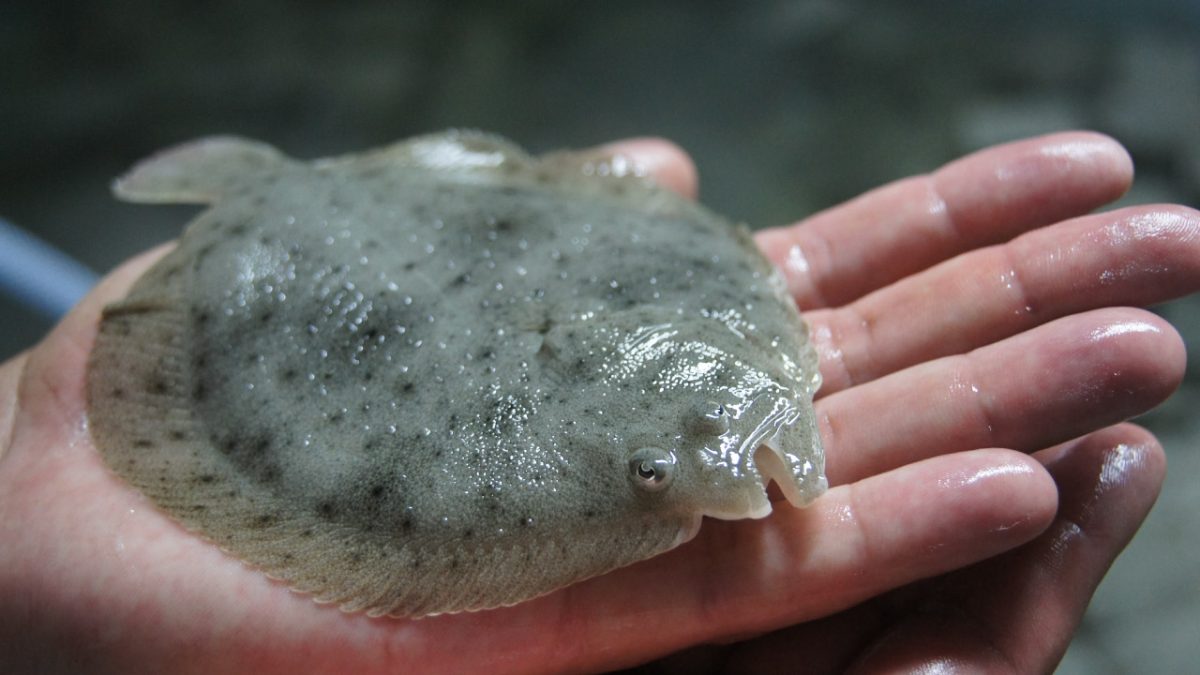
The study began with 785 five-month-old juveniles from ten families sourced from Pescanova Biomarine Center. Following quality control, the genomic analysis was conducted on 775 fish. The researchers combined a low-density SNP chip with whole-genome resequencing of 19 broodstock fish, allowing them to move from 4,085 SNP markers after filtering to an imputed dataset containing 1,680,730 SNPs, with an imputation accuracy of 0.91.
The trait showed moderate-to-high heritability. For the percentage of malpigmentation, heritability was estimated at 0.48 using the low-density panel and 0.39 using the imputed genomic data. When fish were classified simply as normal or malpigmented, the estimates were 0.49 and 0.45, respectively. When the latter were transformed to the liability scale, assuming prevalence rates of 30% and 60%, heritability ranged from 0.65 to 0.75.
The higher genomic density also increased the resolution from just two significant signals using the low-density chip to 295 SNPs grouped into 25 genomic regions when the extent of malpigmentation was quantified. The researchers identified 361 genes within these regions and found that the 295 significant SNPs accounted for more than 90% of the genetic variance captured by the complete imputed marker dataset. The largest association blocks were located on chromosomes 5 and 15.
Scientific source: Costas-Imbernón, D. et al. (2027). Genetic architecture and genomic regions associated with malpigmentation in farmed turbot (Scophthalmus maximus). Aquaculture, 626, 744393. DOI: 10.1016/j.aquaculture.2026.744393. Published online on 22 July 2026.

Related

Latest In-depth
-

Ocean Aquaculture begins work on Spain hatchery designed to produce eight million greater amberjack juveniles a year
Almería, Spain, 9 September 2026 | The first phase will involve an investment of around €15 million and is expected to begin production in January 2028, supplying both the group’s future offshore farms and other Mediterranean producers