
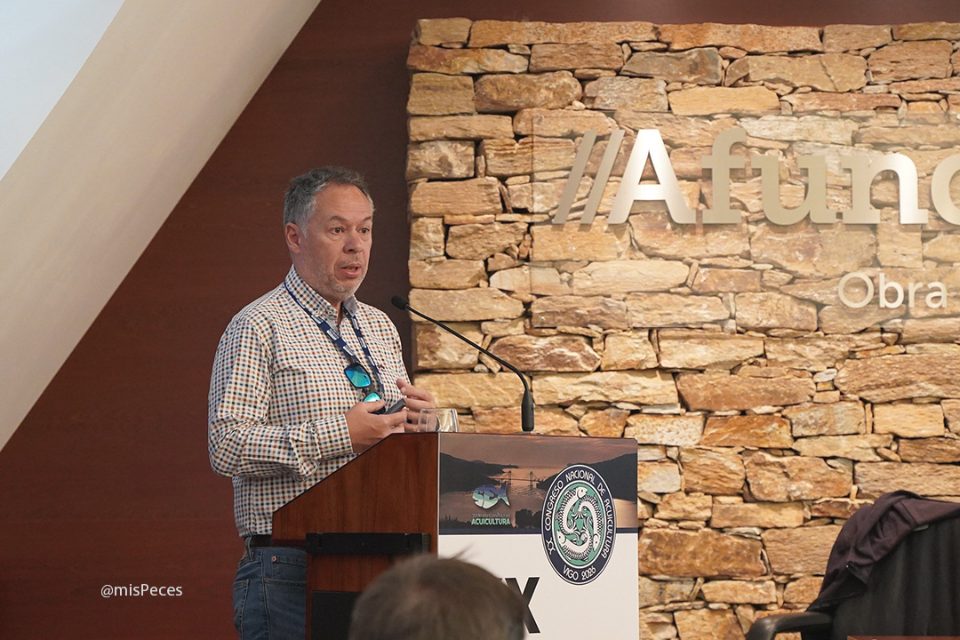
 Manuel Manchado - IFAPA (Spain) | @misPeces
Selective breeding in Senegalese sole (Solea senegalensis) is beginning to move beyond growth performance. At the Spain’s XX National Aquaculture Congress in Vigo, Manuel Manchado, form IFAPA Centro El Toruño, highlighted the potential of marker-assisted selection to improve morphological quality, reduce deformities and produce more uniform fish for the market.
In flatfish such as Senegalese sole, body shape is not a secondary trait. According to Manchado, between 10% and 15% of fish mail fail to match the expected elliptical morphology, mainly because they develop a greater body width than desired. These fish are filtered out before reaching the consumer, creating a productive and commercial challenge for farming companies.
The key, explained, is to include morphological quality as a selection criterion within breeding programmes. The aim is not only to produce faster-growing fish, but to combine growth with commercially acceptable body shape. As Manchado stressed, “a very attractive fish that does not grow is of no interest”; making it essential to balance performance and morphology.
The work presented suggests that body morphology has a strong genetic component, allowing breeding programmes to apply significant correction within production lines. In particular, body ellipticity shows heritability above 0.7, opening the way to gradually reduce the proportion of fish with undesirable shape deviations.
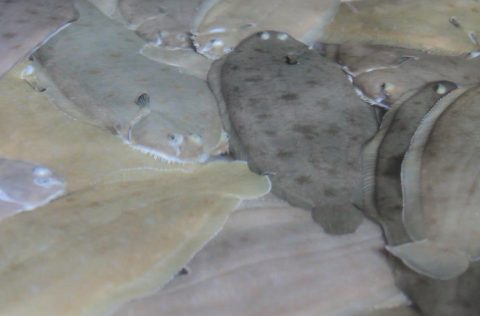
One of the most relevant advances is the identification of markers associated with vertebrae number, body length and deformity rate. Manchado highlighted the BMPR1B marker, linked to these traits, which could help breeders select animal closer to the desired phenotype and avoid fish with shorter bodies and higher malformation risk.
The practical advantage of these markers is that they allow broodstock to be selected a priori, without waiting to evaluate a full generation. Blood, fin or even mucus samples can be used to confirm the genotype of individual fish and design reproductive batches carrying favourable genetic variants for both growth and morphology.
This approach points to a new stage in the genetic improvement of Senegalese sole, a species considered strategic for Mediterranean aquaculture diversification. Beyond growth and reproduction, future breeding programmes will increasingly need to address uniformity, commercial value and welfare. Marker-assisted selection offers a tool to reduce losses in farming and guide breeding towards fish that are more viable from both a productive and market perspective.

Related

Latest In-depth
-
Clams more resistant to heat and Perkinsus: research paves the way for selective breeding
Padua, Italy, 16/10/2026 | University of Padua researchers explain to misPeces the findings presented at Aquaculture Europe 2026 and the steps needed to transfer them to hatcheries. Initial applications could emerge within the next two or three years, although the relationship between resistance, growth and other production traits still need to be assessed