
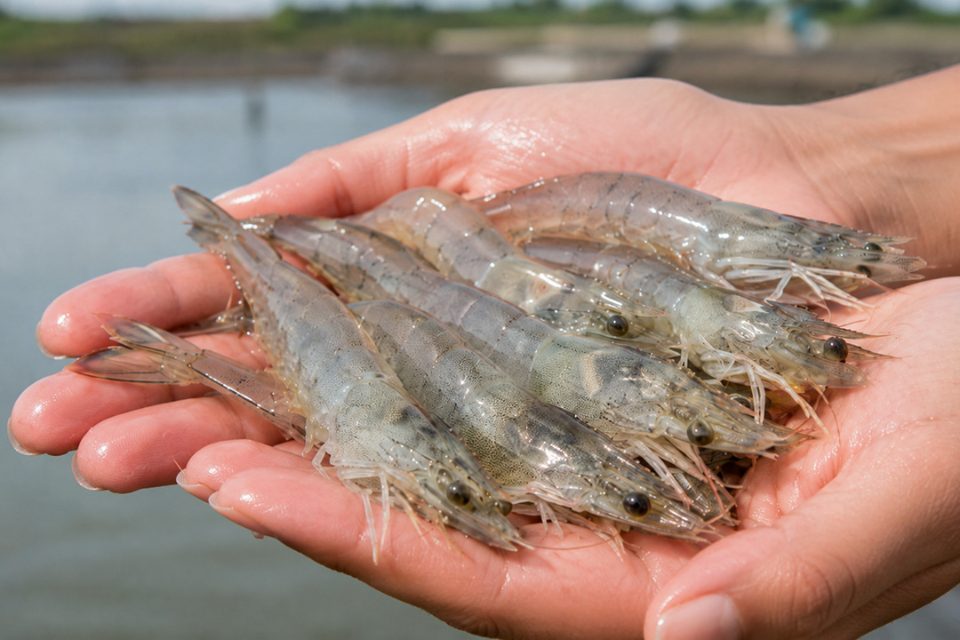
A historical review of 10,896 scientific publications on shrimp and prawn aquaculture, published between 1970 and 2024, reads like a strategic map of how the sector’s scientific priorities have evolved.
The study does not explain how to farm shrimp better tomorrow, but it does show where knowledge is now concentrating and which areas may define aquaculture over the next decade. Research is increasingly focused on microbiota, biofloc, disease resistance, gene expression, functional nutrition and production resilience.
Over five decades, shrimp farming has moved from asking how to produce more to asking how to maintain productivity under greater health, environmental and economic risk. The practical conclusion is that rapid growth and high density are no longer enough.
Shrimp health no longer depends on a single factor, but on the interaction between genetics, water quality, microbiota, nutrition, management and biosecurity.
Gut microbiota has become a scientific frontier because it connects digestive health, immunity, nutrient absorption, growth and stress resistance. Biofloc is attracting interest because it can manage water quality, nutrient recycling and nutritional input at the same time in low-exchange systems.
Gene expression and transcriptomics are also gaining ground because they help explain why some animals respond better than others to heat, salinity, pathogens or functional diets.
The goal of this new phase is to reduce uncertainty and detect system failures before they become economic losses.
What is better understood now
It is now clearer that biosecurity is structural. White spot syndrome virus and acute hepatopancreatic necrosis disease reshaped production practices. It is also better understood that indiscriminate antibiotic use is not a sustainable solution, that microbiota matters, and that farming systems can be designed to favour more stable microbial communities.
The analysis also shows that Pacific white shrimp (Litopenaeus vannamei) has concentrated much of the recent scientific attention because of its industrial weight, the availability of domesticated lines and its capacity for global expansion.
What still needs to be demonstrated
Important uncertainties remain. More evidence is needed to show which microbiota interventions work under commercial conditions, across full production cycles and in different environments. It is also necessary to better separate the effects of diet, genetics, stocking density, production system and management on growth and health.
Many functional additives, probiotics and biofloc strategies still need validation with comparable data on cost, return and scalability. Molecular information — gene expression, transcriptomics and resistance markers — also needs to be translated into practical breeding, nutrition and management programmes.
The main gap revealed by the study is the distance between scientific innovation and the real conditions under which many farms make decisions. The challenge for the next decade will be to grow without increasing fragility, intensify without losing control, and turn complex science into production protocols that farmers can actually use.

Related

Latest In-depth
-
Clams more resistant to heat and Perkinsus: research paves the way for selective breeding
Padua, Italy, 16/10/2026 | University of Padua researchers explain to misPeces the findings presented at Aquaculture Europe 2026 and the steps needed to transfer them to hatcheries. Initial applications could emerge within the next two or three years, although the relationship between resistance, growth and other production traits still need to be assessed