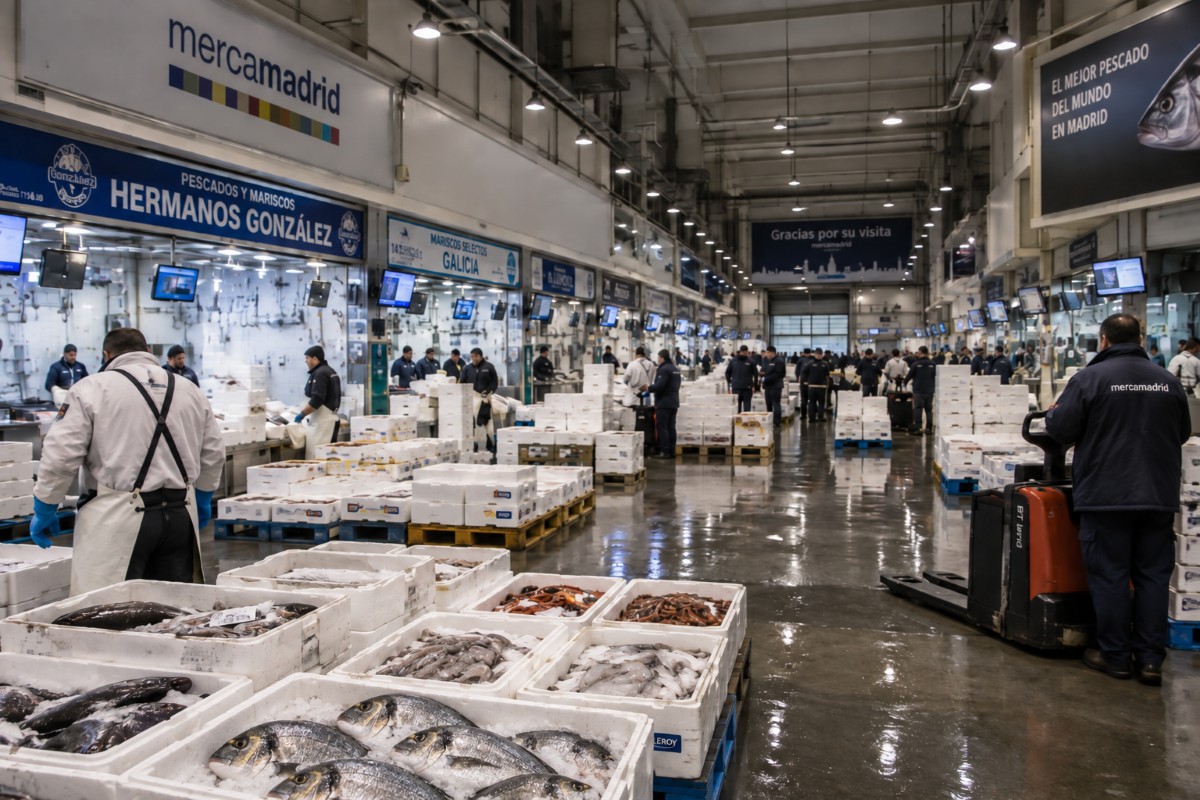
Greek-origin European seabass and gilthead seabream gained significant ground at Mercamadrid during the first eight months of 2026. The increase coincided with declining volumes of Spanish-origin fish, despite the two species following very different trends in Spanish households.
European seabass throughput reached 7,080 tons between January and August up 5,8% year on year Spanish-origin volumes fell by 3.2% to 3,060 tonnes, reducing their market share from 47.2% to 43.2%.
Greece supplied 1,970 tonnes, 27.9% more than in the same period of 2025, and increased its share to 27.8%. Turkish volumes declined by 1.9% to 1,775 tonnes.
Gilthead seabream recored a less favourable overall trend. Total throughput fell by 1.9% to 6,543 tonnes, while Spanish-origin supplies contracted by 12.5% to 2,837 tonnes. Their share consequently dropped from 48.6% to 43.4%. Greece increased its volumes by 22.1% to 1,788 tonnes, whereas supplies from Turkey fell by 5.2% to 1,736 tonnes.
| Species and origin | Jan–Aug 2025 | Jan–Aug 2026 | Change | 2026 share |
|---|---|---|---|---|
| European seabass — total | 6,694 t | 7,080 t | +5.8% | 100% |
| Spain | 3,162 t | 3,060 t | −3.2% | 43.2% |
| Greece | 1,540 t | 1,970 t | +27.9% | 27.8% |
| Türkiye | 1,810 t | 1,775 t | −1.9% | 25.1% |
| Gilthead seabream — total | 6,668 t | 6,543 t | −1.9% | 100% |
| Spain | 3,241 t | 2,837 t | −12.5% | 43.4% |
| Greece | 1,464 t | 1,788 t | +22.1% | 27.3% |
| Türkiye | 1,831 t | 1,736 t | −5.2% | 26.5% |
Source: misPeces analysis based on Mercamadrid’s complete monthly records. Origin refers to the declared commercial provenance and does not necessarily certify the country where the fish was farmed.
The shift was accompanied by higher wholesale prices. The weighted frequent-price indicator calculated by misPeces increased by 17.5% for European seabass, from €8.14/kg to €9.57/kg, and by 15.1% for gilthead seabream, from €7.26/kg to €8.35/kg. However, the published quotations do not provide sufficient evidence to conclude that one origin competed through systematically lower prices.
Size data provide a cleaner competitive signal for gilthead seabream. Spanish-origin volumes fell by 15% in the 300-400 grams category and by 15.5% in the 400-600 grams segment, while fish above 600 grams remained stable.
Greek supplies increased across all categories, including a 40.1% rise in seabream above 600 grams. For European seabass, Greek-origin volumes also grew across Mercamadrid’s small, medium and lager commercial categories.
Wholesale and household demand move differently
The result contrast with household purchasing patterns. Calculation based on Span’s Ministry of Agriculture, Fisheries and Food household consumption panel show European seabass purchases falling by 16.7% in the first half of 2026, while gilhead seabream purchases rose by 5.9%. The panel measures food bought for consumption at home and does not represent the hospitality and catering market on equivalent terms.
This distinction is important. Mercamadrid supplies fishmongers, retailers, restaurant and other distributors, and some of its products are redistributed beyond the Madrid region. The increase in seabass throughput despite weaker household demand may therefore reflect developments in foodservice, specialist retail or regional distribution, although the available figures cannot establish the exact cause.
Spanish aquaculture produced 30,399 tonnes of European seabass whorth €266.2 million at first sale in 2025. Gilthead seabream production reached 12,768 tonnes, valued at €92.9 million. Seabass production was distributed principally across Comunidad Valenciana, Andalusia, the Canary Islands and Murcia, whereas Comunidad Valenciana alone accounted for approximately 72.5% of Spanish gilthead seabream output.
The combined figures identify a strategically relevant trend: Spanish-origin fish lost market share at Mercamadrid in both species, while Greece expanded its position. The divergence was especially pronounced in gilthead seabream, where growing household purchases did not translate into stronger Spanish-origin throughput at the wholesale market.

Related

Latest In-depth
-
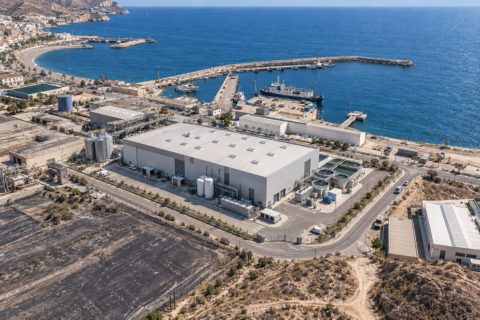
Ocean Aquaculture begins work on Spain hatchery designed to produce eight million greater amberjack juveniles a year
Almería, Spain, 9 September 2026 | The first phase will involve an investment of around €15 million and is expected to begin production in January 2028, supplying both the group’s future offshore farms and other Mediterranean producers