
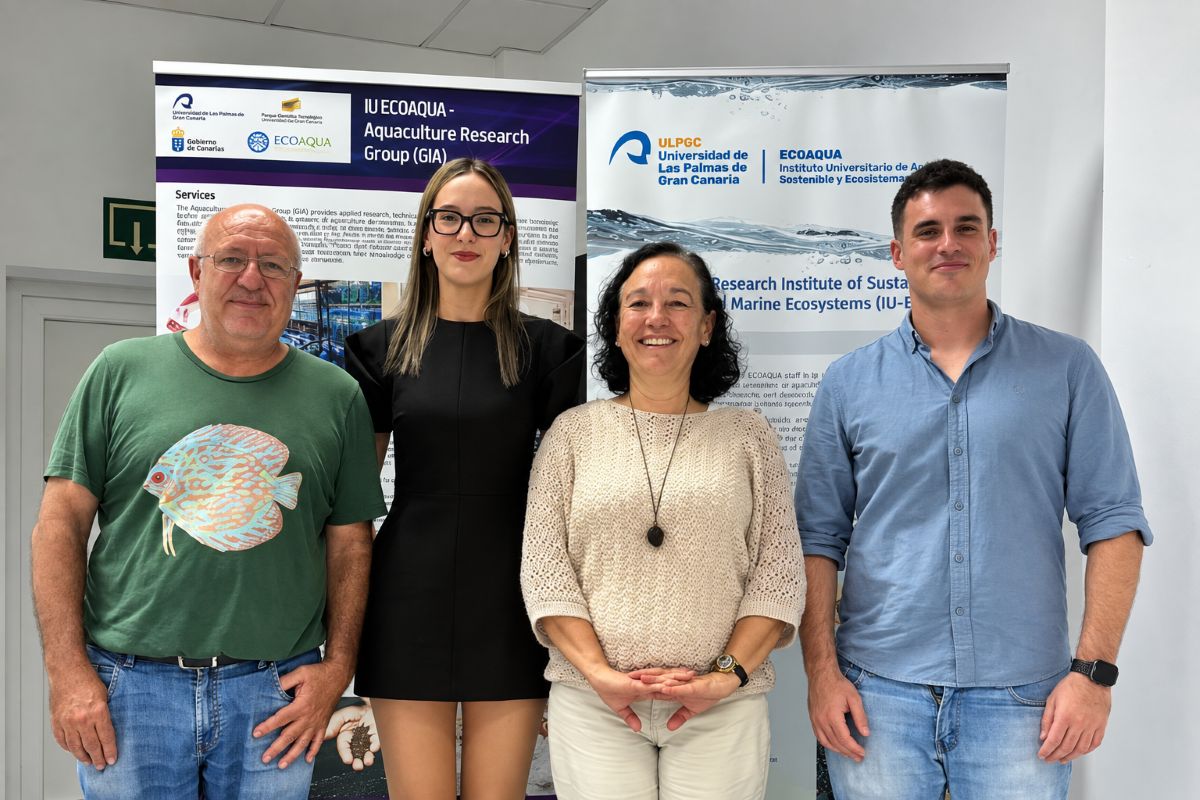
 José Miguel Cerdá-Reverter, Sana Mimoun, Alicia Felip, Félix Acosta |IATS-CSIC
Understanding what causes European seabass (Dicentrarchus labrax) to enter sexual maturation and begin allocating resources to reproduction could help explain one of the processes affecting growth and size uniformity in aquaculture stocks. Early maturation in this species is associated with different growth trajectories and greater variation in body size within the population.
As a long-running research line at the Institute of Aquaculture Torre de la Sal (IATS-CSIC) has been showing, this transition does not depend on a single signal. Body size, energy status and a range of endocrine and reproductive signals have all been associated with the onset of puberty.
Previous work at the institute has investigated factors ranging from body size and photoperiod to feed restriction, kisspeptins and, more recently, the insulin-like growth factor (IGF) system.
The latest advance in this research comes from work by Sana Mimoun, carried out within the Fish Reproductive Physiology group at IATS-CSIC under the supervision of Alicia Felip.
According to information released by the IATS-CSIC on the Mater’s thesis, the findings place the IGF system at different levels of the brain-pituitary-gonadal axis, the neuroendocrine pathway coordinating reproductive function. The study also characterises the brain distribution of IGF ligands and receptors, in collaboration with José Miguel Cerdá-Reverter, from the Fish Neurobehaviour Laboratory.
The significance of the findings becomes clearer when considered alongside the team’s previous research. In a study published in Aquaculture involving one-year-old juveniles males, researchers found higher circulating IGF-1 levels in early-maturing males than in non-maturing males before and during the period of gonadal development.
They also detected changes in the testicular expression of genes belonging to the IGF system and a positive correlation between igf expression and genes associated with cell proliferation during the early stages of spermatogenesis.
The authors concluded that the IGF system participates in processes associated with the onset of male puberty, although the specific molecular mechanisms remain to elucidated.
An equally complex relationship has emerged in females. A study published in 2023 found an average incidence of early maturation of 18.1% among two-year-old females, although this varied between cohorts, and showed that early-maturing females were generally larger. IGF-1, FSH, oestradiol and vitellogenin, together with body weight, contributed to explaining the differences associated with early maturation.
A subsequent study published in 2026 refined that interpretation: larger body size did not always correspond to more advanced ovarian development, while females with a higher condition factor during the spring and summer preceding gonadal development subsequently showed higher levels of FSH and IGF-1.
The findings therefore suggest that energy reserves may provide more information than body size alone when seeking to understand the onset of sexual maturation.
Mimoun’s work now extends this research from circulating signals and the gonads to the organization of the IGF system along the brain-pituitary-gonaldal axis.
This approach fit within the objectives of the MATGROWTH project (PID2023-153042OB-I00), which funds the work and investigates the relationship between growth and sexual maturation in European seabass.
As knowledge of these mechanisms develops, producers could eventually have access to indicators capable of anticipating early maturation and supporting the development of nutritional, husbandry, photoperiod or selective-breeding strategies.

Related

Latest In-depth
-
Ocean Aquaculture begins work on Spain hatchery designed to produce eight million greater amberjack juveniles a year
Almería, Spain, 9 September 2026 | The first phase will involve an investment of around €15 million and is expected to begin production in January 2028, supplying both the group’s future offshore farms and other Mediterranean producers