

Growth in fish and seafood consumption does not depend solely on greater supply. A study based on data from 124 countries concludes that rising income is the most stable driver of seafood demand, although the influence of prices, trade and demographic change varies across regions.
For the European market, the most relevant findings is negative price sensitivity. Researchers observe that, when seafood becomes more expensive, consumption tends to decline.
The estimated effect is not large, but it confirms that affordability remains a competitive factor in a mature region where consumers have numerous food alternatives.
This inclusion is especially relevant for European aquaculture, whose competitiveness is being challenged by rising energy, feed, labour, finance and regulatory-compliance costs.
For producers of Mediterranean species such as European seabass, gilthead seabream and meagre, the implication is not necessarily to compete as the cheapest fish. There is also scope to strengthen differentiation, reliable supply, convenience, quality and the trust associated with European origin.
However, these attributes must deliver sufficient value to offset any price gap with imported products or other sources of protein.
The study also points to a strategic difference between markets. In upper-middle-income economies, growing purchasing power may continue to drive seafood demand; in Europe, by contrast, the challenge is not only to grow, but to prevent fish from losing its place in the shopping basket as pressure on household budgets increases.
Consequently, producing more does not automatically mean selling more. To consolidate seafood consumption in Europe, aquaculture will need to combine cost efficiency with a clear value proposition for consumers.

Related

Latest In-depth
-
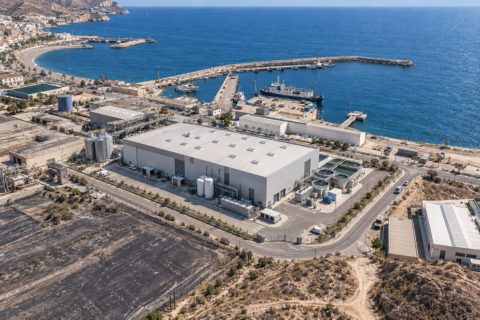
Ocean Aquaculture begins work on Spain hatchery designed to produce eight million greater amberjack juveniles a year
Almería, Spain, 9 September 2026 | The first phase will involve an investment of around €15 million and is expected to begin production in January 2028, supplying both the group’s future offshore farms and other Mediterranean producers