
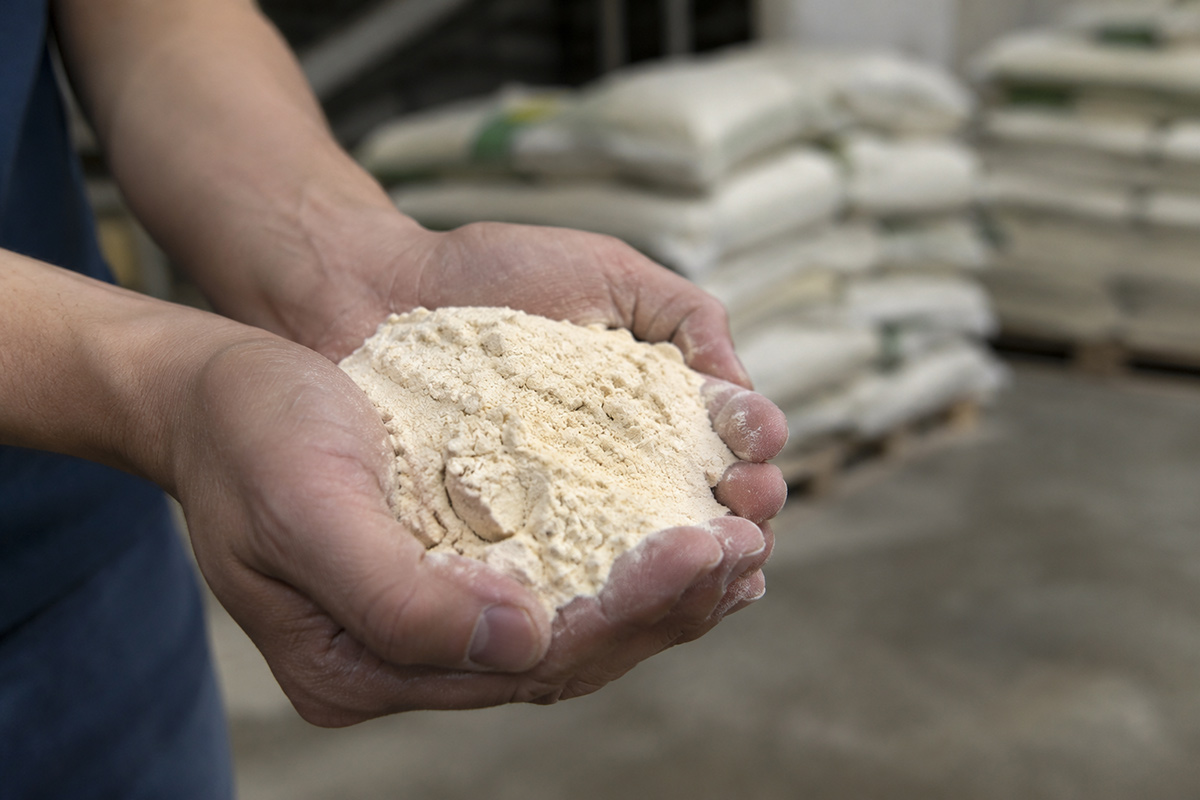
Protein hydrolysates can broaden the options available for formulating aquafeeds, but the name does not describe a uniform ingredient. The raw material, hydrolysis method and manufacturing conditions determine the product’s composition and may influence how fish respond to it. Before assessing its benefits, it is therefore important to know which product is being evaluated.
In enzymatic hydrolysis, proteins are broken down into smaller peptides and free amino acids. The result depends, among other factors, on the tissue used and the process applied. A fish hydrolysate, a liver hydrolysate and one made from poultry tissues should not be treated as equivalent. Nor is it enough to group under the same products made from different raw materials or processed in different ways.
This variability matters because the benefits attributed to hydrolysates – from helping with feed formulation to improving palatability or providing functional activity – need to be demonstrated for each product and use. A novel process or the use of by-products does not, on its own, prove a nutritional or economic benefit.
Trials show potential, but also limitations
In the case of hydrolysates, their inclusion has been found to improve, or at least match growth performance in juvenile European seabass. One experimental study added 5% tilapia hydrolysate and 5% fishmeal to seabass feeds. Growth was similar to that achieved with the control feed, which contained 20% fishmeal.
This experimental result shows that such diets can be used. Some feed conversion values were also better, although the differences were not statistically significant.
Digestibility provides another piece of information, but it is not enough to predict performance on a farm. In Nile tilapia, one study compared hydrolysates made from pig liver and mucosa, feathers and poultry by-products. Apparent digestibility values varied between ingredients.
This reinforces the need to characterise each product, although high digestibility alone does not demonstrate improved growth or profitability.
Palatability trials also need to be interpreted carefully. In another trial with juvenile tilapia, some treatments produced favourable numerical values, but differences in feeding behaviour parameters were not statistically significant.
Taken together, the studies point to potential applications, not a uniform response. Species, fish size, inclusion rate and diet composition can all affect the outcome. A response observed in juvenile tilapia, for example, does not establish the effective inclusion rate for European seabass or gilthead seabream.
What feed manufacturers need to check
Feed manufacturers need enough information to establish whether a hydrolysate serves a useful purpose in a formula and whether its properties remain consistent between batches. They should have documentation covering:
- Identity and traceability: raw materials used, tissues, origin and incoming-material checks
- Manufacturing process: hydrolysis method and parameters relevant to interpreting the product’s characteristics
- Composition and digestibility: protein, amino acid profile, fat, ash and moisture, as well as available data on the degree or hydrolysis and peptide size distribution
- Consistency and storage: results from consecutive batches, microbiological checks, oxidation and stability during storage
- Performance in feed: compatibility with processing, physical characteristics and any potential loss of soluble components on contact with water
- Dose validation: trials supporting an inclusion range for the intended species, fish size and formula
The degree of hydrolysis alone does not determine nutritional quality. The aim is to obtain an ingredient suited to a defined purpose, with reproducible results in the diet in which it will be used.
The experimental comparison also needs to be relevant. Diets should be nutritionally balanced and include an appropriate control group. If several raw materials or nutrients change at the same time, it becomes harder to attribute to observed response to the hydrolysate.
Functional claims require specific evidence. Antioxidant, immune or antimicrobial activity observed in the laboratory may justify further research, but it does not show that the ingredient prevents disease or reduces treatments over a commercial production cycle.
What farms can ask for
When a farm buys a finished feed, it may not need every industrial detail about the ingredient. It does need enough information to understand the function claimed for it and the evidence supporting that claim.
Producers can ask for the results that underpin the inclusion and check whether they were obtained with a comparable species, fish size and production stage. Trials should describe their duration, environmental conditions, diet compared, number of replicates, and results for growth, feed intake, feed conversion and survival.
If an on-farm trial is proposed, it is useful to agree in advance on the indicators, measurement method and criteria for interpreting the results. Growth and feed conversion also depend on management and the environment; a useful comparison should aim for equivalent conditions and record any factors that could influence the outcome.
Cost should be assessed across the full feeding programme. The price of the hydrolysate alone does not determine its profitability, just as the price per tonne of feed does not capture its full economic value. The comparison can include the net feed price, feed intake, marketable biomass, survival and time to harvest.
It should also explain its limitations, especially when comparing production cycles or conditions that differ.
Circularity and performance are separate questions
Making use of co-products can help make better use of available raw materials. Its environmental benefit, however, also depends on processing, storage, transport and the alternative uses of those materials. From a nutritional perspective, a protein hydrolysate cannot on its own meet requirements for essential fatty acids such as EPA and DHA.
Hydrolysates can be useful formulation tools. To justify their inclusion, manufacturers need to demonstrate what product they are offering and what function it serves; farms need to be able to assess what the resulting feed contributes to their production and whether its performance justifies the cost.
Related

Latest news
-
EU opens its market to Egyptian aquaculture amid concern over third-country competition
Brussels, 9 November 2026 | The authorisation covers farmed fish, fish products and crustaceans. The new access is subject to sanitary and traceability requirements, but reopens the debate over competitive conditions with non-EU producers
-
Greece explores digital alerts and deeper-growing systems to reduce mussel mortality
Volos, Greece, 9/11/2026 | The TEAMFORADRIS project is developing a mobile platform to warn farmers about harmful environmental changes and testing a submersible structure that can move mussels into cooler water
-

Brussels plans 2027 proposal to simplify aquaculture rules
Brussels, 6 November 2026 | The initiative aims to address obstacles such as licensing procedures and provide a clearer, more consistent framework for investment and new entrants