
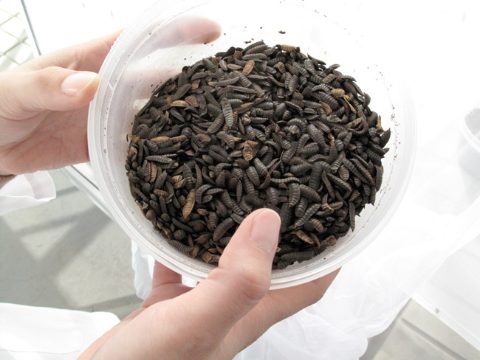
Insect chitin, a polysaccharide derived from the exoskeleton of insects and crustaceans, affects various physiological and health aspects in rainbow trout when included in feeds, such as growth, nutrient digestibility, intestinal functionality, and metabolic status.
This polysaccharide is notable for its health benefits for fish, including immunostimulant properties and bacteriostatic effects. However, its impact on growth performance and digestibility remains controversial.
The study "Effect of dietary chitin on growth performance, nutrient utilization, and metabolic response in rainbow trout (Oncorhynchus mykiss)" investigates how the inclusion of chitin at different levels affects rainbow trout and what the optimal levels are.
To do this, an experiment was designed in which trout were fed diets containing 0%, 1.5%, 3%, and 4.5% chitin over a period of ten weeks. The researchers evaluated growth performance, protein and lipid digestibility, intestinal functionality, enzymatic activity, gene expression, inflammatory response, and intestinal microbiota composition.
The study results revealed that chitin levels of up to 3% did not impair growth performance or nutrient digestibility in the trout. However, a 4.5% inclusion of chitin had significant negative effects on both aspects. Additionally, alterations were observed in biomarkers related to digestive functionality and inflammatory response, even at lower chitin levels. On the other hand, the intestinal microbiota did not show significant differences between the different dietary treatments, although some important bacterial species did not recover.
These findings are important for the formulation of aquaculture feeds that seek to balance sustainability with optimal fish health and performance.
Reference:
G. Pascon, G. Cardinaletti, E. Daniso, L. Bruni, M. Messina, G. Parisi, F. Tulli. Effect of dietary chitin on growth performance, nutrient utilization, and metabolic response in rainbow trout (Oncorhynchus mykiss). Aquaculture Reports

Related

Latest In-depth
-
Clams more resistant to heat and Perkinsus: research paves the way for selective breeding
Padua, Italy, 16/10/2026 | University of Padua researchers explain to misPeces the findings presented at Aquaculture Europe 2026 and the steps needed to transfer them to hatcheries. Initial applications could emerge within the next two or three years, although the relationship between resistance, growth and other production traits still need to be assessed