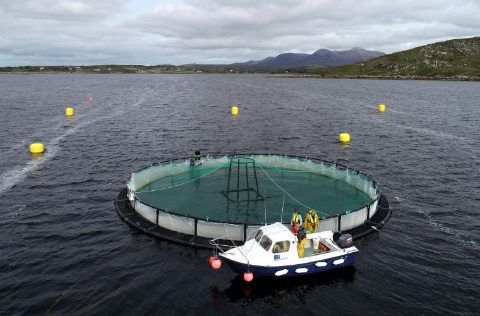
Integrated multi-trophic aquaculture, commonly known as IMTA, is designed to maximise nutrient use within a system through a production chain involving fish, shellfish and seaweed.
In principle, this approach can make aquaculture more sustainable while diversifying production. However, an international group of scientists led by RISE Research Institutes of Sweden, drawing on a review of the available economic and environmental studies, has found that these benefits do not necessarily materialise in every system.
As the researchers point out, economic assessments of IMTA systems often produce favourable results because they account of new products, nutrient recovery and the opportunity to spread commercial risk across several species.
Life-cycle assessments, however, provide little consistent evidence that these systems have a lower overall environmental impact than existing monocultures.
This does not mean that IMTA is ineffective, but rather that profitability and sustainability have generally been assessed using different methodologies, system boundaries and functional units.
The main explanation lies in what each assessment includes. A farm may improve local water quality and generate additional income from seaweed or shellfish while leaving other impacts associated with feed production, energy consumption, materials or infrastructures largely unchanged.
If integration also requires additional pumping, structures, space, transport or labour, some of the benefits gained through nutrient recovery may be offset by these extra requirements.
The number of species incorporated is therefore not, in itself, an adequate measure of environmental performance.
To demonstrate a genuine advantage, the system must address at least one of the farm’s main sources of impact; reducing feed or energy use, recovering a significant proportion of nutrients, lowering relevant emissions, or generating co-products capable of replacing other goods with a larger environmental footprint.
There must also be a market capable of absorbing these products at prices and volumes sufficient to offset the additional investment and operating costs.
Another important limitation is the scale of the available evidence. Many economic findings come from pilot facilities, theoretical models or extrapolations that do not always reflect the conditions of a commercial farm.
The review also found no systems that had been assessed simultaneously using both a comprehensive life-cycle assessment and a sufficient robust cost-benefit analysis. Producers and investors should therefore require realistic scenarios covering survival, productivity, prices, labour costs, capital investment, logistic and financial sensitivity before considering a project viable.
For these reasons, the researchers argue that IMTA should be assessed as a complete business and production model, rather than assumed to guarantee sustainability simply because it integrates fish, shellfish and seaweed.
Its true value will depend on how many nutrients it recovers, what additional resources it consumes, which products it generates and whether it can operate profitability at commercial scale.

Related

Latest In-depth
-
Clams more resistant to heat and Perkinsus: research paves the way for selective breeding
Padua, Italy, 16/10/2026 | University of Padua researchers explain to misPeces the findings presented at Aquaculture Europe 2026 and the steps needed to transfer them to hatcheries. Initial applications could emerge within the next two or three years, although the relationship between resistance, growth and other production traits still need to be assessed