Accurate biomass management remains one of the major challenges facing modern aquaculture, particularly in marine farms where traditional weighing methods are still costly, slow and invasive. A new technological development based on artificial intelligence and stereo vision now aims to change this paradigm by enabling automated, contact-free fish weight estimation at a significantly lower cost.
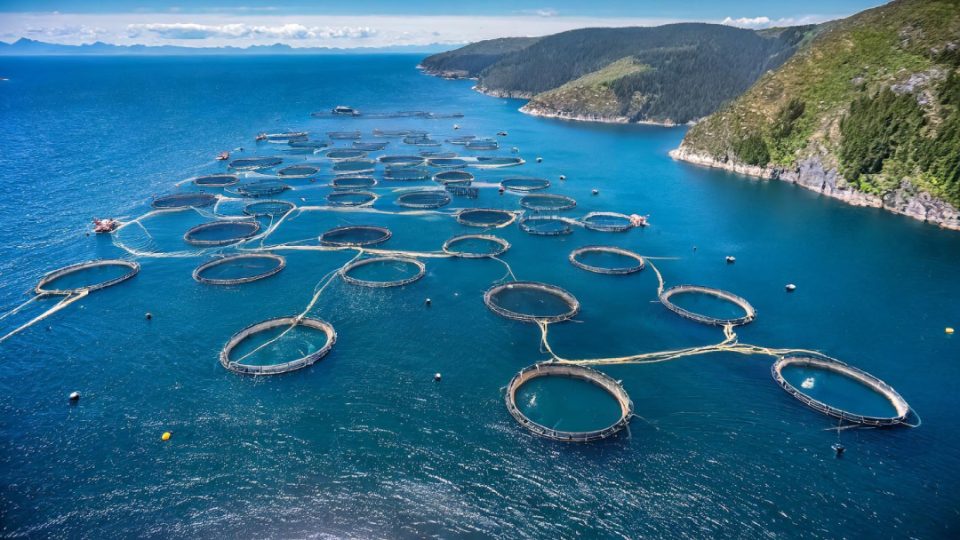
Designed to operate directly in offshore cages, the system relies on a stereo vision camera housed in a waterproof enclosure and connected to an advanced deep-learning model. With a manufacturing cost below €600 and a total weight of just 1.37 kilograms, the device can be easily deployed in real marine environments, capturing images and depth data of fish as key swim freely, without the need for handling or physical sampling.
The core of the system lies in an artificial intelligence model capable of automatically identifying specific anatomical landmarks on each fish and combining them with three-dimensional data provided by the camera. This 3D reconstruction is then used to calculate body length and convert it into a weight estimate through species-specific biometric relationships. Unlike simpler approaches, the technology accounts for the natural curvature of the fish’s body, significantly improving the accuracy of the results.
Field trials conducted under real open-sea conditions demonstrate particularly strong performance. In an evaluation involving nearly two hundred fish, the system achieved close to 99% accuracy, with a percentage error just over 1% compared to weights obtained through manual methods. Researchers also found that around nine minutes of recording per cage are sufficient to obtain stable and representative biomass estimates, paving the way for frequent and scalable monitoring throughout the production cycle.
Beyond technical accuracy, the potential impact of this technology primarily operational and economic. Compared with other commercial non-invasive weighing systems, which can cost five or six times more, the proposed solution dramatically lowers the barrier to entry for small and medium-sized aquaculture farms. At the same time, it reduces fish stress, improves animal welfare and supports more informed decision-making in key areas such as feeding strategies, harvest planning and growth control.
In a sector increasingly shaped by demands for efficiency, sustainability and traceability, low-cost and high-precision tools such as this strengthen the role of precision aquaculture as a strategic pillar of future production. The ability to measure biomass continuously, objectively and without direct human intervention could, in the coming years, become a standard operational practice for marine farms committed to data-driven management.

Related

Latest In-depth
-
Clams more resistant to heat and Perkinsus: research paves the way for selective breeding
Padua, Italy, 16/10/2026 | University of Padua researchers explain to misPeces the findings presented at Aquaculture Europe 2026 and the steps needed to transfer them to hatcheries. Initial applications could emerge within the next two or three years, although the relationship between resistance, growth and other production traits still need to be assessed