
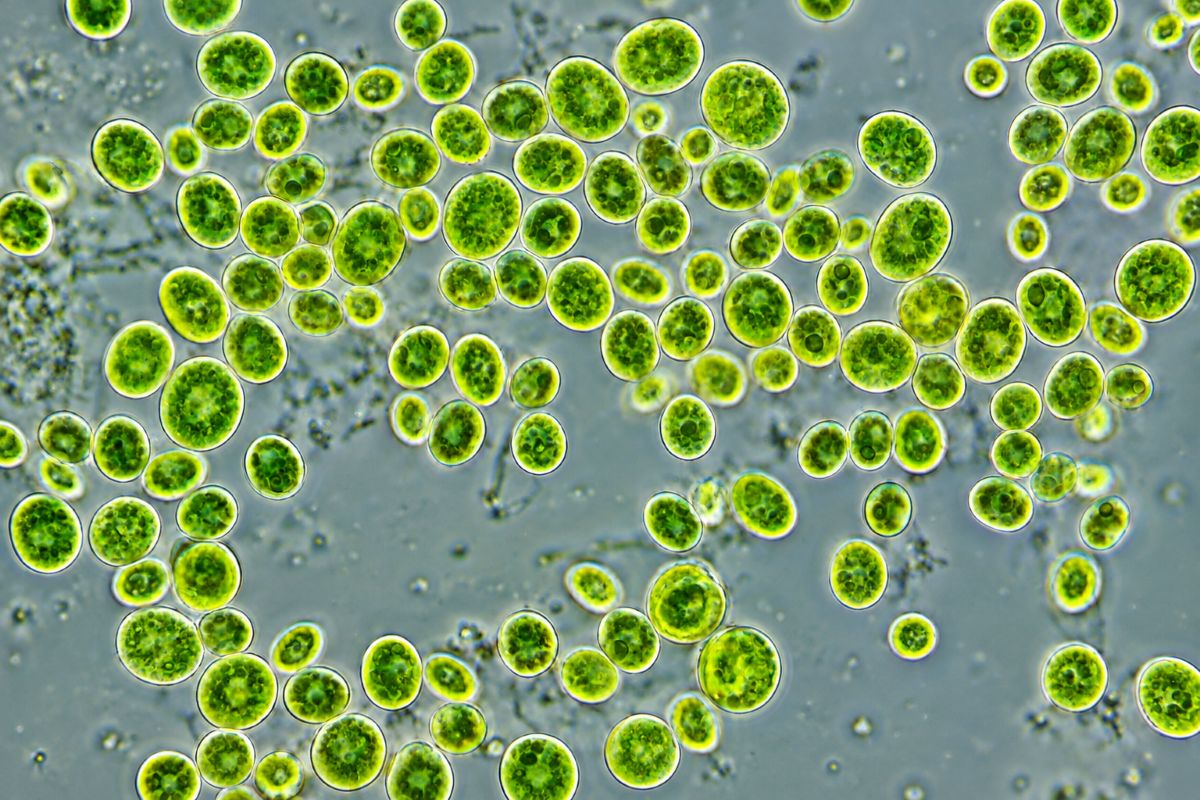
The cell wall of microalgae remains one of the barriers to fully exploiting their high-value compounds. A study by researchers at the Universities of Huelva (UHU) and Seville (US) has now shown that mechanical processing of Clorella sorokiniana increase the amount of carotenoids released during digestion, highlighting ball milling as an approach of interest because of its relative simplicity and potential for scale-up.
Published in Food Chemistry under the title Effect of ultrasounds and ball milling on the bioaccesibility of carotenoids from the microalgae Clorella sorokiniana, the study compared ball milling and ultrasound treatments applied to different forms of biomass – fresh, freeze-dried and alginate-encapsulated – using both a wild-type strain and another enriched in phytoene. The researchers used a standarised in vitro gastrointestinal digestion model to determine the proportion of carotenoids that became bioaccessible following processing.
The result show that disrupting the cellular structure can greatly increase the bioaccessibility of certain carotenoids, with increases exceeding 2,000% compared with untreated samples under some experimental conditions.
However, the effect depended on the treatment, biomass format and carotenoid analysed: there was no single treatment that produced the best results under all conditions. Freeze-drying, encapsulation and the presence of fat in the food matrix were also found to influence the availability of these compounds.
From an industrial perspective, one of the most relevant findings concerns ball milling, a mechanical technology that disrupts cell through impact and friction.
In several samples, it achieved results comparable to or better than ultrasound.
The researchers also point to its relative simplicity and potential cost advantages, factors that could become relevant if carotenoids derived from microalgae are to be incorporated into functional foods, nutraceutical or products for the cosmetic industry.
The study also represents a further step in research previously carried out by the same groups on Chlorella sorokiniana. In 2023, misPeces reported on research aimed at improving the extraction on phytoene and other carotenoids through different biomass treatments.
The latest work shifts the question from how much of these compounds can be extracted to how much of carotenoids content can actually become available during digestion, an important consideration when seeking to turn pigment-rich biomass into a functional ingredient.
The findings, however, do not mean that the human body absorbs up to 26 times more carotenoids. The study assessed bioaccessibility using simulated in vitro gastrointestinal digestion, meaning in vivo research would still be needed to determine actual bioability. Nor does the study provide data on the energy cost, biomass processing capacity or economics of ball milling at industrial scale.
These variables will ultimately determine whether the improvements observed under experimental conditions can translate into competitive microalgae ingredients.

Related

Latest In-depth
-

Ocean Aquaculture begins work on Spain hatchery designed to produce eight million greater amberjack juveniles a year
Almería, Spain, 9 September 2026 | The first phase will involve an investment of around €15 million and is expected to begin production in January 2028, supplying both the group’s future offshore farms and other Mediterranean producers