

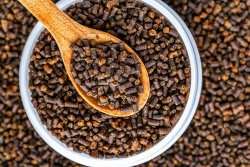
Methanotrophic bacteria protein could become a useful tool for partially reducing the aquaculture sector’s dependence on marine-derived ingredients without compromising production performance.
A study conducted by researchers from IRTA, Universidad de Barcelona and the Danish company Unibio, recently published in Aquaculture, shows that single-cell protein derived from methanotrophic bacterial biomass can replace up to 50% of the fishmeal in gilthead seabream (Sparus aurata) diets without compromising growth, feed efficiency or disease resistance.
However, the study also warns that higher replacement levels reduce feed intake, growth performance and survival under disease challenge conditions, which currently limits its use as a complete fishmeal substitute.
For this reason, and based on the results obtained, it should not be considered a viable total replacement for fishmeal at present.
The authors note that future formulation strategies will need to incorporate additional DHA and omega-3 sources if higher inclusion levels are not be achieved without affecting growth, feed intake and fish robustness.
The researchers evaluated different levels of fishmeal replacement, analysing digestibility, growth, feed utilisation, gut microbiota, tissue health and resistance to Vibrio harveyi.
The result showed that protein digestibility remained comparable to that of conventional fishmeal and that replacement levels of up to 50% did not affect key performance indicators such as specific growth rate or feed conversion ratio.
Nevertheless, the study also identified a clear technical limitation. When fishmeal was replaced at 75% or 100%, fish showed progressive reductions in final body weight, with performance losses exceeding 20% in the most extreme treatments.
From a production perspective, the findings are significant because they provide a new pathway for reducing reliance on marine raw materials.
In addition, moderate inclusion levels promoted a more diverse gut microbiota, increasing the abundance of potentially beneficial microorganisms while reducing some bacteria groups associated with health issues.
The authors detected no significant alterations in intestinal or liver histology, nor in oxidative stress indicators, at intermediate inclusion levels.
The researchers attribute the decline in performance mainly to palatability issues and to lower levels of DHA and other essential omega-3 fatty acids in diets containing higher proportions of bacterial protein.
Disease resistance followed a similar pattern. Fish fed diets replacing between 25% and 75% of fishmeal-maintained survival rates comparable to those of the control group following an experimental Vibrio harveyi challenge.
Reference
Enric Gisbert, Alberto Ruiz, Federico Melenchón, Yanis Cruz-Quintana, Dolors Furones, Ignasi Sanahuja, Silvia Torrecillas, Nana W. Thorringer. Bacterial single cell protein from methanotrophic bacteria as an alternative ingredient for gilthead seabream (Sparus aurata) aquafeeds: Effects on digestibility, growth performance, gut microbiota, and disease resistance. Aquaculture, Volume 625, 2026, 744316, ISSN 0044-8486, https://doi.org/10.1016/j.aquaculture.2026.744316

Related

Latest In-depth
-
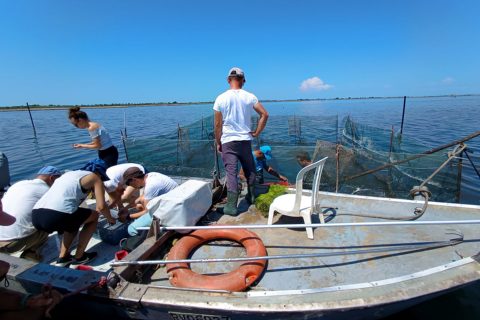
Clams more resistant to heat and Perkinsus: research paves the way for selective breeding
Padua, Italy, 16/10/2026 | University of Padua researchers explain to misPeces the findings presented at Aquaculture Europe 2026 and the steps needed to transfer them to hatcheries. Initial applications could emerge within the next two or three years, although the relationship between resistance, growth and other production traits still need to be assessed