
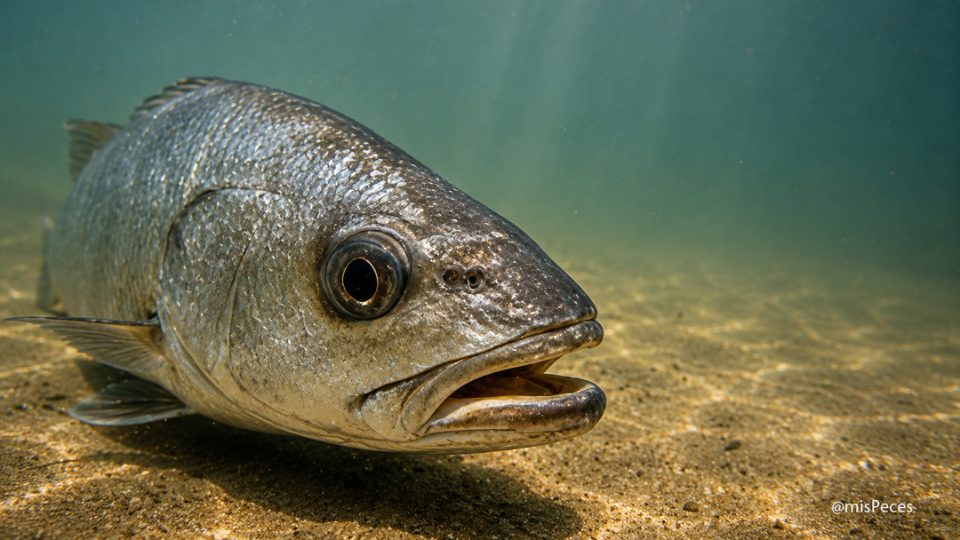
 Corvina grande | @misPeces
The expansion of meagre farming, Argyrosomus regius, increases the species’ exposure to pathogens, temperature fluctuations, handling and nutritional imbalances. Prevention is particularly challenging because no vaccines are specifically authorised for meagre in the European Union, while chemical and antimicrobial treatments are subject to regulatory and environmental restrictions.
Against this background, Portuguese and Spanish researchers reviewed the main functional compounds evaluated in meagre. The analysis, published in Frontiers in Marine Science, concludes that amino acids, vitamins, minerals, lipids, algae, insects and probiotics can modify immune, antioxidant, intestinal and stress-related indicators. However, these changes do not necessarily translate into greater disease resistance.
The main limitation is the gap between biomarker response and production outcomes. Only one trial included a controlled bacterial infection, and none assessed the effectiveness of these feeds against viral or parasitic diseases. Most studies were also short and conducted under favourable experimental conditions, without measuring mortality, recurrence of health problems or profitability on commercial farms.
Tryptophan is one of the most extensively studied amino acids and has been associated with lower cortisol, glucose and lactate responses following handling or confinement. Other amino acids, including histidine, phenylalanine and tyrosine, modified antioxidant or immune parameters, although several studies used doses well above the estimated requirements of other marine fish.
Some of the observed effects could therefore reflect the correction of an inadequate basal diet or a physiological stimulation that would be difficult to transfer to a commercial formulation.
The most applicable results relate to lipid balance and the prevention of systemic granulomatosis. Adequate supplies of EPA, DHA and phospholipids may improve growth, larval survival and tolerance to cold stress, while vitamin C and E and certain micronutrients have reduced granuloma formation.
Systemic granulomatosis is, however, a non-infectious metabolic and inflammatory disorder, meaning that preventing it is not equivalent to protecting fish against Vibrio, Photobacterium or other pathogens.
Dose is another critical factor. Excessive concentrations of fatty acids, vitamin E, insect meals or microalgae blends have caused oxidative stress, intestinal alterations or reduced growth.
In the case of selenium, some of the clearest experimental effects were obtained at approximately 3-4milligrams per kilogram of feed, far above the maximum of 0.5 milligrams per kilogram authorised in complete feeds for fish in the European Union.
Algae and probiotics offer potential, but their effects depend on the species or strain used, processing method and inclusion level. Some algal extracts reduced markers of inflammation and oxidation but did not improve protection during an experimental infection.
Likewise, a bacterium that is effective in gilthead seabream or European seabass will not necessarily produce the same response in meagre, and commercial authorisation requires evidence of safety, stability and efficacy.
For producers, the decisive question is not whether an ingredient activates a biomarker, but whether it solves a specific production problem and justifies its additional cost. Meaningful validation should measure survival, disease incidence, growth, feed intake, feed conversion ratio and cost per kilogram produced.
Until such data are available, functional feeds should be regarded as a complement to biosecurity, water-quality management, husbandry and veterinary diagnosis, rather than a substitute for an integrated health-management strategy.
Scientific reference
Monteiro, M., Oliva-Teles, A. & Díaz-Rosales, P. (2026). Functional compounds for sustainable control of infectious diseases in meagre (Argyrosomus regius) aquaculture: a review. Frontiers in Marine Science, 13, 1872027. https://doi.org/10.3389/fmars.2026.1872027

Related

Latest In-depth
-
Clams more resistant to heat and Perkinsus: research paves the way for selective breeding
Padua, Italy, 16/10/2026 | University of Padua researchers explain to misPeces the findings presented at Aquaculture Europe 2026 and the steps needed to transfer them to hatcheries. Initial applications could emerge within the next two or three years, although the relationship between resistance, growth and other production traits still need to be assessed