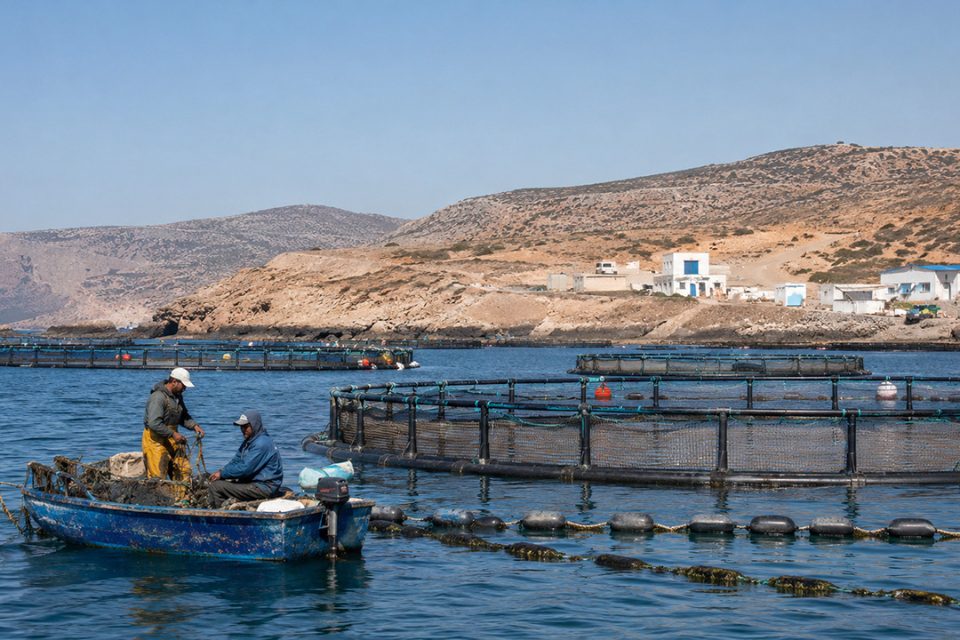
Morocco now has 244 aquaculture projects classified as active, with a combined target production capacity of close to 90,000 tonnes per year, according to the National Agency for the Development of Aquaculture, ANDA. The figures were presented at the Agency’s Board of Directors meeting held in Rabat on 14 July.
The number reflects the expansion of Morocco’s aquaculture project portfolio, but it should not be interpreted as current production. The official statement does not specify how many of the 244 projects are already producing, how many remain under construction or development, or how much of the projected capacity is currently being used.
In December 2025, ANDA reported 184 installed and operational projects, with a target capacity of 75,507 tonnes, alongside a further 62 projects under development that were expected to add approximately 14,590 tonnes.
That classification amounted to 246 projects and slightly more than 90,000 tonnes of potential capacity, almost the same volume now presented under the broader category of active projects.
The latest figures published by the World Bank help illustrate the gap between potential capacity and actual output. In November 2025, the institution estimated Morocco’s aquaculture production at approximately 3,600 tonnes, while identifying 322 authorised farms with a combined target capacity exceeding 124,000 tonnes.
The difference between the figures can be partly explained by the fact that an authorisation or an active project does not necessarily mean that a farm has been completed or is producing at commercial scale.
According to the World Bank, the sector’s expansion continues to be constrained by gaps in infrastructure and services across the value chain. Key needs include hatcheries capable of supplying juveniles and shellfish seed, aquafeed production facilities, cold-storage capacity, and processing and value-addition units.
The institution has also called for simpler administrative procedures, measures to reduce investment risk and improved conditions for attracting private capital.
These priorities are broadly consistent with the areas now highlighted by ANDA. The Agency reports progress in the development of domestic hatcheries, public support for strategic production inputs, and the expansion of handling and processing facilities intended to improve product quality, competitiveness and added value.
ANDA also maintains cooperation programmes with the World Bank, the Islamic Development Bank and the Japan International Cooperation Agency, JICA.
Morocco therefore has a growing portfolio of sites, licences and aquaculture projects, but the decisive indicators will be how quickly this planned capacity is converted into harvested and marketed biomass.
A clearer assessment of the sector’s progress will require future statistics to distinguish between authorised, under-construction and operational projects, while also reporting production by species, actual deployment, investment delivered and utilisation of installed capacity.

Related
Latest In-depth
-
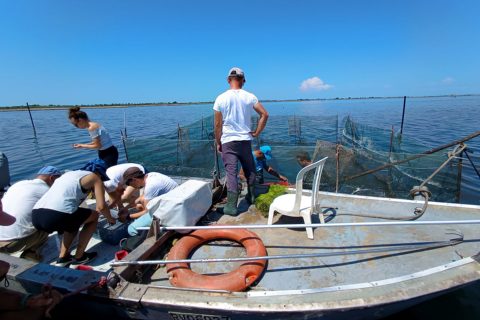
Clams more resistant to heat and Perkinsus: research paves the way for selective breeding
Padua, Italy, 16/10/2026 | University of Padua researchers explain to misPeces the findings presented at Aquaculture Europe 2026 and the steps needed to transfer them to hatcheries. Initial applications could emerge within the next two or three years, although the relationship between resistance, growth and other production traits still need to be assessed