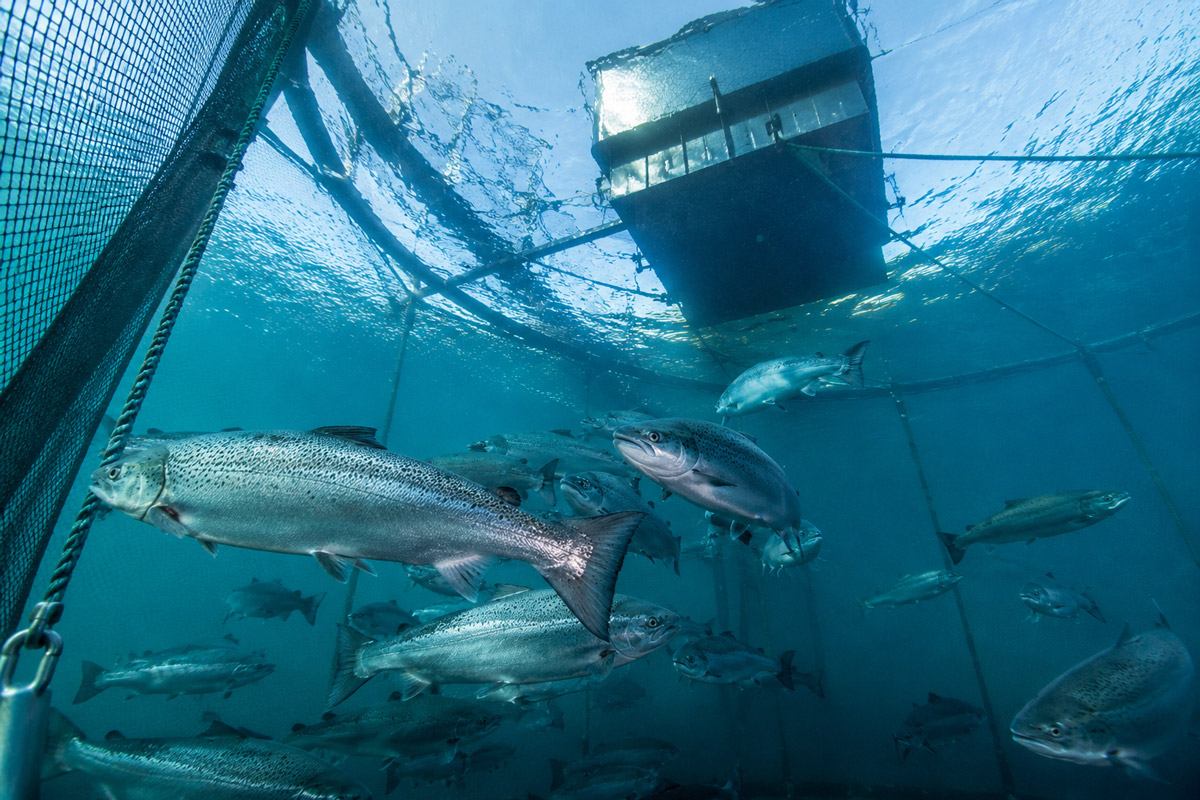
Moving aquaculture into exposed marine areas can provide access to colder waters, greater water exchange and lower concentrations of farming sites. These conditions may reduce the effects of coastal warming, some algal and jellyfish events, and pathogen transmission between cages.
However, a review published in Ocean Engineering warns that moving production offshore does not eliminate risks but transforms them. Wavers, currents and extreme events increase the loads placed on structures, nets and mooring systems, while wear and biofouling make nets one of the most vulnerable components.
The accumulation of fouling organisms increase drag, restricts water exchange within the cage and raises the risk of damage, escapes and oxygen-related problems.
Currents can be stronger in open waters, improving water exchange. However, if their speed exceeds the swimming capacity of the fish, energy expenditure rises and can result in fatigue, poorer production performance and impaired welfare.
Submerged and submersible cages can keep fish in more stable water layers, sheltered from surface wave action, elevated temperatures and, at some sites, sea lice.
In return, these systems require more complex arrangements for feeding, buoyancy control, inspection and harvesting, as well as solutions that allow species with swim bladders to access air during prolonged periods of submergence.
Surface cages offer easier access and simplify routine operations, but require structures and mooring systems capable of withstanding more demanding conditions.
The choice therefore involves a trade-off between construction and operating costs: surface installations require greater structural strength, whereas submerged systems shift some of the complexity to feeding, monitoring and maintenance.
The University of Stavanger researchers conclude that the sustainability of an offshore site cannot be assessed solely on the basis of water depth, distance from shore or structural conditions.
Design decisions must integrate waves, currents, oxygen availability, stocking density, swimming capacity and operational feasibility throughout the production cycle.
At the same time, better models are needed to represent how installations and fish respond together under extreme environmental conditions.
Scientific reference
Wen, X., & Ong, M. C. (2026). Offshore fish farming in exposed seas: A state-of-the-art review of challenges, potential solutions and numerical modelling. Ocean Engineering, 365, 127291. https://doi.org/10.1016/j.oceaneng.2026.127291

Related
Latest In-depth
-
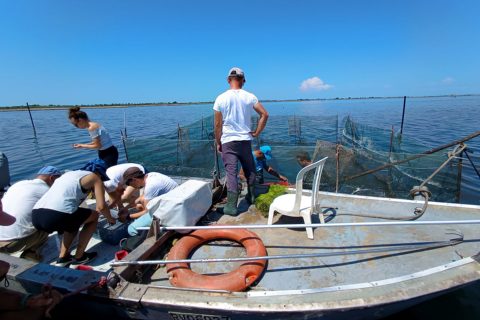
Clams more resistant to heat and Perkinsus: research paves the way for selective breeding
Padua, Italy, 16/10/2026 | University of Padua researchers explain to misPeces the findings presented at Aquaculture Europe 2026 and the steps needed to transfer them to hatcheries. Initial applications could emerge within the next two or three years, although the relationship between resistance, growth and other production traits still need to be assessed